


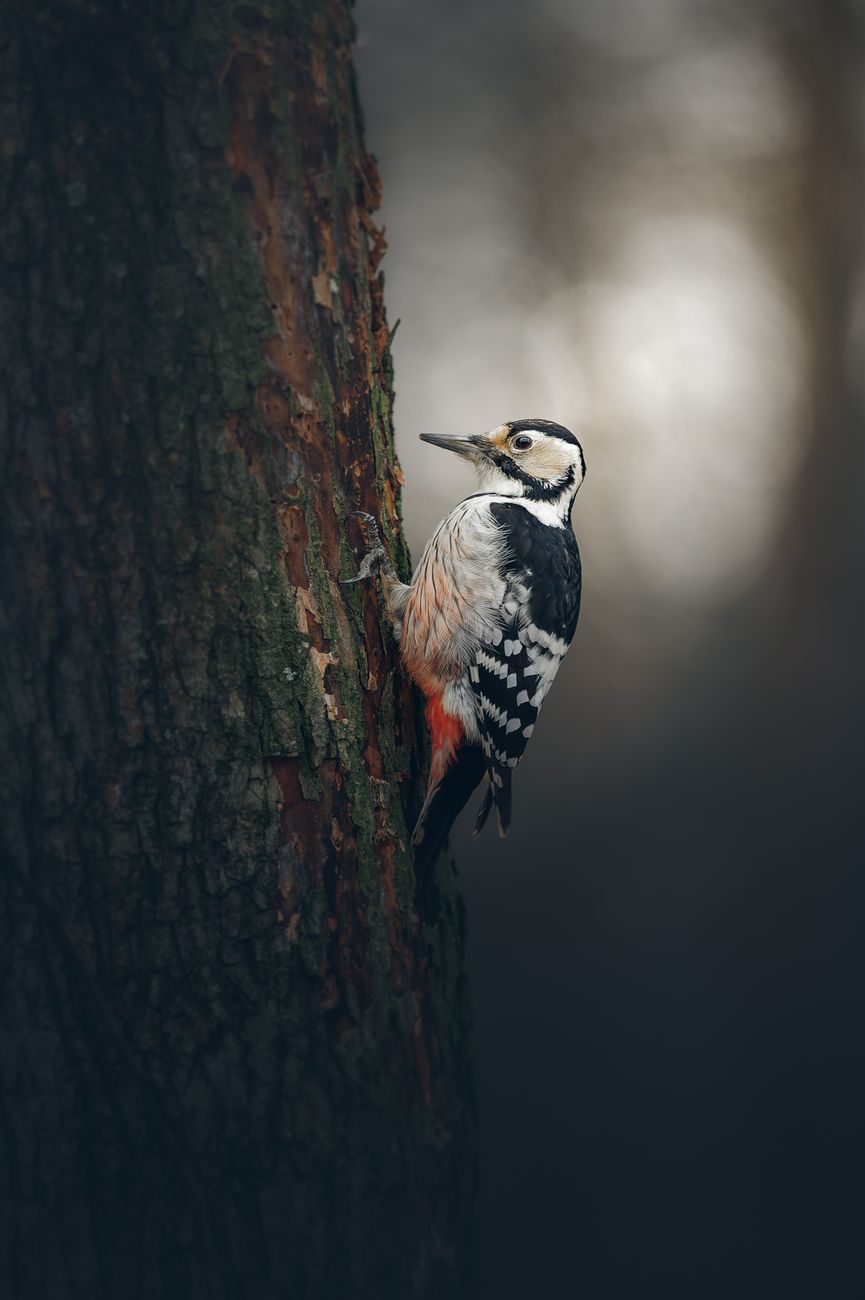
WHITE-BACKED WOODPECKER
Dendrocopos leucotos
DESCRIPTION
White-Backed Woodpecker (Dendrocopos leucotos) is a striking bird known for its distinctive white back and black-and-white patterned plumage. This woodpecker exhibits a strong preference for mature forests, where it forages for insects and larvae hidden beneath the bark of trees. Its drumming behavior is not only a means of communication but also plays a crucial role in establishing territory and attracting mates.
FUN FACTS
- The White-Backed Woodpecker is known for its unique drumming patterns, which can vary between individuals and are used to communicate with others
- This species plays a vital role in forest ecosystems by helping to control insect populations and creating nesting sites for other wildlife through its excavations.| Despite its striking appearance, the White-Backed Woodpecker is often elusive and can be difficult to spot in its natural habitat, making sightings a special event for birdwatchers and nature enthusiasts
QUICK INFO
Lifespanup to 10 years in the wild
Average Weight70-100 g
Average Length23-26 cm
Diet TypeInsectivore
Social Structuresolitary or pair, often seen alone or with a mate during breeding season
Activity PatternDiurnal
Breeding SeasonSpring (April-June)
- Habitat
- This species thrives in old-growth forests, particularly those with a mix of coniferous and deciduous trees. It prefers areas with abundant dead or decaying wood, which provides ample foraging opportunities.
- Biomes
- Temperate Forest, Boreal Forest
- Native Range
- The White-Backed Woodpecker is native to parts of Europe and Asia, particularly in regions with suitable forest habitats.
- Continent
- Europe, Asia
- Countries
- Poland, Russia, Ukraine, Belarus, Slovakia
- Diet
- The White-Backed Woodpecker primarily feeds on insects, particularly wood-boring beetles and their larvae. It uses its strong beak to excavate tree bark in search of these food sources.
- Diet Type
- Insectivore
- Favorite Food
- wood-boring beetles, larvae
- Social Structure
- solitary or pair, often seen alone or with a mate during breeding season
- Activity Pattern
- Diurnal
- Group Size
- 1-2
- Territorial
- 1
70-100 g
Weight
23-26 cm
Length
- Coloration
- primarily black and white with a distinctive white back and a red crown in males
- Sexual Dimorphism
- males have a red crown, females do not
- Lifespan
- up to 10 years in the wild
- Offspring per Birth
- 3-5
- Sexual Maturity
- 1-2 years
- Breeding Season
- Spring (April-June)
EN
Endangered
IUCN Red List Status
- Population Status
- The population of White-Backed Woodpeckers is currently declining due to habitat loss.
- Wild Population Estimate
- unknown
- Population Trend
- Decreasing
- Endangered
- 1
- Threats
- The main threats to the White-Backed Woodpecker include deforestation and habitat fragmentation, which reduce the availability of suitable nesting and foraging sites. Additionally, changes in forest management practices can negatively impact their populations.
- Predators
- larger birds of prey, such as hawks and owls; snakes may also pose a threat to eggs and young.
- Defense Mechanisms
- White-Backed Woodpeckers rely on their ability to escape quickly into tree cavities to avoid predators.
- Found in Zoos
- Rare