


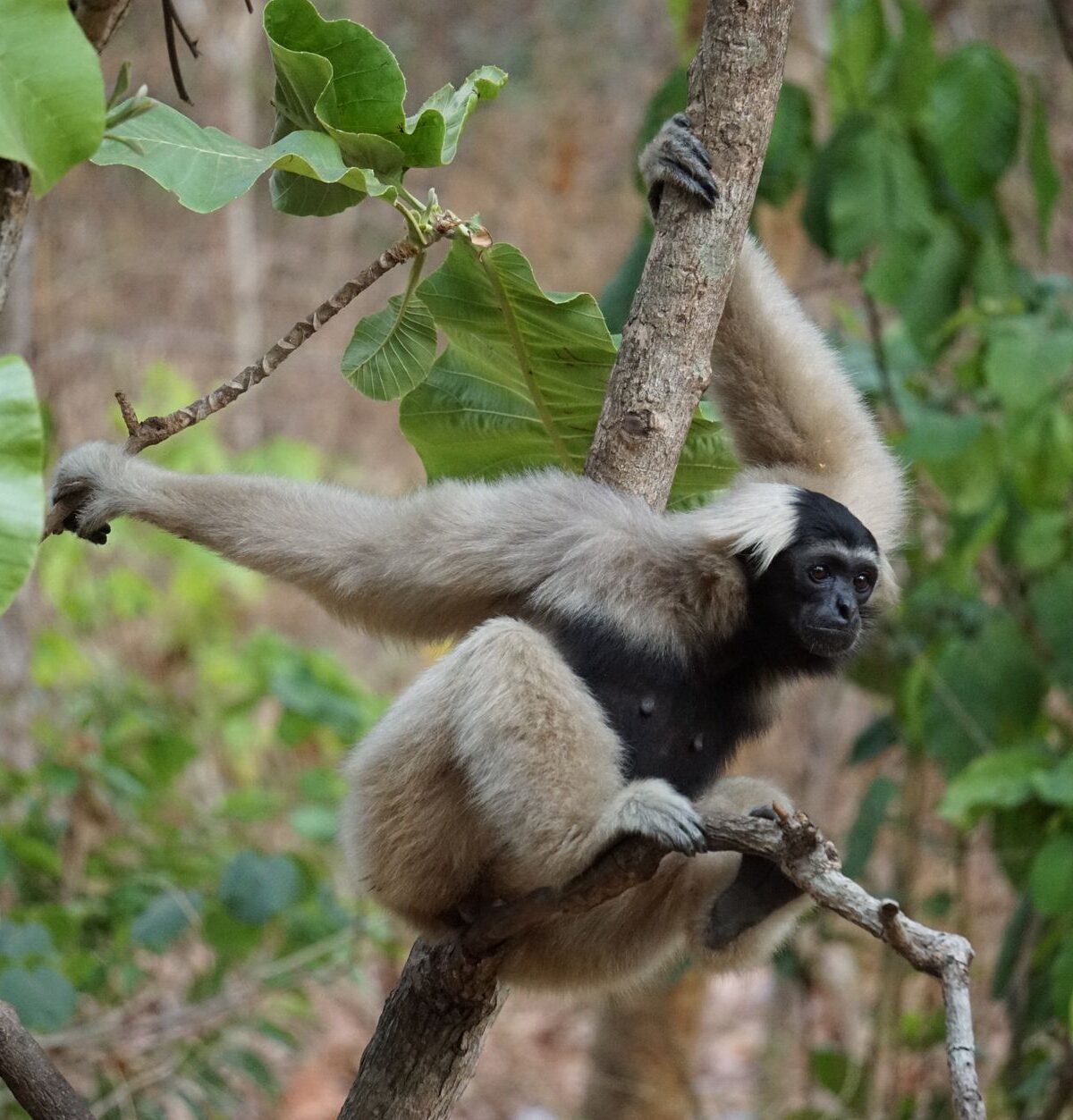
WHITE-CHEEKED GIBBON
DESCRIPTION
Also called the Lar Gibbon, White-Cheeked Gibbon is a small ape known for its distinctive white cheek patches and long arms. They have a slender body covered in black or dark brown fur, with lighter-colored cheeks and a throat patch. These gibbons are highly agile and spend most of their time in the trees, using brachiation to move swiftly between branches.
FUN FACTS
- White-Cheeked Gibbons are known for their impressive vocal abilities, often singing in duets with their partners to strengthen their bond and establish territory
- Their calls can carry over several kilometers, making them one of the loudest primates in the forest
- | These gibbons are highly acrobatic and can swing through the trees at speeds of up to 56 km/h, showcasing their remarkable adaptations for an arboreal lifestyle
- Their long arms and flexible shoulder joints allow them to move effortlessly among the branches
QUICK INFO
Lifespan25-30 years in the wild, up to 40 in captivity
Average Weight5-7 kg
Average Length50-70 cm
Diet TypeHerbivore
Social StructureThey typically live in small family groups consisting of a mated pair and their offspring.
Activity PatternDiurnal
Breeding SeasonYear-round, with peaks depending on the region
- Habitat
- They inhabit tropical and subtropical forests, often in areas with dense canopy cover. These gibbons are arboreal and prefer habitats that provide ample climbing opportunities.
- Biomes
- Tropical Rainforest
- Native Range
- They are native to the forests of Southeast Asia, particularly in countries like Thailand, Myanmar, and Laos.
- Continent
- Asia
- Countries
- Thailand, Myanmar, Laos, Vietnam, Cambodia
- Diet
- White-Cheeked Gibbons primarily eat fruits, leaves, and flowers, with a preference for ripe fruits. They may also consume insects occasionally.
- Diet Type
- Herbivore
- Favorite Food
- fruits, leaves
- Social Structure
- They typically live in small family groups consisting of a mated pair and their offspring.
- Activity Pattern
- Diurnal
- Group Size
- 2-6
- Territorial
- 1
 VU
VU
5-7 kg
Weight
50-70 cm
Length
- Coloration
- black or dark brown fur with white cheek patches
- Sexual Dimorphism
- Males and females are similar in size, but males may have slightly larger throat pouches.
- Lifespan
- 25-30 years in the wild, up to 40 in captivity
- Gestation Period
- 210 days
- Offspring per Birth
- 1
- Sexual Maturity
- 4-5 years
- Breeding Season
- Year-round, with peaks depending on the region
EN
Endangered
IUCN Red List Status
- Population Status
- The population is currently declining due to habitat loss and hunting.
- Wild Population Estimate
- Less than 10,000
- Population Trend
- Decreasing
- Endangered
- 1
- Threats
- Main threats include deforestation for agriculture and logging, as well as hunting for the pet trade. Habitat fragmentation also poses a significant risk to their survival.
- Predators
- Large birds of prey and snakes are known to pose threats to young gibbons, while humans are the primary threat due to hunting and habitat destruction.
- Defense Mechanisms
- They rely on their agility and speed to escape predators, often using their vocalizations to alert others in their group.
- Found in Zoos
- Uncommon