


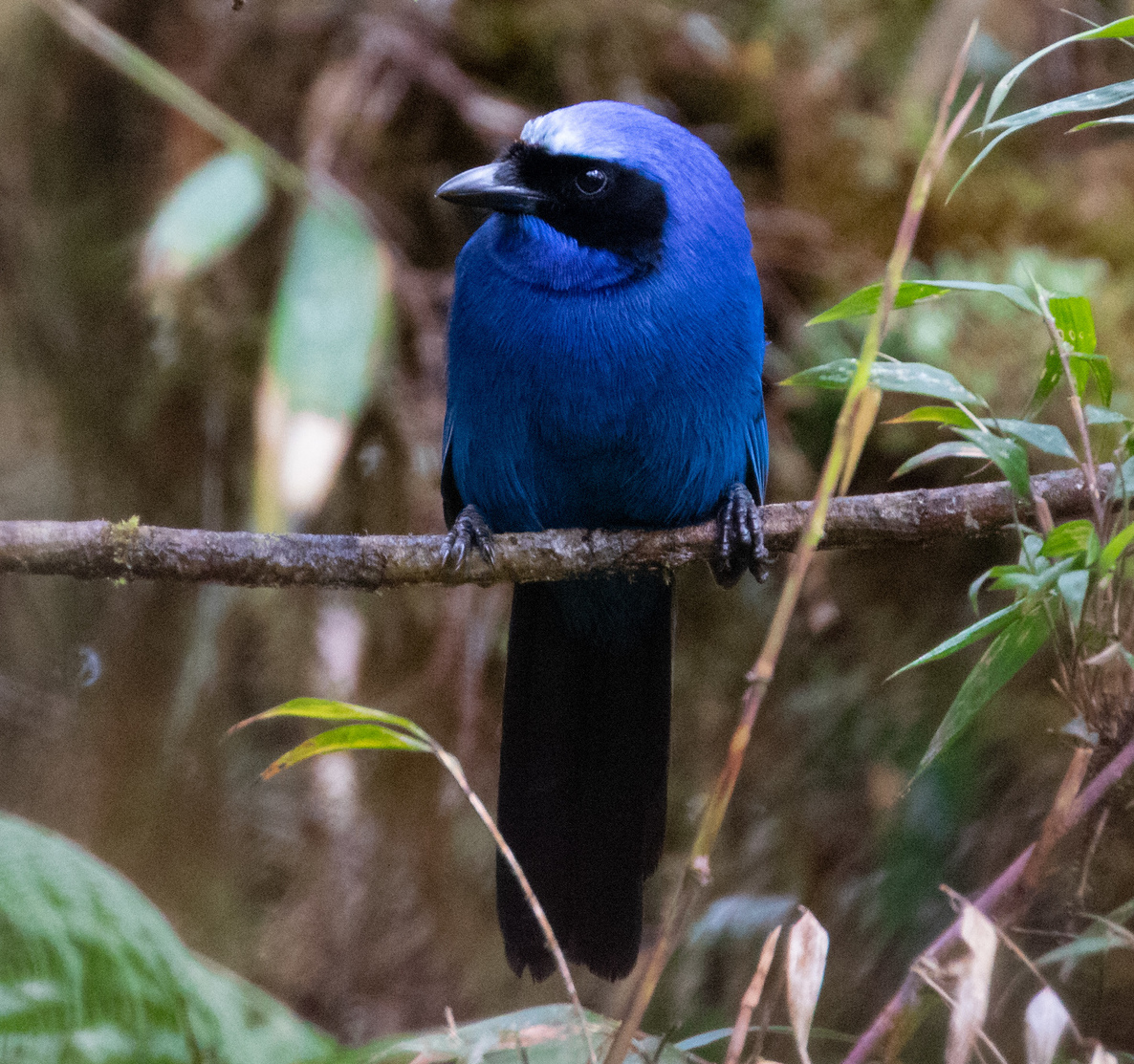
WHITE-COLLARED JAY
Cyanolyca viridicyanus
DESCRIPTION
White-collared Jay (Cyanolyca viridicyanus) is a striking bird known for its vibrant blue plumage and distinctive white collar around its neck. This species exhibits social behavior, often seen in small groups, and is known for its intelligence and problem-solving abilities. It inhabits montane forests, where it plays a crucial role in seed dispersal and maintaining the ecological balance of its habitat.
FUN FACTS
- White-collared Jays are known for their intelligence, often using tools to access food, which showcases their problem-solving skills
- They also have a complex social structure, engaging in cooperative breeding where non-breeding individuals help care for the young of their relatives.|These jays are excellent mimics, capable of imitating various sounds from their environment, including other bird calls and even human-made noises
- This ability not only aids in communication but also helps them to blend into their surroundings and avoid predators
QUICK INFO
Lifespanup to 10 years in the wild
Average Weight100-150 g
Average Length25-30 cm
Diet TypeOmnivore
Social Structuregroup — they are often found in small flocks, which helps them in foraging and protection against predators.
Activity PatternDiurnal
Breeding SeasonSpring (March-May)
- Habitat
- This species thrives in montane forests, typically at elevations ranging from 1,500 to 3,000 meters. It prefers areas with dense vegetation and abundant food sources.
- Biomes
- Tropical Rainforest, Montane Forest
- Native Range
- The White-collared Jay is native to the mountainous regions of Central America, particularly in countries like Mexico and Guatemala.
- Continent
- North America, Central America
- Countries
- Mexico, Guatemala
- Diet
- The White-collared Jay primarily feeds on insects, fruits, and seeds. It forages actively in the canopy and understory of its forest habitat.
- Diet Type
- Omnivore
- Favorite Food
- insects, fruits, seeds
- Social Structure
- group — they are often found in small flocks, which helps them in foraging and protection against predators.
- Activity Pattern
- Diurnal
- Group Size
- 5-15
- Territorial
- 0
 CR
CR
 LC
LC
100-150 g
Weight
25-30 cm
Length
- Coloration
- vibrant blue with a distinctive white collar
- Lifespan
- up to 10 years in the wild
- Offspring per Birth
- 2-4
- Sexual Maturity
- 1-2 years
- Breeding Season
- Spring (March-May)
LC
Least Concern
IUCN Red List Status
- Population Status
- The population of White-collared Jays is currently stable, but habitat loss poses a potential threat.
- Wild Population Estimate
- unknown
- Population Trend
- Stable
- Endangered
- 0
- Threats
- Main threats include habitat destruction due to deforestation and agricultural expansion. These activities reduce their natural habitat and food sources.
- Predators
- hawks, snakes, and larger birds of prey
- Defense Mechanisms
- They often use alarm calls to warn other jays of approaching predators and may mob larger threats.
- Found in Zoos
- Uncommon