


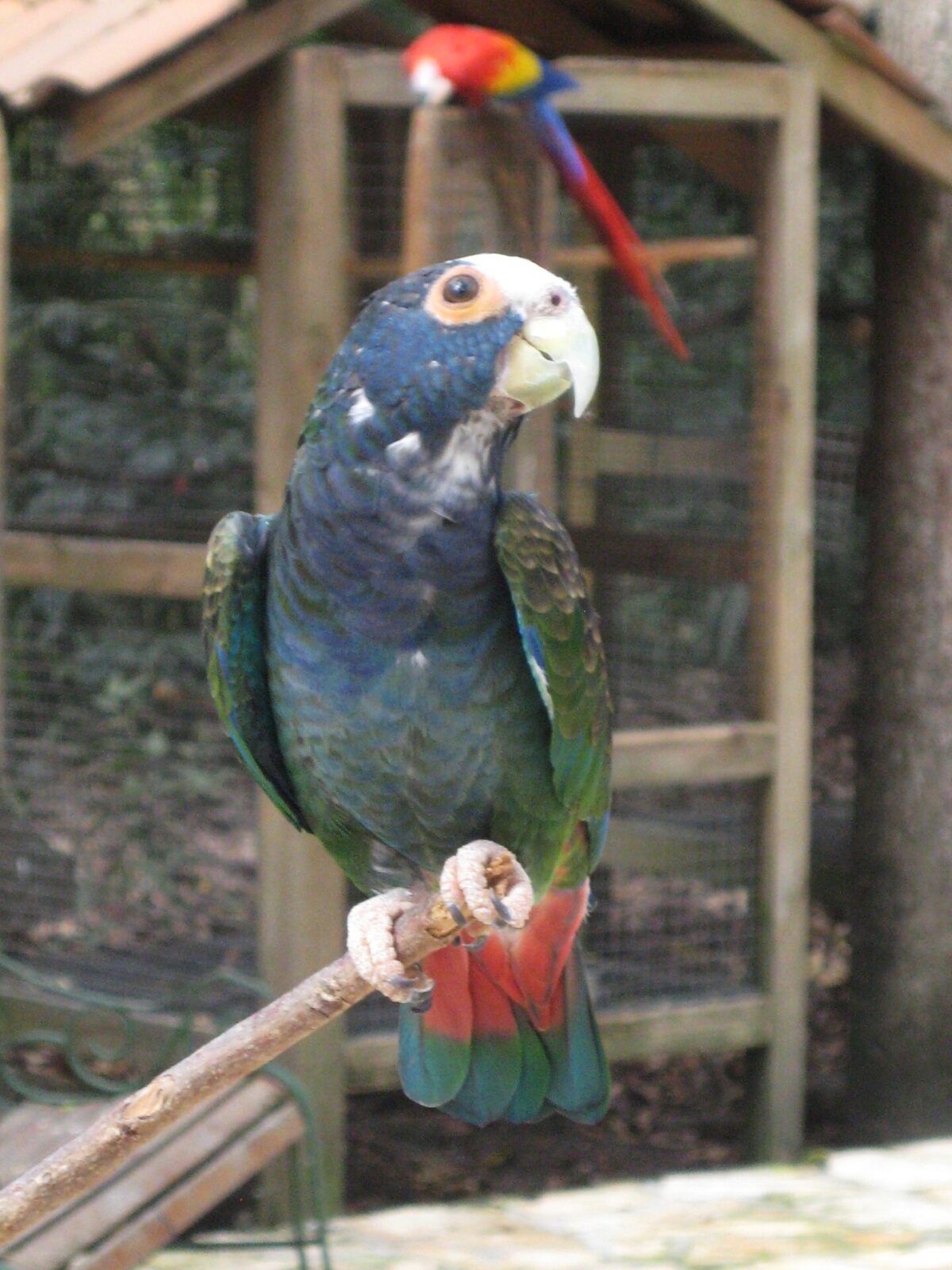
WHITE-CROWNED PARROT
Pionus senilis
DESCRIPTION
The White-Crowned Parrot, or Pionus senilis, is a medium-sized parrot known for its distinctive white crown and green body. It has a short, square tail and a relatively stout build, with a beak that is strong enough to crack open seeds and nuts. These parrots are social and often found in flocks, displaying playful behavior and vocalizations that include a variety of whistles and squawks.
FUN FACTS
- White-Crowned Parrots are known for their intelligence and ability to mimic sounds, including human speech, which makes them popular pets
- They have a unique way of communicating with each other through a series of whistles and calls that can vary significantly between individuals
- | These parrots are also known for their playful nature, often engaging in acrobatic displays and social interactions that showcase their agility and curiosity
- In the wild, they play an important role in seed dispersal, helping to maintain the health of their forest ecosystems
QUICK INFO
Lifespan20-30 years in captivity
Average Weight200-250 g
Average Length25-30 cm
Diet TypeHerbivore
Social Structuregroup — they are typically found in flocks, which can enhance their foraging efficiency and provide safety in numbers.
Activity PatternDiurnal
Breeding SeasonSpring (March-May)
- Habitat
- These parrots inhabit tropical and subtropical forests, often near water sources. They prefer areas with abundant fruiting trees and dense foliage for foraging and nesting.
- Biomes
- Tropical Rainforest, Subtropical Forest
- Native Range
- The White-Crowned Parrot is native to Central America, particularly found in countries like Mexico and parts of Belize and Guatemala.
- Continent
- North America, Central America
- Countries
- Mexico, Belize, Guatemala
- Diet
- White-Crowned Parrots primarily feed on seeds, fruits, and nuts, which they forage for in their natural habitat. They are known to enjoy a variety of plant materials, making them adaptable in their feeding habits.
- Diet Type
- Herbivore
- Favorite Food
- seeds, fruits, nuts
- Social Structure
- group — they are typically found in flocks, which can enhance their foraging efficiency and provide safety in numbers.
- Activity Pattern
- Diurnal
- Group Size
- 5-30
- Territorial
- 0
 CR
CR
 LC
LC
200-250 g
Weight
25-30 cm
Length
- Coloration
- The plumage is predominantly green with a distinctive white crown and a red under the tail.
- Lifespan
- 20-30 years in captivity
- Offspring per Birth
- 2-4
- Sexual Maturity
- 2-3 years
- Breeding Season
- Spring (March-May)
LC
Least Concern
IUCN Red List Status
- Population Status
- The population is currently stable, but habitat loss poses a potential threat.
- Wild Population Estimate
- 50,000-100,000
- Population Trend
- Stable
- Endangered
- 0
- Threats
- Main threats include habitat destruction due to deforestation and the illegal pet trade. These factors can lead to localized declines in their populations.
- Predators
- Hawks, snakes, and larger birds of prey are known to prey on White-Crowned Parrots.
- Defense Mechanisms
- They often rely on their ability to fly quickly and their social structure to evade predators.
- Compatible Animals
- other parrot species, small birds
- Found in Zoos
- Common