


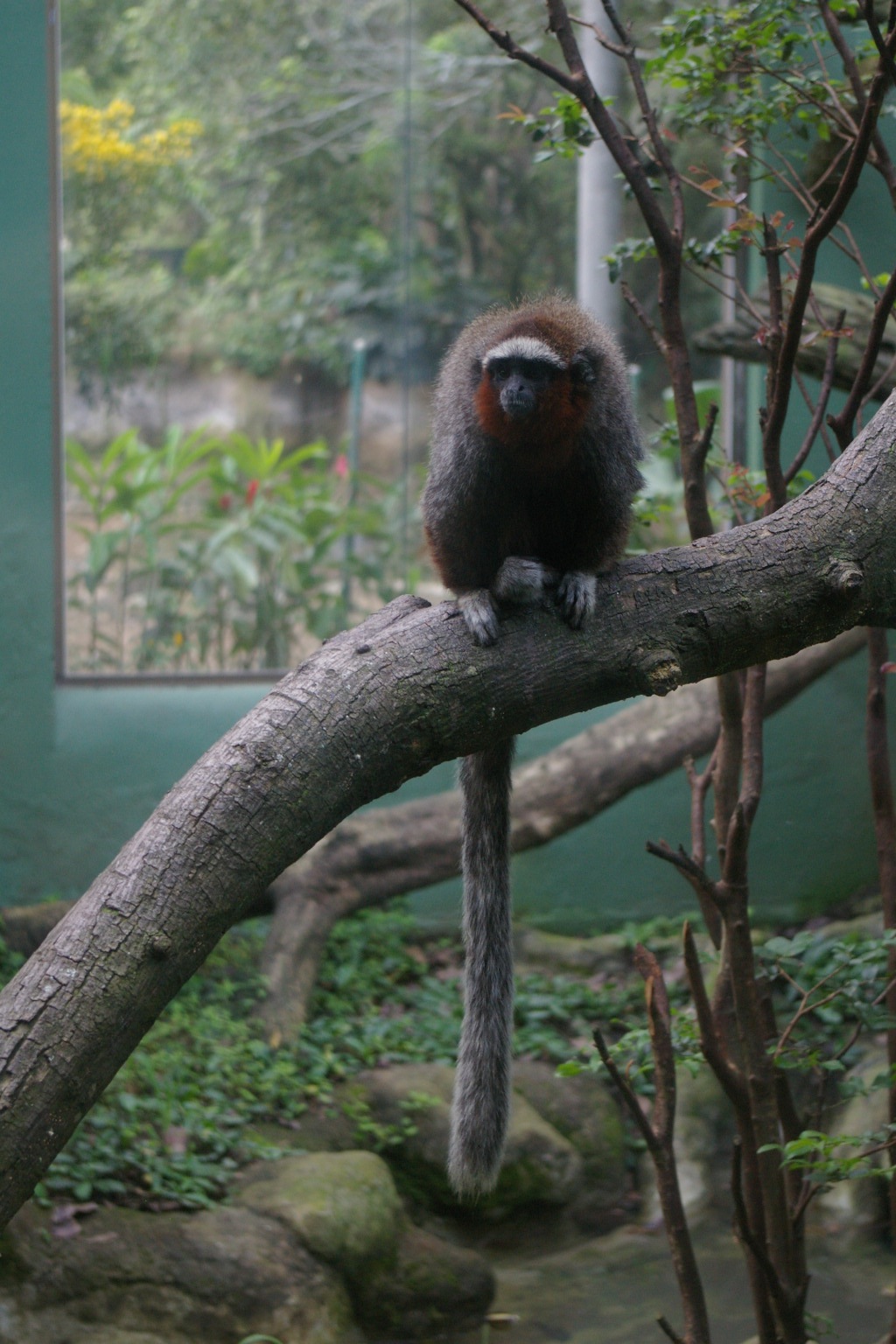
WHITE-EARED TITI
Callicebus ornatus
DESCRIPTION
White-eared Titi (Callicebus ornatus) is also known as the Ornate Titi, characterized by its distinctive white ear tufts and a generally soft, grayish-brown fur. This species exhibits a strong social structure, often forming monogamous pairs that engage in mutual grooming and vocalizations to strengthen their bond. Inhabiting the dense forests of South America, they play a crucial role in their ecosystem by aiding in seed dispersal through their fruit-based diet.
FUN FACTS
- White-eared Titis are known for their strong pair bonds, often seen grooming each other and engaging in playful behavior, which helps to reinforce their social structure
- Additionally, they have a unique way of communicating through a series of whistles and chirps, which can be heard throughout their forest habitat, making them one of the more vocal primate species
QUICK INFO
Lifespan15-20 years in the wild, up to 25 in captivity
Average Weight1.5-2.5 kg
Average Length40-50 cm
Diet TypeHerbivore
Social StructureThey typically form monogamous pairs, often seen together and caring for their young cooperatively.
Activity PatternDiurnal
Breeding SeasonYear-round, with peaks depending on local conditions
- Habitat
- These primates thrive in tropical and subtropical forests, often found in the canopy layer where they can easily access their food sources. They prefer areas with dense vegetation that provide both food and shelter from predators.
- Biomes
- Tropical Rainforest
- Native Range
- The native range of the White-eared Titi includes parts of the Amazon Basin, particularly in Brazil and surrounding regions.
- Continent
- South America
- Countries
- Brazil, Bolivia, Peru
- Diet
- White-eared Titis primarily consume fruits, leaves, and flowers, showcasing a preference for ripe fruits when available.
- Diet Type
- Herbivore
- Favorite Food
- fruits, leaves, flowers
- Social Structure
- They typically form monogamous pairs, often seen together and caring for their young cooperatively.
- Activity Pattern
- Diurnal
- Group Size
- 2-6
- Territorial
- 1
 LC
LC
1.5-2.5 kg
Weight
40-50 cm
Length
- Coloration
- Grayish-brown fur with distinctive white ear tufts and a darker face.
- Lifespan
- 15-20 years in the wild, up to 25 in captivity
- Gestation Period
- 150 days
- Offspring per Birth
- 1-2
- Sexual Maturity
- 2-3 years
- Breeding Season
- Year-round, with peaks depending on local conditions
LC
Least Concern
IUCN Red List Status
- Population Status
- The population of White-eared Titis is currently stable, but habitat loss poses a potential threat.
- Wild Population Estimate
- Unknown
- Population Trend
- Stable
- Endangered
- 0
- Threats
- Main threats include habitat destruction due to logging and agricultural expansion, which reduces their living space and food sources. Additionally, they may face risks from hunting in some areas.
- Predators
- Main predators include large birds of prey and snakes, which can pose a threat to both adults and young.
- Defense Mechanisms
- They rely on their agility and ability to navigate through the trees to escape predators, as well as their vocalizations to alert others of danger.
- Found in Zoos
- Uncommon