


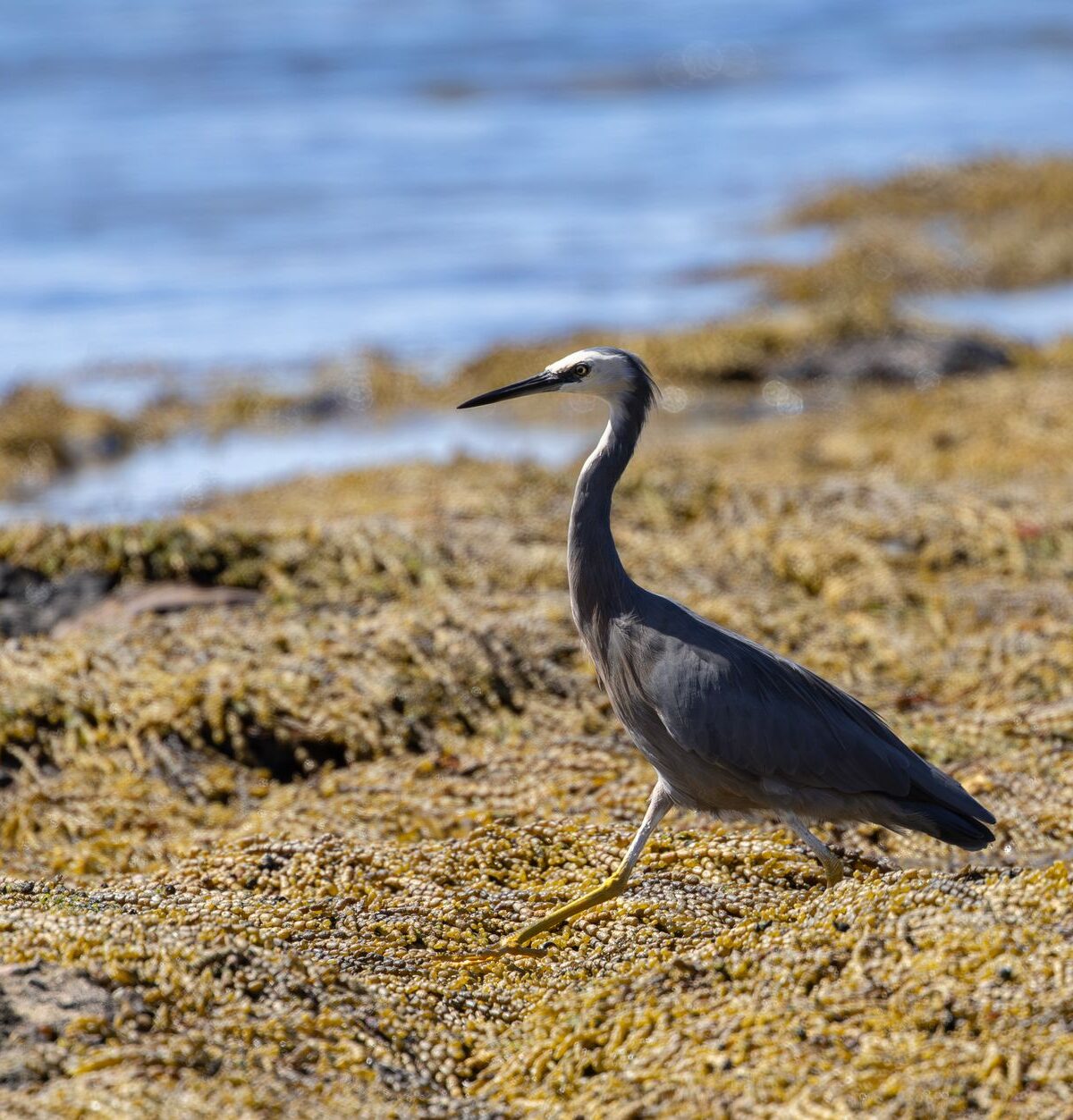
WHITE-FACED HERON
Egretta novaehollandiae
DESCRIPTION
White-faced Heron (Egretta novaehollandiae) is a medium-sized heron characterized by its long legs and neck, with a distinctive white face and a grayish-blue body. This species is often seen wading in shallow waters, where it uses its keen eyesight to hunt for fish and other aquatic prey. White-faced Herons are known for their graceful flight and can often be spotted in both solitary and small group settings, showcasing their adaptability to various environments.
FUN FACTS
- White-faced Herons are known for their unique hunting technique, where they often stand motionless for long periods, waiting for fish to come within striking distance
- This patience allows them to be highly effective hunters, often catching their prey with remarkable speed
- | In addition to their hunting skills, White-faced Herons are also known for their elaborate courtship displays during the breeding season, which include intricate dances and vocalizations to attract mates
- These displays are not only a way to find a partner but also serve to strengthen pair bonds
QUICK INFO
Lifespan10-15 years in the wild
Average Weight0.7-1.2 kg
Average Length0.6-0.7 m
Diet TypePiscivore
Social Structuresolitary or in small groups, often seen alone while foraging.
Activity PatternDiurnal
Breeding SeasonSpring to early summer
- Habitat
- White-faced Herons inhabit a variety of wetland environments, including estuaries, marshes, and coastal areas. They are also found in freshwater habitats such as rivers and lakes, demonstrating a preference for shallow waters.
- Biomes
- Wetlands, Coastal
- Native Range
- The native range of the White-faced Heron extends across Australia, New Zealand, and parts of Papua New Guinea.
- Continent
- Australia, Oceania
- Countries
- Australia, New Zealand, Papua New Guinea
- Diet
- White-faced Herons primarily feed on fish, crustaceans, and amphibians, using their sharp beaks to catch prey in the water. They are skilled hunters, often standing still for long periods before striking.
- Diet Type
- Piscivore
- Favorite Food
- fish
- Social Structure
- solitary or in small groups, often seen alone while foraging.
- Activity Pattern
- Diurnal
- Group Size
- 1-5
- Territorial
- 0
 LC
LC
0.7-1.2 kg
Weight
0.6-0.7 m
Length
- Coloration
- The White-faced Heron has a predominantly gray body with a striking white face and neck, complemented by long, slender legs.
- Lifespan
- 10-15 years in the wild
- Offspring per Birth
- 2-5
- Sexual Maturity
- 2-3 years
- Breeding Season
- Spring to early summer
LC
Least Concern
IUCN Red List Status
- Population Status
- The population of White-faced Herons is currently stable, with no significant declines reported.
- Wild Population Estimate
- 50,000-100,000
- Population Trend
- Stable
- Endangered
- 0
- Threats
- Main threats to the White-faced Heron include habitat loss due to wetland drainage and pollution. Climate change also poses a risk by altering their natural habitats.
- Predators
- Eggs and chicks are vulnerable to predation by birds of prey and larger mammals, while adults may be threatened by larger raptors.
- Defense Mechanisms
- White-faced Herons rely on their ability to fly away quickly to escape predators, and they often use their camouflage to blend into their surroundings.
- Found in Zoos
- Uncommon