


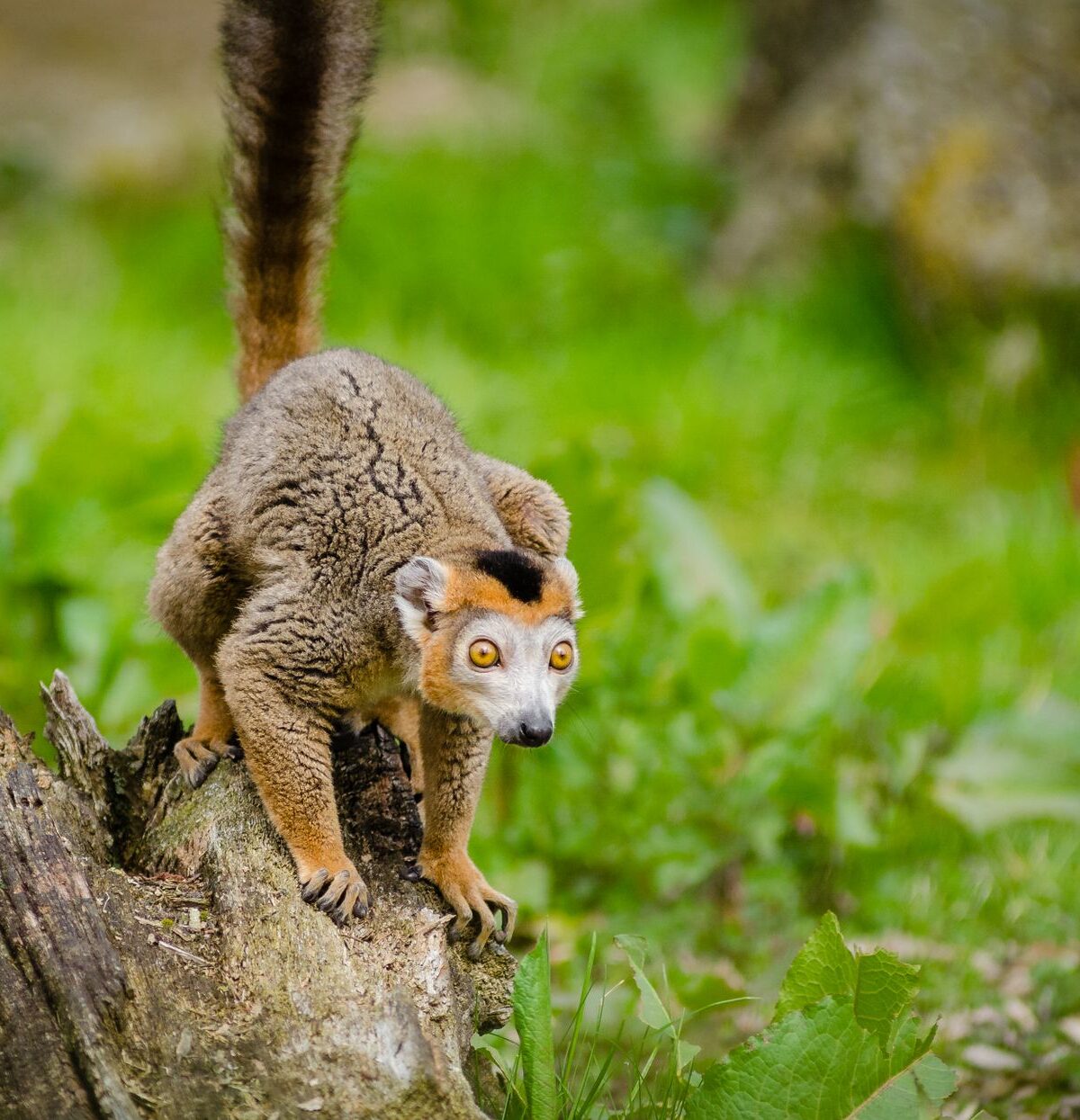
WHITE-FRONTED BROWN LEMUR
Eulemur fulvus
DESCRIPTION
White-Fronted Brown Lemur (Eulemur fulvus) is a medium-sized primate characterized by its distinctive white facial markings and brown fur. These lemurs are known for their social behavior, often living in groups that exhibit complex social structures. They are primarily arboreal, spending most of their time in trees, where they forage for food and interact with other members of their group.
FUN FACTS
- White-Fronted Brown Lemurs are known for their strong social bonds, often seen grooming each other to reinforce relationships
- They also have a unique vocal communication system, using different calls to convey various messages, such as alerts to danger or calls to gather the group
QUICK INFO
Lifespan15-20 years in the wild, up to 30 in captivity
Average Weight2.5-3.5 kg
Average Length40-50 cm
Diet TypeHerbivore
Social StructureThey typically live in groups, which can consist of several females and their offspring, with males often being more solitary or forming smaller bachelor groups.
Activity PatternDiurnal
Breeding SeasonSpring (September-November)
- Habitat
- White-Fronted Brown Lemurs inhabit a variety of forest types, including tropical rainforests and dry deciduous forests. They are highly adaptable and can also be found in secondary forests.
- Biomes
- Tropical Rainforest, Dry Forest
- Native Range
- They are native to Madagascar, specifically found in the western and central parts of the island.
- Continent
- Africa
- Countries
- Madagascar
- Diet
- They primarily consume fruits, leaves, and flowers, with a preference for ripe fruits when available.
- Diet Type
- Herbivore
- Favorite Food
- fruits, leaves
- Social Structure
- They typically live in groups, which can consist of several females and their offspring, with males often being more solitary or forming smaller bachelor groups.
- Activity Pattern
- Diurnal
- Group Size
- 5-15
- Territorial
- 1
 LC
LC

2.5-3.5 kg
Weight
40-50 cm
Length
- Coloration
- They have a brownish coat with lighter facial markings and a white patch on the forehead.
- Sexual Dimorphism
- Males are generally larger than females, with more pronounced coloration differences.
- Lifespan
- 15-20 years in the wild, up to 30 in captivity
- Gestation Period
- 120 days
- Offspring per Birth
- 1-2
- Sexual Maturity
- 2-3 years
- Breeding Season
- Spring (September-November)
LC
Least Concern
IUCN Red List Status
- Population Status
- The population is currently stable, but habitat loss poses a significant threat.
- Wild Population Estimate
- 10,000-20,000
- Population Trend
- Stable
- Endangered
- 0
- Threats
- Main threats include habitat destruction due to deforestation and hunting. These factors have led to a decline in their natural habitat, impacting their population.
- Predators
- Main predators include Madagascar's native raptors and snakes, as well as introduced species like domestic cats and dogs.
- Defense Mechanisms
- They rely on their agility and ability to climb trees to escape from predators.
- Found in Zoos
- Common