


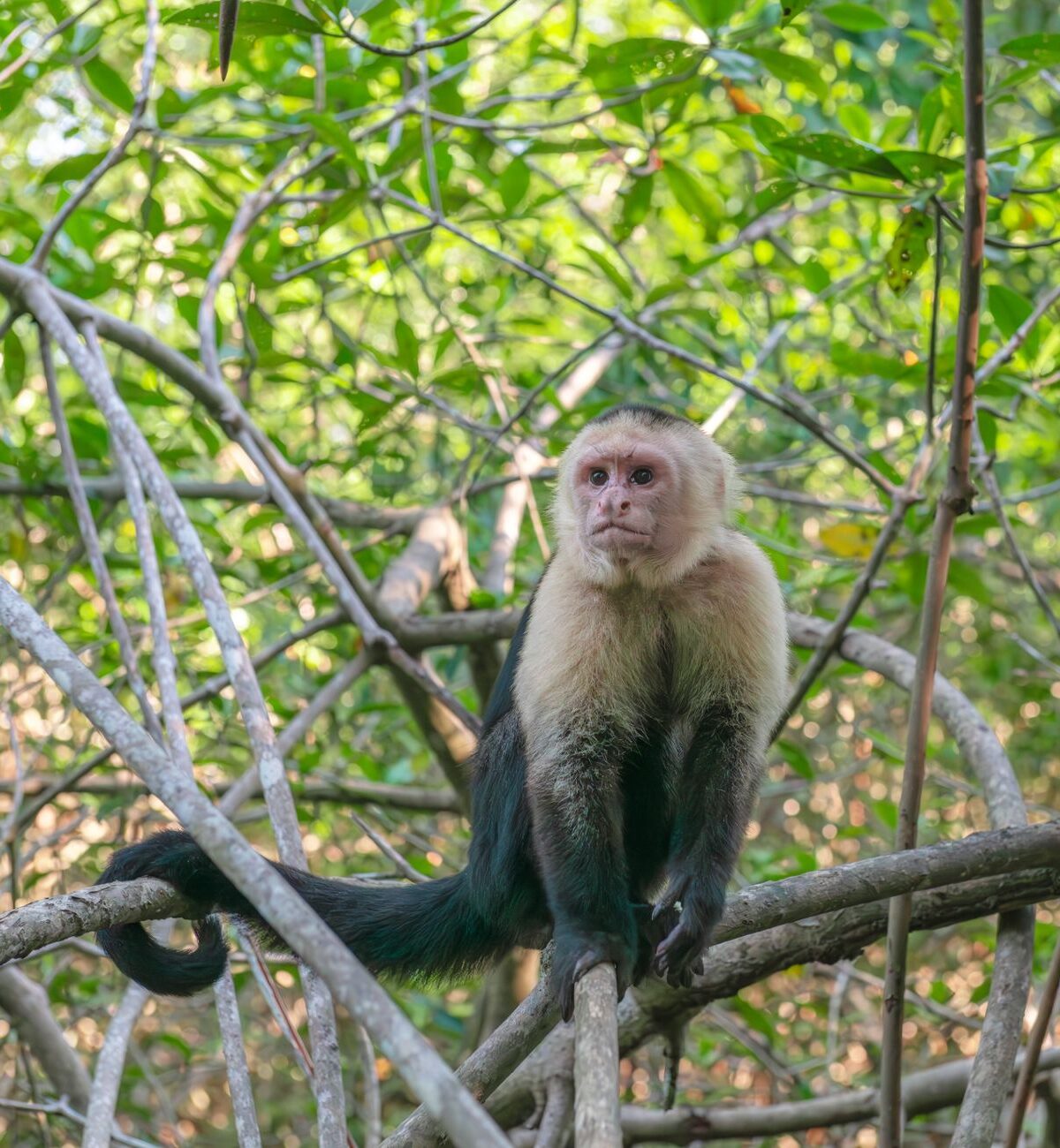
WHITE-HEADED CAPUCHIN
Cebus capucinus
DESCRIPTION
White-Headed Capuchin (Cebus capucinus) is commonly known as the Capuchin Monkey, characterized by its distinctive white head and dark brown to black body. These monkeys are highly intelligent and exhibit complex social behaviors, often using tools to obtain food. They are also known for their playful nature and strong social bonds within their groups, which can consist of up to 30 individuals.
FUN FACTS
- White-Headed Capuchins are known for their impressive problem-solving skills, often using tools like sticks to extract insects from tree bark
- They also have a unique grooming behavior that strengthens social bonds within their groups, often spending hours grooming each other to maintain relationships and social harmony
QUICK INFO
Lifespan15-25 years in the wild, up to 30 years in captivi
Average Weight3-4 kg
Average Length40-55 cm
Diet TypeOmnivore
Social StructureThey live in groups, typically consisting of 10-30 individuals, with a matriarchal social structure.
Activity PatternDiurnal
Breeding SeasonYear-round, with peaks depending on the region
- Habitat
- White-Headed Capuchins inhabit tropical rainforests, dry forests, and secondary forests. They are often found in areas with abundant fruiting trees, which provide essential food resources.
- Biomes
- Tropical Rainforest, Dry Forest
- Native Range
- They are native to Central America, particularly from Honduras to western Panama.
- Continent
- North America, Central America
- Countries
- Honduras, Nicaragua, Costa Rica, Panama
- Diet
- They primarily eat fruits, nuts, seeds, and insects, showcasing their omnivorous diet. Occasionally, they may also consume small vertebrates.
- Diet Type
- Omnivore
- Favorite Food
- fruits, nuts, insects
- Social Structure
- They live in groups, typically consisting of 10-30 individuals, with a matriarchal social structure.
- Activity Pattern
- Diurnal
- Group Size
- 10-30
- Territorial
- 1
 LC
LC
 NT
NT
3-4 kg
Weight
40-55 cm
Length
- Coloration
- They have a distinctive white face and crown, with a dark brown to black body and limbs.
- Sexual Dimorphism
- Males are generally larger than females.
- Lifespan
- 15-25 years in the wild, up to 30 years in captivi
- Gestation Period
- 150-180 days
- Offspring per Birth
- 1-2
- Sexual Maturity
- 3-4 years
- Breeding Season
- Year-round, with peaks depending on the region
LC
Least Concern
IUCN Red List Status
- Population Status
- The population is currently stable, but habitat loss poses a threat.
- Wild Population Estimate
- 50,000-100,000
- Population Trend
- Stable
- Endangered
- 0
- Threats
- Main threats include habitat destruction due to deforestation and hunting. They are also sometimes captured for the pet trade.
- Predators
- Main predators include large birds of prey, snakes, and jaguars.
- Defense Mechanisms
- They use vocalizations to warn others of danger and can also exhibit aggressive behaviors when threatened.
- Compatible Animals
- Other primates, such as squirrel monkeys and tamarins, in zoo settings.
- Found in Zoos
- Common