


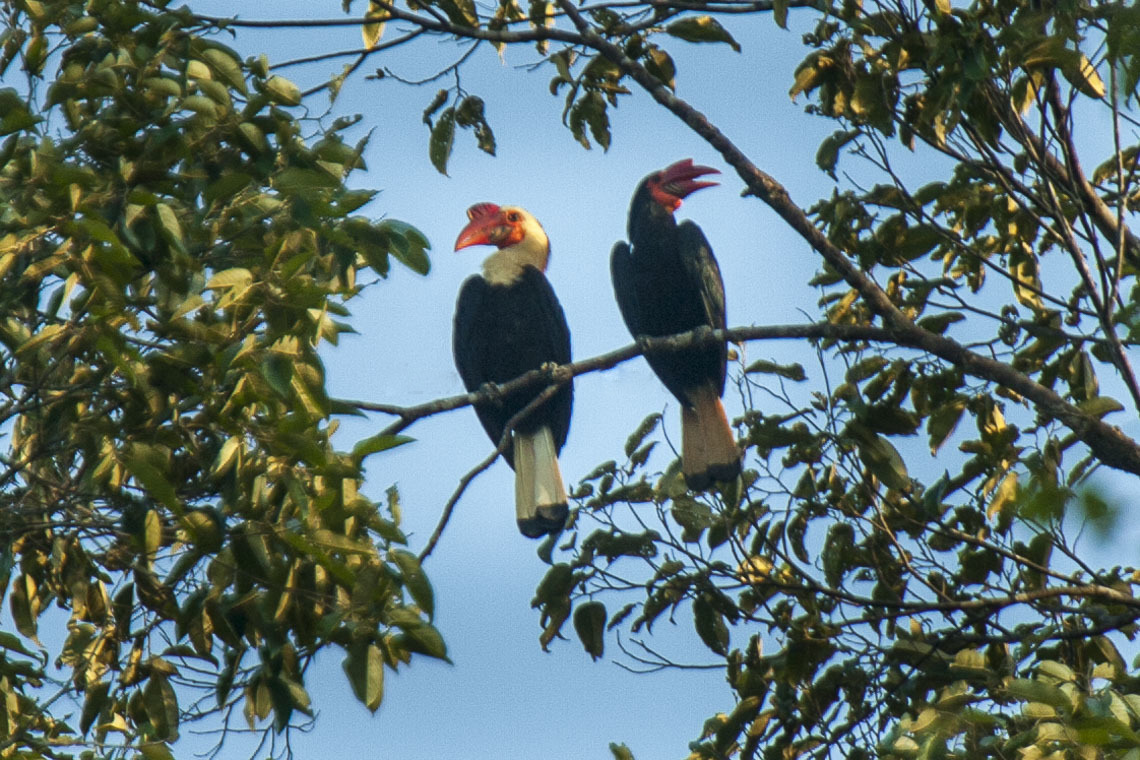
WHITE-HEADED HORNBILL
Rhabdotorrhinus leucocephalus
DESCRIPTION
White-Headed Hornbill (Rhabdotorrhinus leucocephalus) is a striking bird known for its distinctive white head and large, curved bill. This species exhibits a predominantly black body with a contrasting white crown, making it easily recognizable in its natural habitat. It is primarily found in the tropical forests of Southeast Asia, where it plays a crucial role in seed dispersal and maintaining the ecological balance.
FUN FACTS
- The White-Headed Hornbill is known for its unique nesting behavior, where the female seals herself inside a tree cavity during breeding, relying on the male to bring her food
- This fascinating adaptation helps protect the young from predators and environmental threats.| These hornbills play a vital role in their ecosystem as seed dispersers, helping to maintain the health of their forest habitats
- Their feeding habits contribute to the growth of various plant species, showcasing the interconnectedness of wildlife and vegetation
QUICK INFO
LifespanUp to 20 years in the wild.
Average Weight0.5-1 kg
Average Length50-60 cm
Diet TypeOmnivore
Social StructurePairs or small groups, often seen foraging together.
Activity PatternDiurnal
Breeding SeasonSpring (March-May)
- Habitat
- This species inhabits dense tropical and subtropical forests, often favoring areas with abundant fruiting trees. It is typically found at various elevations, from lowland forests to mountainous regions.
- Biomes
- Tropical Rainforest
- Native Range
- The White-Headed Hornbill is native to the forests of Southeast Asia, particularly in regions of Indonesia and Malaysia.
- Continent
- Asia
- Countries
- Indonesia, Malaysia
- Diet
- The White-Headed Hornbill primarily feeds on fruits, insects, and small vertebrates. Its diet varies seasonally based on food availability.
- Diet Type
- Omnivore
- Favorite Food
- Fruits, insects
- Social Structure
- Pairs or small groups, often seen foraging together.
- Activity Pattern
- Diurnal
- Group Size
- 2-6
- Territorial
- 1
 VU
VU
0.5-1 kg
Weight
50-60 cm
Length
- Coloration
- Predominantly black body with a striking white head and a large yellow bill.
- Sexual Dimorphism
- Males and females are similar in appearance, but males tend to have slightly larger bills.
- Lifespan
- Up to 20 years in the wild.
- Offspring per Birth
- 2-3
- Sexual Maturity
- 2-3 years
- Breeding Season
- Spring (March-May)
LC
Least Concern
IUCN Red List Status
- Population Status
- The population is currently stable, but habitat loss poses a potential threat.
- Wild Population Estimate
- 10,000-15,000
- Population Trend
- Stable
- Endangered
- 0
- Threats
- Main threats include habitat destruction due to logging and agricultural expansion. Additionally, hunting poses a risk in some areas.
- Predators
- Large birds of prey and snakes are known to prey on young hornbills.
- Defense Mechanisms
- They use their strong bills to defend themselves and can be quite aggressive when threatened.
- Found in Zoos
- Uncommon