


WHITE-HEADED VULTURE
Trigonoceps occipitalis
DESCRIPTION
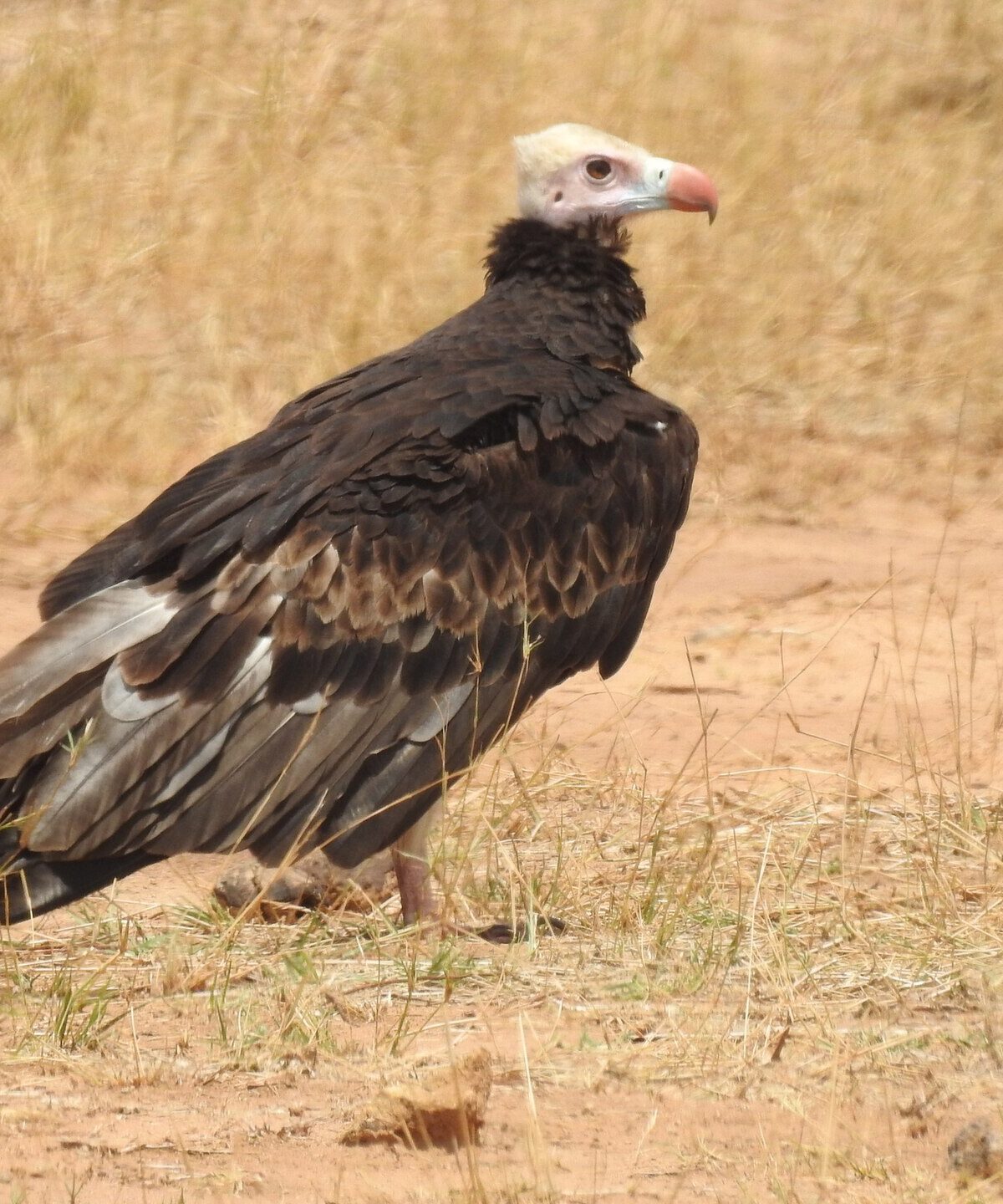
White-headed Vulture (Trigonoceps occipitalis) is commonly known as the African White-headed Vulture. This large scavenger is characterized by its distinctive white head and neck, which are devoid of feathers, a feature that helps keep it clean while feeding on carrion. It has a wingspan of about 2.2 meters and a robust body, often seen soaring in the skies of its native habitats, displaying a mix of dark brown and white plumage.
FUN FACTS
- White-headed Vultures are known for their unique feeding behavior, often waiting for larger predators to open carcasses before swooping in to feed
- They have a highly developed social structure, often communicating with each other through a series of vocalizations and body language, which helps them coordinate during feeding.| These vultures play a vital ecological role by cleaning up dead animals, which helps prevent the spread of disease
- Their featherless heads are an adaptation that allows them to feed on carrion without getting their feathers dirty, making them more efficient scavengers
QUICK INFO
Lifespan20-30 years in the wild
Average Weight3-4 kg
Average Length65-75 cm
Diet TypeCarnivore
Social StructureThey are generally seen in pairs or small groups, especially during feeding.
Activity PatternDiurnal
Breeding SeasonVaries by region, typically during the rainy season.
- Habitat
- White-headed Vultures inhabit open savannas, grasslands, and woodlands where they can easily spot food from the air. They prefer areas with scattered trees for nesting and roosting.
- Biomes
- Savanna, Grassland
- Native Range
- The species is found across sub-Saharan Africa, particularly in the eastern and southern regions.
- Continent
- Africa
- Countries
- Botswana, Namibia, South Africa, Tanzania, Zimbabwe
- Diet
- It primarily feeds on carrion, often scavenging from larger predators. This vulture plays a crucial role in the ecosystem by helping to dispose of dead animals.
- Diet Type
- Carnivore
- Favorite Food
- carrion
- Social Structure
- They are generally seen in pairs or small groups, especially during feeding.
- Activity Pattern
- Diurnal
- Group Size
- 2-10
- Territorial
- 0
3-4 kg
Weight
65-75 cm
Length
- Coloration
- The body is mostly dark brown with a striking white head and neck.
- Sexual Dimorphism
- Males and females are similar in appearance, but females are generally larger.
- Lifespan
- 20-30 years in the wild
- Offspring per Birth
- 1
- Sexual Maturity
- 4-5 years
- Breeding Season
- Varies by region, typically during the rainy season.
EN
Endangered
IUCN Red List Status
- Population Status
- The population is currently declining due to habitat loss and other threats.
- Wild Population Estimate
- Less than 10,000
- Population Trend
- Decreasing
- Endangered
- 1
- Threats
- Main threats include habitat destruction, poisoning, and hunting. These factors have led to a significant decline in their numbers across their range.
- Conservation Program
- Various local conservation efforts are in place, but more comprehensive programs are needed.
- Predators
- Humans are the primary threat, but young vultures may be vulnerable to larger birds of prey.
- Found in Zoos
- Uncommon