


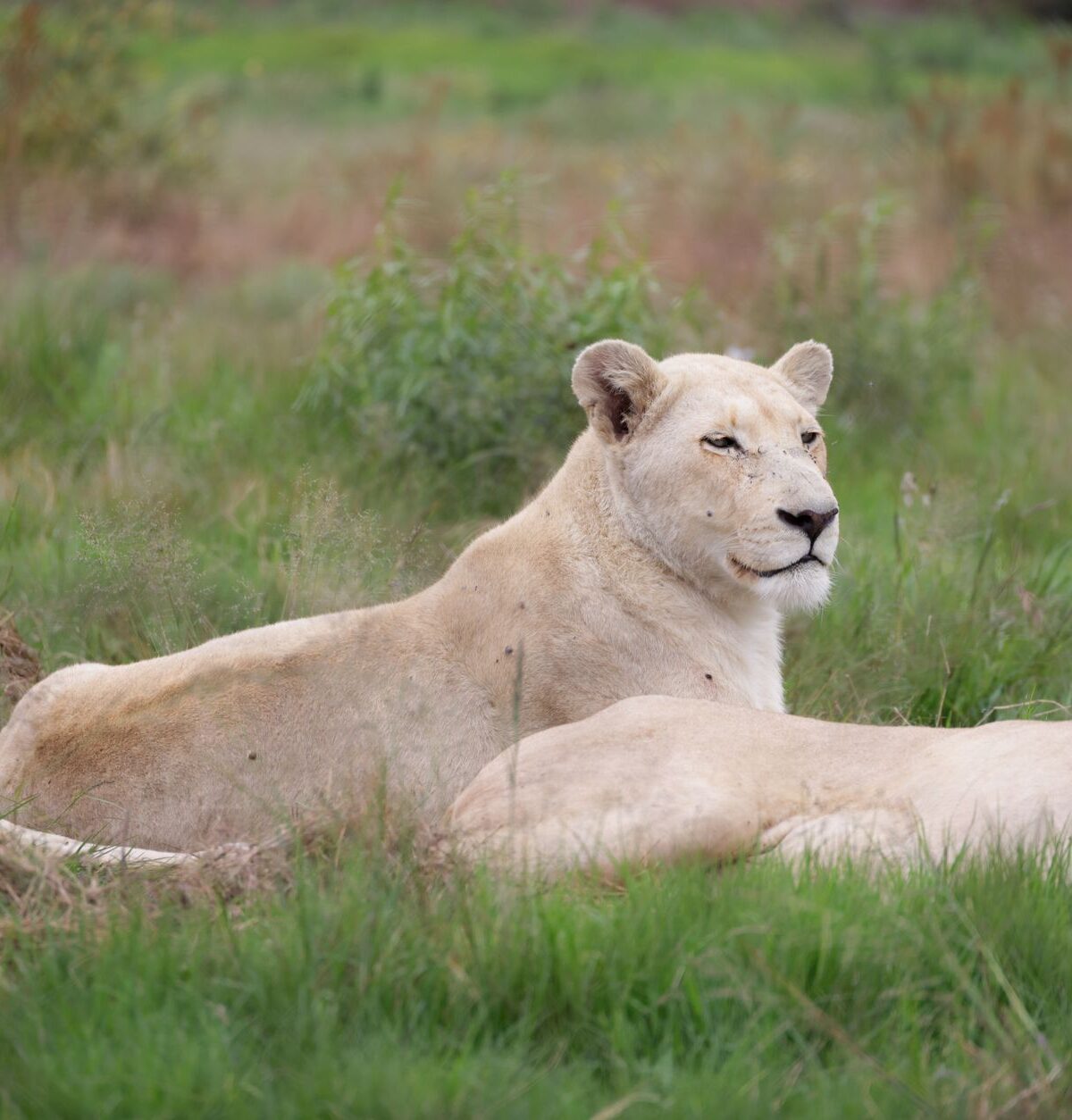
WHITE LION
DESCRIPTION
White Lion is a rare color variant of the African lion, characterized by its striking white fur, which is caused by a recessive gene. These lions exhibit the same physical features as their tawny counterparts, including a muscular build and a majestic mane in males. In the wild, they are known for their social behavior, living in prides and exhibiting complex social structures.
FUN FACTS
- White Lions are not a separate species but rather a color variant of the African lion, making them genetically similar to their tawny relatives
- Their unique coloration has made them a subject of fascination and conservation efforts, as they symbolize the need for wildlife preservation
- | The first recorded sighting of a White Lion in the wild was in the 1930s, and they have since become a symbol of rarity and beauty in the animal kingdom
- Their striking appearance has led to their popularity in zoos and wildlife parks, where they are often featured in educational programs
QUICK INFO
Lifespan10-14 years in the wild, up to 20 years in captivi
Average Weight150-250 kg
Average Length1.8-2.5 m
Diet TypeCarnivore
Social Structuregroup — they live in prides, which are family units that provide social structure and cooperative hunting.
Activity PatternDiurnal
Breeding SeasonYear-round
- Habitat
- White Lions inhabit savannas, grasslands, and open woodlands, where they can find ample prey and cover for hunting. They prefer areas with sufficient water sources and shelter.
- Biomes
- Savanna, Grassland
- Native Range
- Historically, White Lions were found in the Timbavati region of South Africa, but their range has been significantly reduced due to habitat loss and hunting.
- Continent
- Africa
- Countries
- South Africa
- Diet
- White Lions primarily hunt large ungulates, such as zebras and wildebeests, but they may also scavenge when necessary. Their hunting strategy often involves teamwork and stealth.
- Diet Type
- Carnivore
- Favorite Food
- zebras, wildebeests
- Social Structure
- group — they live in prides, which are family units that provide social structure and cooperative hunting.
- Activity Pattern
- Diurnal
- Group Size
- 3-15
- Territorial
- 1
150-250 kg
Weight
1.8-2.5 m
Length
- Coloration
- white fur with light cream or golden undertones, dark mane in males
- Sexual Dimorphism
- males are larger and have a prominent mane, while females are smaller and lack a mane
- Lifespan
- 10-14 years in the wild, up to 20 years in captivi
- Gestation Period
- 110 days
- Offspring per Birth
- 1-4
- Sexual Maturity
- 2-3 years
- Breeding Season
- Year-round
EN
Endangered
IUCN Red List Status
- Population Status
- The population of White Lions is critically low, primarily due to habitat loss and poaching.
- Wild Population Estimate
- fewer than 300
- Population Trend
- Decreasing
- Endangered
- 1
- Threats
- Main threats include habitat destruction, poaching, and human-wildlife conflict. These factors have led to a significant decline in their population.
- Conservation Program
- Various conservation programs are in place to protect White Lions, including breeding programs in captivity and habitat restoration efforts.
- Predators
- Humans are the primary threat to White Lions, as they hunt them for sport and encroach on their habitats. In the wild, adult lions have few natural predators, but cubs can be vulnerable to hyenas and other large carnivores.
- Defense Mechanisms
- White Lions rely on their social structure and strength in numbers to defend against threats. They also use their powerful roars to establish territory and communicate with pride members.
- Compatible Animals
- none
- Found in Zoos
- Uncommon