


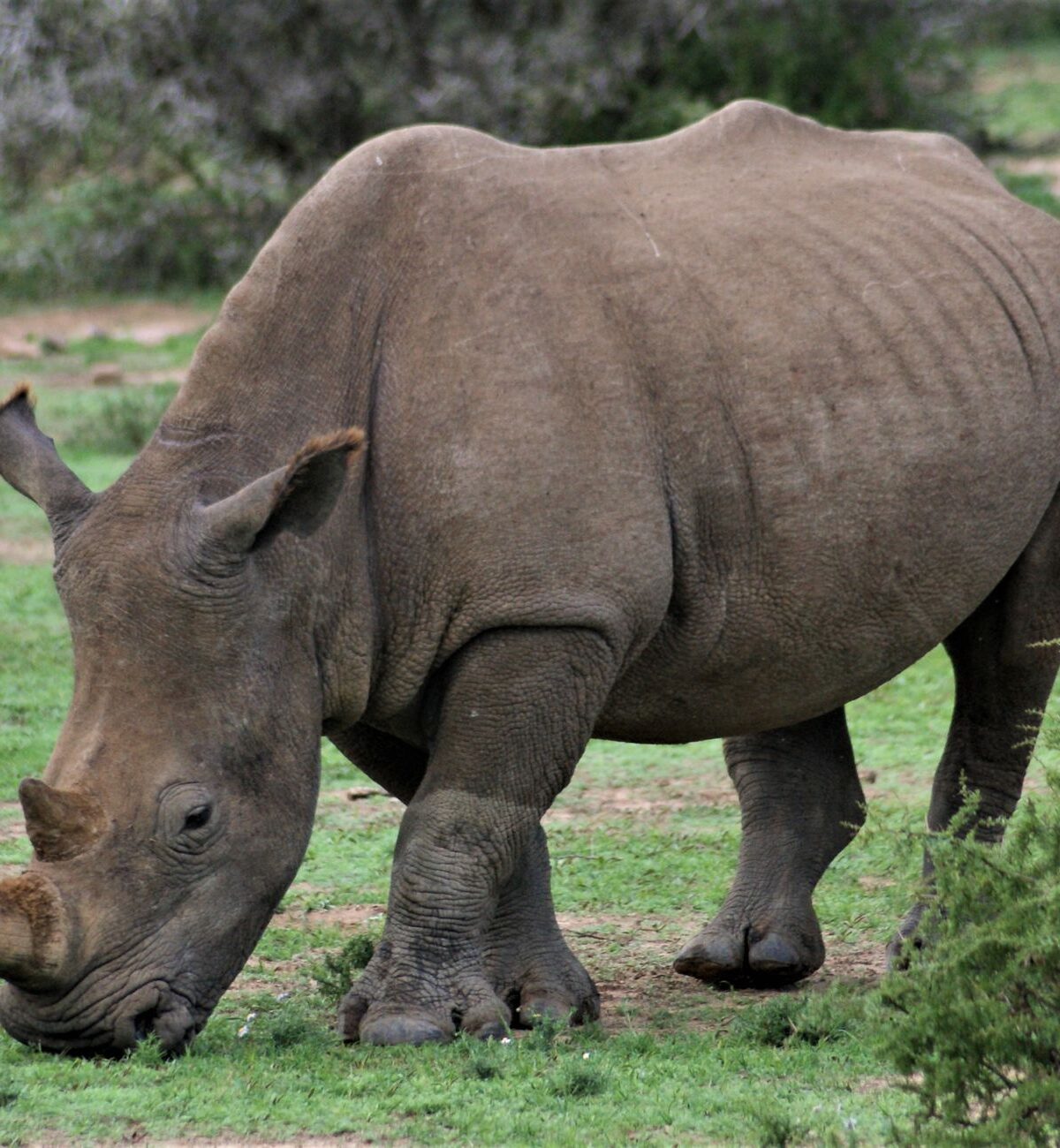
WHITE RHINOCEROS
Ceratotherium simum
DESCRIPTION
White Rhinoceros (Ceratotherium simum) is commonly known as the Square-lipped Rhinoceros due to its broad, square-shaped mouth, which is adapted for grazing on grasses. This species is the second-largest land mammal, characterized by its massive body, two horns on its snout, and a thick, grayish skin that appears wrinkled. White Rhinoceroses are generally social animals, often found in groups, and they play a crucial role in their ecosystem by maintaining the grasslands they inhabit.
FUN FACTS
- White Rhinoceroses can consume up to 150 pounds of grass in a single day, making them one of the largest grazers in their habitat
- | Their horns are made of keratin, the same material as human hair and nails, and can grow continuously throughout their lives, requiring regular wear from grazing and other activities
QUICK INFO
Lifespan40-50 years in the wild, up to 60 in captivity
Average Weight1,800-2,700 kg
Average Length3.4-4.2 m
Diet TypeHerbivore
Social Structuregroup — females often form small groups with their calves, while males are typically solitary.
Activity PatternDiurnal
Breeding SeasonYear-round
- Habitat
- White Rhinoceroses inhabit savannas, grasslands, and open woodlands, where they can find ample grazing opportunities. They prefer areas with access to water sources for drinking and wallowing.
- Biomes
- Savanna, Grassland
- Native Range
- Historically, White Rhinoceroses were found throughout southern Africa, but their range has significantly decreased due to habitat loss and poaching.
- Continent
- Africa
- Countries
- South Africa, Namibia, Zimbabwe, Kenya
- Diet
- White Rhinoceroses are herbivores that primarily graze on grasses, but they may also consume leaves and shrubs when necessary.
- Diet Type
- Herbivore
- Favorite Food
- grasses
- Social Structure
- group — females often form small groups with their calves, while males are typically solitary.
- Activity Pattern
- Diurnal
- Group Size
- 2-15
- Territorial
- 1
 VU
VU
1,800-2,700 kg
Weight
3.4-4.2 m
Length
1.5-1.8 m at shoulder
Height (Shoulder)
- Coloration
- grayish skin with a rough texture
- Sexual Dimorphism
- males are generally larger than females
- Lifespan
- 40-50 years in the wild, up to 60 in captivity
- Gestation Period
- approximately 16 months
- Offspring per Birth
- 1
- Sexual Maturity
- 3-4 years
- Breeding Season
- Year-round
VU
Vulnerable
IUCN Red List Status
- Population Status
- The population of White Rhinoceroses has been severely impacted by poaching and habitat loss, but conservation efforts have led to some recovery in certain areas.
- Wild Population Estimate
- 18,000-20,000
- Population Trend
- Increasing
- Endangered
- 1
- Threats
- The main threats to White Rhinoceroses include poaching for their horns and habitat loss due to agricultural expansion and human settlement. Conservation efforts are ongoing to protect their populations.
- Conservation Program
- Various anti-poaching initiatives and habitat protection programs are in place, particularly in South Africa.
- Predators
- Humans are the primary threat, but young rhinoceroses may be vulnerable to lions and crocodiles.
- Defense Mechanisms
- White Rhinoceroses rely on their size and strength for defense, using their horns to fend off predators and threats.
- Compatible Animals
- Zebras, Warthogs, Antelopes
- Found in Zoos
- Common