


WHITE SPOTTED PUFFERFISH
Arothron hispidus
DESCRIPTION
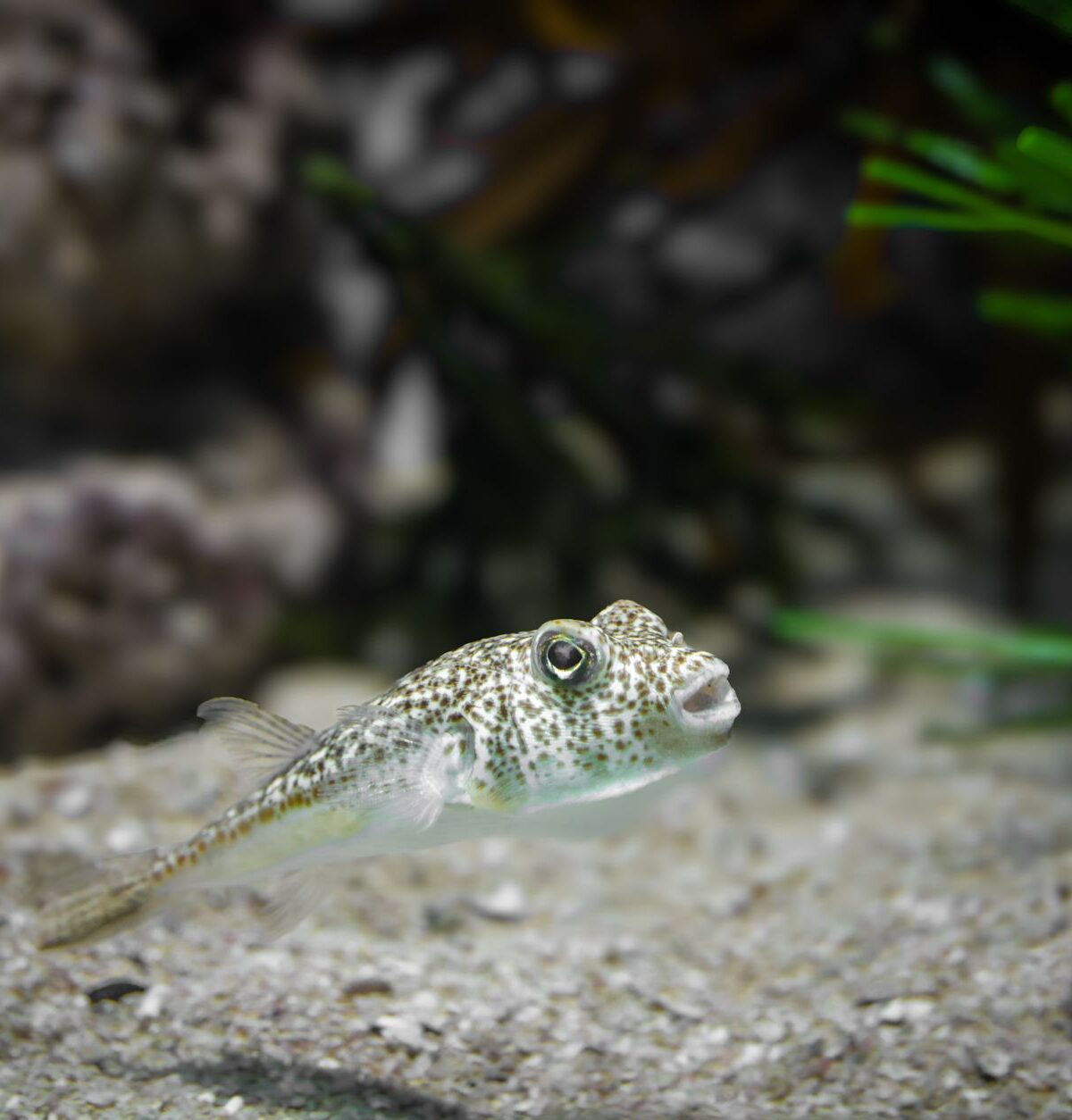
White Spotted Pufferfish (Arothron hispidus) is commonly known as the Hispid Puffer and Spotted Puffer. This species is characterized by its rounded body covered in numerous white spots against a brownish background, which provides effective camouflage among coral reefs. They are known for their ability to inflate their bodies as a defense mechanism against predators, and they exhibit a curious and often playful behavior in their natural habitat.
FUN FACTS
- White Spotted Pufferfish are known for their unique ability to inflate their bodies, which can be a fascinating sight for divers and aquarists alike
- This inflation is not just a defense mechanism; it also allows them to escape from predators by making them too large to swallow
- | Despite their cute appearance, these fish contain tetrodotoxin, a potent neurotoxin that can be deadly to predators and humans if ingested
- This toxin serves as an effective deterrent against potential threats, making them a risky choice for consumption in some cultures
QUICK INFO
Lifespan10-15 years in the wild, up to 20 in captivity
Average Weight1-2 kg
Average Length30-50 cm
Diet TypeOmnivore
Social Structuresolitary, occasionally found in pairs during breeding
Activity PatternDiurnal
Breeding SeasonYear-round in tropical regions
- Habitat
- This species inhabits shallow coastal waters, particularly around coral reefs and rocky substrates. They prefer areas with plenty of hiding spots and abundant food sources.
- Biomes
- Coral Reef, Coastal
- Native Range
- The native range of the White Spotted Pufferfish includes the tropical and subtropical waters of the Indo-Pacific region.
- Continent
- Asia, Australia, Africa
- Countries
- India, Indonesia, Philippines, Australia, Madagascar
- Diet
- White Spotted Pufferfish primarily feeds on hard-shelled invertebrates, such as mollusks and crustaceans, as well as algae and coral. Their strong beak-like teeth allow them to crack open the shells of their prey.
- Diet Type
- Omnivore
- Favorite Food
- mollusks, crustaceans, algae
- Social Structure
- solitary, occasionally found in pairs during breeding
- Activity Pattern
- Diurnal
- Group Size
- 1-2
- Territorial
- 0
 LC
LC
1-2 kg
Weight
30-50 cm
Length
- Coloration
- brownish body with numerous white spots
- Lifespan
- 10-15 years in the wild, up to 20 in captivity
- Sexual Maturity
- 2-3 years
- Breeding Season
- Year-round in tropical regions
LC
Least Concern
IUCN Red List Status
- Population Status
- The population of White Spotted Pufferfish is currently stable, but they face threats from habitat destruction and overfishing.
- Population Trend
- Stable
- Endangered
- 0
- Threats
- Main threats include habitat loss due to coral reef degradation and overfishing for the aquarium trade. Pollution and climate change also pose risks to their populations.
- Predators
- Larger fish, sharks, and some marine mammals are known to prey on White Spotted Pufferfish.
- Defense Mechanisms
- They can inflate their bodies with water or air to deter predators, making them appear larger and more difficult to swallow.
- Compatible Animals
- clownfish, tangs, wrasses
- Found in Zoos
- Uncommon