


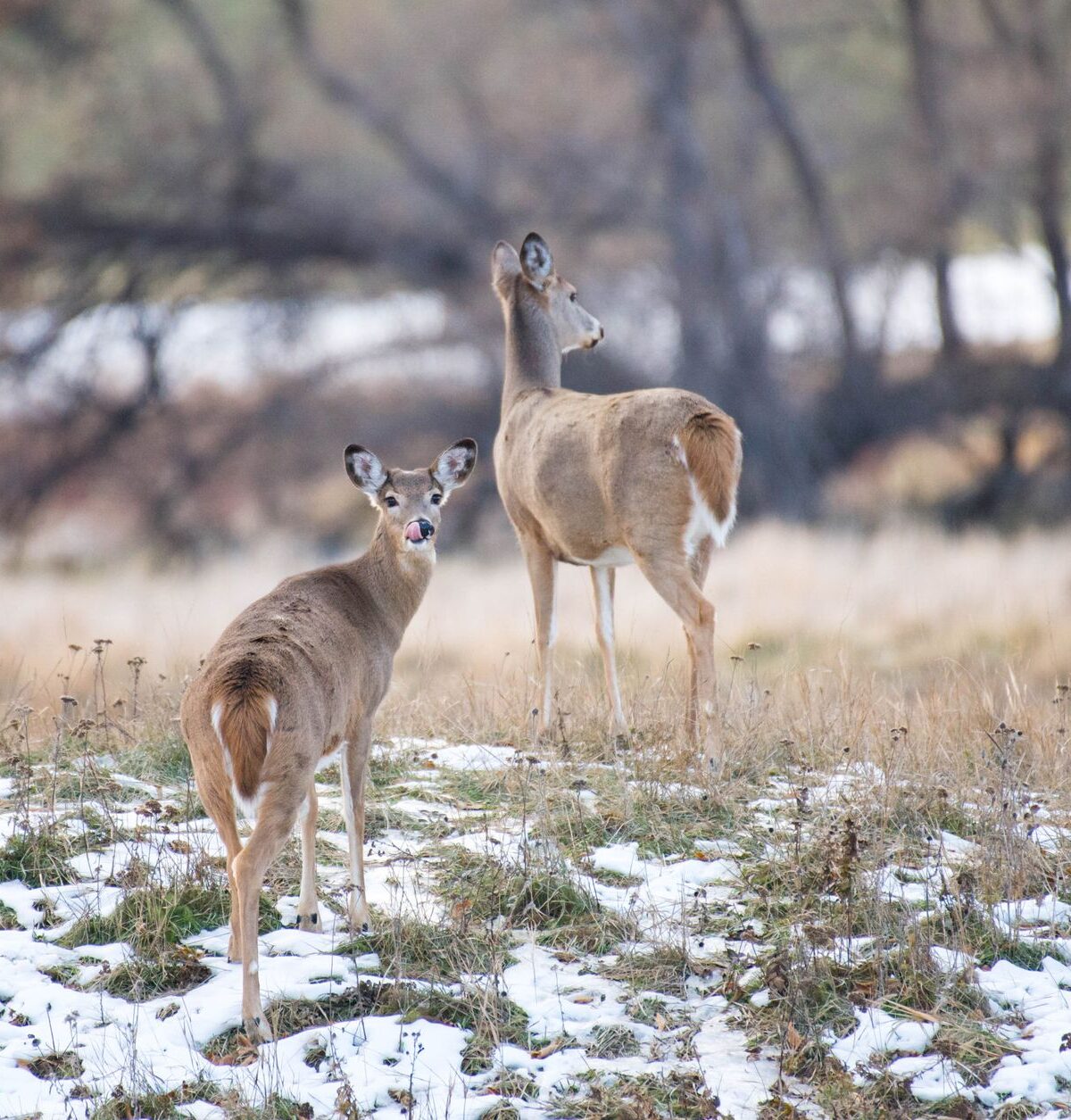
WHITE-TAILED DEER
Odocoileus virginianus
DESCRIPTION
White-tailed Deer (Odocoileus virginianus) is commonly known as Virginia Deer and Whitetail. This species is characterized by its reddish-brown coat in summer, which turns grayish-brown in winter, and its distinctive white underside of the tail, which it raises when alarmed. They are highly adaptable animals, often found in a variety of habitats, and are known for their agility and speed, making them elusive in the wild.
FUN FACTS
- White-tailed Deer are known for their impressive jumping ability, capable of leaping over obstacles up to 3 meters high
- They also have a unique communication system, using a variety of vocalizations and body language to convey messages to each other, especially during the mating season
QUICK INFO
Lifespan10-15 years in the wild, up to 20 years in captivi
Average Weight45-136 kg
Average Length1.5-2.1 m
Diet TypeHerbivore
Social StructureWhite-tailed Deer are typically social animals, often found in small groups, especially females and their young. Males are more solitary, particularly outside of the breeding season.
Activity PatternCrepuscular
Breeding SeasonFall (October-November)
- Habitat
- White-tailed Deer inhabit a range of environments, including forests, grasslands, and suburban areas. They prefer areas with a mix of open spaces and dense cover for feeding and hiding from predators.
- Biomes
- Temperate Forest, Grassland, Urban
- Native Range
- White-tailed Deer are native to North America, ranging from southern Canada to the northern parts of South America.
- Continent
- North America, South America
- Countries
- United States, Canada, Mexico
- Diet
- White-tailed Deer are herbivores, primarily feeding on leaves, fruits, nuts, and grasses. They are known to browse on a wide variety of vegetation, depending on the season and availability.
- Diet Type
- Herbivore
- Favorite Food
- Acorns, fruits, and tender shoots
- Social Structure
- White-tailed Deer are typically social animals, often found in small groups, especially females and their young. Males are more solitary, particularly outside of the breeding season.
- Activity Pattern
- Crepuscular
- Group Size
- 2-10
- Territorial
- 0
 LC
LC
LC
LC
45-136 kg
Weight
1.5-2.1 m
Length
0.9-1.2 m at shoulder
Height (Shoulder)
- Coloration
- Reddish-brown in summer, grayish-brown in winter with white underbelly
- Sexual Dimorphism
- Males are generally larger than females and have antlers.
- Lifespan
- 10-15 years in the wild, up to 20 years in captivi
- Gestation Period
- 200 days
- Offspring per Birth
- 1-3
- Sexual Maturity
- 1-2 years
- Breeding Season
- Fall (October-November)
LC
Least Concern
IUCN Red List Status
- Population Status
- The population of White-tailed Deer is generally stable and widespread across their range.
- Wild Population Estimate
- 30 million
- Population Trend
- Stable
- Endangered
- 0
- Threats
- Main threats include habitat loss due to urban development and vehicle collisions. They are also susceptible to diseases such as Chronic Wasting Disease.
- Predators
- Coyotes, wolves, mountain lions, and humans are the primary predators of White-tailed Deer.
- Defense Mechanisms
- They rely on their speed and agility to escape predators, and their keen senses help them detect danger early.
- Found in Zoos
- Common