


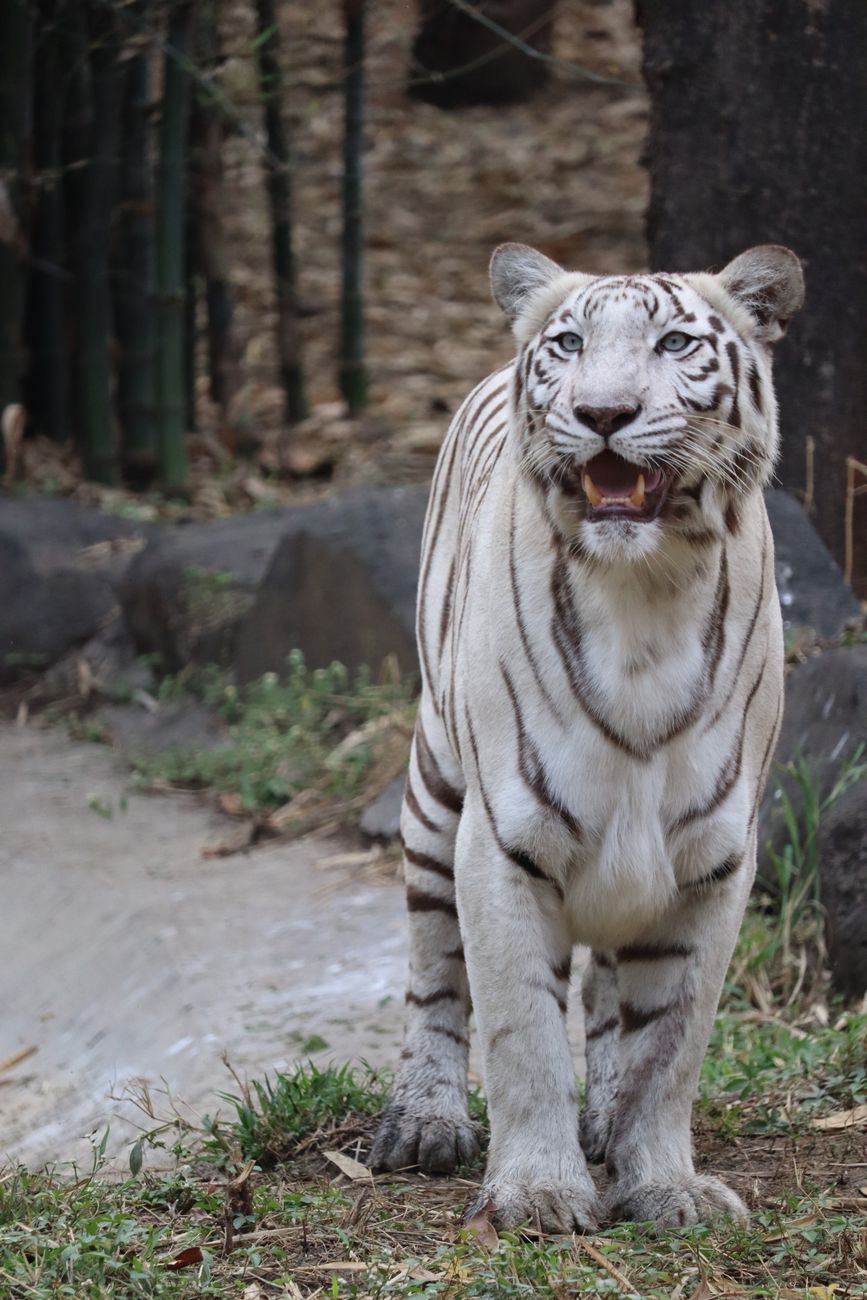
WHITE TIGER
DESCRIPTION
Also called Bengal Tiger, White Tiger is a rare color variant of the Bengal tiger, characterized by its striking white fur and black stripes. This unique coloration is due to a recessive gene and does not affect the tiger's overall size or behavior. White Tigers are solitary animals, primarily active at dawn and dusk, and they inhabit a variety of environments, including grasslands and dense forests.
FUN FACTS
- White Tigers are not a separate subspecies but rather a genetic variant of the Bengal Tiger, which means they share the same behaviors and ecological roles
- Their unique coloration has made them popular in zoos and wildlife parks, but it has also led to unethical breeding practices that can result in health issues due to inbreeding
- | The first documented White Tiger was captured in 1951 in India, and since then, they have become a symbol of beauty and rarity, often featured in films and advertisements
- Despite their popularity, the genetic diversity of White Tigers is limited, raising concerns about their long-term survival
QUICK INFO
Lifespan10-15 years in the wild, up to 20 in captivity
Average Weight150-250 kg
Average Length2.4-3.0 m
Diet TypeCarnivore
Social Structuresolitary, with mothers raising cubs alone
Activity PatternCrepuscular
Breeding SeasonYear-round, peaks in winter
- Habitat
- White Tigers typically inhabit tropical and subtropical forests, grasslands, and swamps. They require large territories with sufficient cover for hunting and raising their young.
- Biomes
- Tropical Rainforest, Grassland, Temperate Forest
- Native Range
- Historically found in the Indian subcontinent, their range has significantly decreased due to habitat loss and poaching.
- Continent
- Asia
- Countries
- India, Nepal, Bangladesh, Bhutan
- Diet
- White Tigers are carnivorous and primarily hunt large prey such as deer and wild boar. They are skilled hunters, using their stealth and strength to ambush their prey.
- Diet Type
- Carnivore
- Favorite Food
- deer, wild boar
- Social Structure
- solitary, with mothers raising cubs alone
- Activity Pattern
- Crepuscular
- Group Size
- 1-3
- Territorial
- 1
150-250 kg
Weight
2.4-3.0 m
Length
1.0 m at shoulder
Height (Shoulder)
- Coloration
- white fur with black stripes
- Sexual Dimorphism
- males are generally larger than females
- Lifespan
- 10-15 years in the wild, up to 20 in captivity
- Gestation Period
- 93-112 days
- Offspring per Birth
- 2-4
- Sexual Maturity
- 3-4 years
- Breeding Season
- Year-round, peaks in winter
EN
Endangered
IUCN Red List Status
- Population Status
- The population of White Tigers is extremely low, primarily due to inbreeding and habitat loss.
- Wild Population Estimate
- unknown, possibly extinct in the wild
- Population Trend
- Decreasing
- Endangered
- 1
- Threats
- Main threats include habitat destruction, poaching, and inbreeding due to captive breeding programs. The loss of prey species also impacts their survival.
- Conservation Program
- Various conservation programs exist, focusing on habitat preservation and anti-poaching efforts.
- Predators
- Humans are the primary threat, as they hunt tigers for their pelts and body parts. Adult White Tigers have no natural predators.
- Defense Mechanisms
- White Tigers rely on their camouflage and stealth to avoid detection by both prey and potential threats.
- Compatible Animals
- none
- Found in Zoos
- Common