


WHITE-WINGED DUCK
Asarcornis scutulata
DESCRIPTION
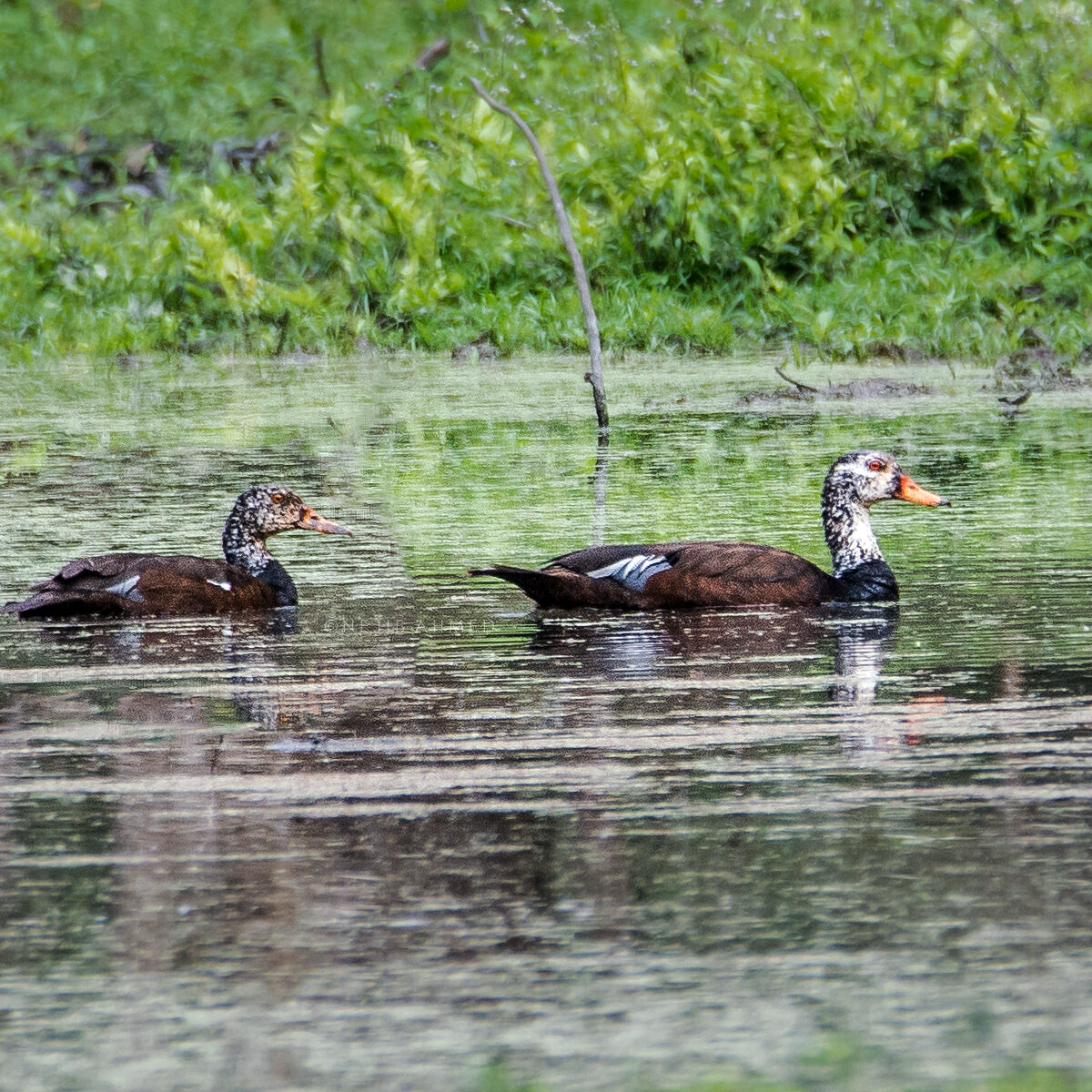
White-Winged Duck (Asarcornis scutulata) is a large, striking duck species known for its distinctive white wing patches and dark plumage. This species is primarily found in freshwater habitats, where it exhibits a preference for dense vegetation and is often seen foraging in shallow waters. White-Winged Ducks are known for their secretive behavior, often hiding among reeds and grasses, making them difficult to observe in the wild.
FUN FACTS
- White-Winged Ducks are known for their unique vocalizations, which include a series of whistles and quacks that can be heard over long distances
- They are also one of the few duck species that exhibit strong pair bonds, often staying with the same mate for multiple breeding seasons.| This species is considered a symbol of wetland conservation in Southeast Asia, highlighting the importance of preserving their natural habitats for biodiversity
- Their striking appearance and rarity make them a sought-after species for birdwatchers and conservationists alike
QUICK INFO
Lifespan10-15 years in the wild, up to 20 in captivity
Average Weight1.5-2.5 kg
Average Length60-70 cm
Diet TypeHerbivore
Social StructureThey are typically found in pairs or small groups, often consisting of a male and female.
Activity PatternCrepuscular
Breeding SeasonMonsoon season (June-September)
- Habitat
- These ducks inhabit freshwater wetlands, swamps, and marshes, often favoring areas with dense vegetation. They require clean water bodies for foraging and nesting.
- Biomes
- Wetlands, Freshwater
- Native Range
- The White-Winged Duck is native to Southeast Asia, particularly found in Myanmar, Thailand, and parts of India.
- Continent
- Asia
- Countries
- Myanmar, Thailand, India
- Diet
- White-Winged Ducks primarily feed on aquatic plants, seeds, and invertebrates. They forage by dabbling in the water and grazing on vegetation.
- Diet Type
- Herbivore
- Favorite Food
- aquatic plants, seeds
- Social Structure
- They are typically found in pairs or small groups, often consisting of a male and female.
- Activity Pattern
- Crepuscular
- Group Size
- 2-6
- Territorial
- 0
 VU
VU
 LC
LC
1.5-2.5 kg
Weight
60-70 cm
Length
- Coloration
- They have dark brown plumage with striking white wing patches and a distinctive white throat.
- Sexual Dimorphism
- Males are generally larger and have more vibrant coloration compared to females.
- Lifespan
- 10-15 years in the wild, up to 20 in captivity
- Offspring per Birth
- 6-12
- Sexual Maturity
- 1-2 years
- Breeding Season
- Monsoon season (June-September)
EN
Endangered
IUCN Red List Status
- Population Status
- The population of White-Winged Ducks is currently declining due to habitat loss and hunting.
- Wild Population Estimate
- 1,000-2,500
- Population Trend
- Decreasing
- Endangered
- 1
- Threats
- Main threats include habitat destruction due to agriculture and urbanization, as well as hunting pressures. Conservation efforts are needed to protect their remaining habitats.
- Predators
- Large birds of prey, snakes, and mammals such as foxes may prey on White-Winged Ducks, particularly their eggs and young.
- Defense Mechanisms
- They rely on their cryptic coloration and secretive behavior to avoid detection by predators.
- Found in Zoos
- Rare