


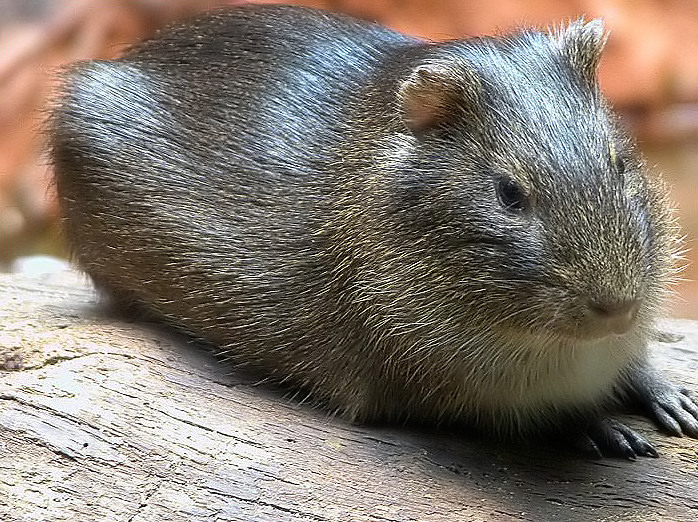
WILD GUINEA PIG
Cavia aperea
DESCRIPTION
Wild Guinea Pig (Cavia aperea) is a small rodent native to South America, characterized by its robust body and short legs. It has a coarse fur coat that varies in color, often featuring shades of brown, gray, and black, which helps it blend into its natural habitat. These animals are primarily herbivorous and are known for their social behavior, often found in groups in the wild, where they communicate through a variety of vocalizations.
FUN FACTS
- Wild Guinea Pigs are known for their strong social bonds and can often be seen grooming each other, which helps strengthen their group dynamics
- Additionally, they have a unique way of communicating through a series of chirps, whistles, and purrs, which convey different messages to their group members
QUICK INFO
Lifespan4-6 years in the wild, up to 8 years in captivity
Average Weight700-1,200 g
Average Length25-30 cm
Diet TypeHerbivore
Social Structuregroup — they often live in small to medium-sized groups, which helps them in foraging and avoiding predators.
Activity PatternDiurnal
Breeding SeasonYear-round, with peaks during the rainy season
- Habitat
- Wild Guinea Pigs inhabit grasslands, savannas, and scrub forests. They prefer areas with dense vegetation that provides cover from predators.
- Biomes
- Grassland, Savanna
- Native Range
- Cavia aperea is found across various regions of South America, including parts of Brazil, Argentina, Paraguay, and Uruguay.
- Continent
- South America
- Countries
- Brazil, Argentina, Paraguay, Uruguay
- Diet
- Wild Guinea Pigs primarily feed on grasses, seeds, and other plant materials. They are known to graze extensively in their natural habitats.
- Diet Type
- Herbivore
- Favorite Food
- grasses, seeds
- Social Structure
- group — they often live in small to medium-sized groups, which helps them in foraging and avoiding predators.
- Activity Pattern
- Diurnal
- Group Size
- 5-15
- Territorial
- 0

 VU
VU
 LC
LC
 LC
LC
700-1,200 g
Weight
25-30 cm
Length
- Coloration
- fur is typically coarse and can be brown, gray, or black, often with lighter underparts.
- Lifespan
- 4-6 years in the wild, up to 8 years in captivity
- Gestation Period
- 59-72 days
- Offspring per Birth
- 1-5
- Sexual Maturity
- 2-3 months
- Breeding Season
- Year-round, with peaks during the rainy season
LC
Least Concern
IUCN Red List Status
- Population Status
- The population of Wild Guinea Pigs is currently stable, though habitat loss poses a potential threat.
- Wild Population Estimate
- unknown
- Population Trend
- Stable
- Endangered
- 0
- Threats
- Main threats include habitat destruction due to agriculture and urbanization. Additionally, they are sometimes hunted for food in certain regions.
- Predators
- foxes, birds of prey, domestic cats, and snakes
- Defense Mechanisms
- They rely on their agility and speed to escape predators, often using burrows for shelter.
- Found in Zoos
- Uncommon