


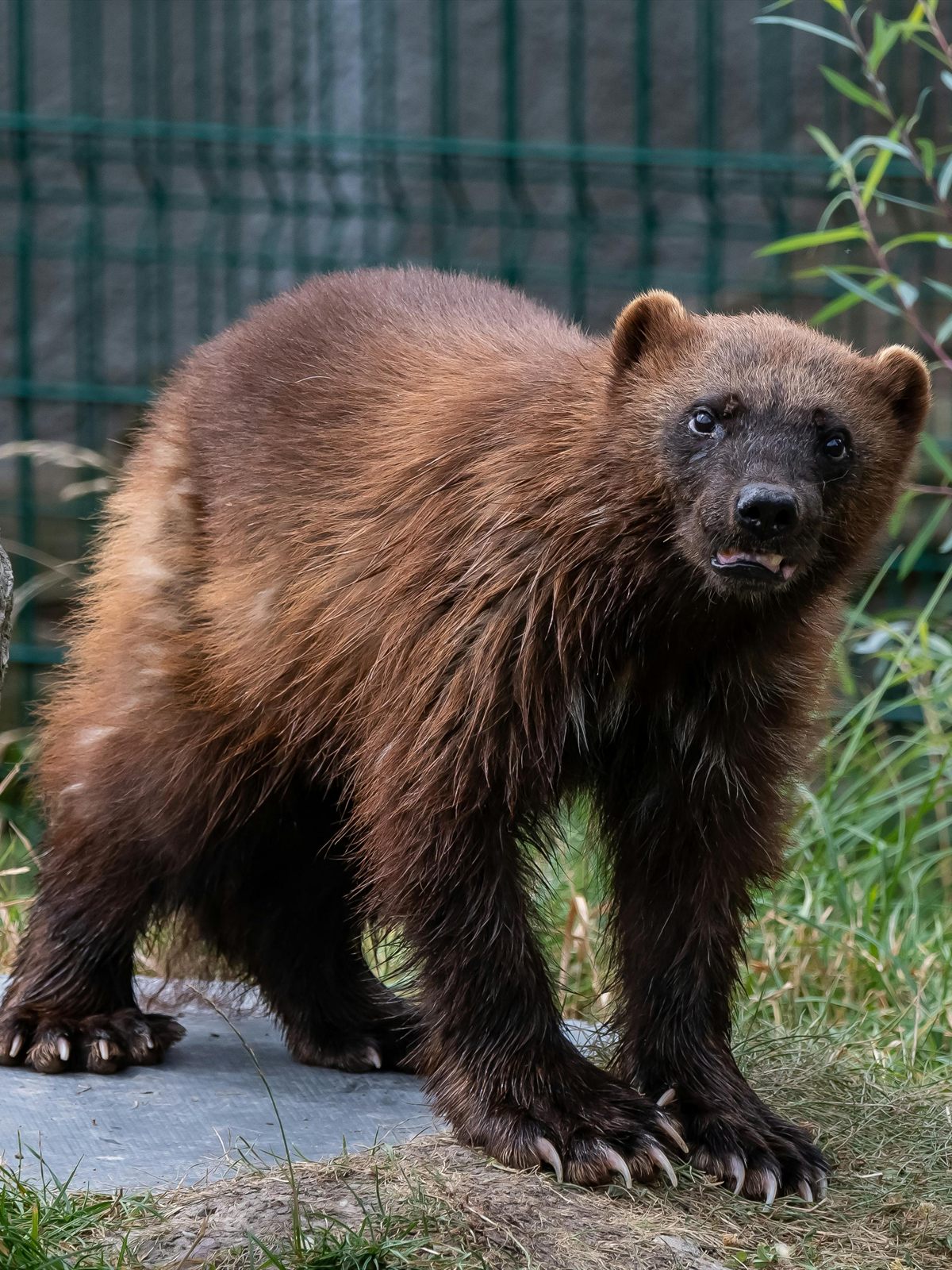
WOLVERINE
Gulo gulo
DESCRIPTION
Wolverines are robust, stocky animals with a thick fur coat that is typically dark brown with lighter stripes along their sides. They possess powerful limbs and large claws, which aid in digging and climbing. Known for their strength and tenacity, wolverines are solitary creatures that roam vast territories in search of food, often covering large distances in harsh, cold environments.
FUN FACTS
- Wolverines have an incredible sense of smell, allowing them to locate carrion buried under deep snow, which is crucial for their survival in harsh winter conditions
- | Despite their small size compared to other large carnivores, wolverines are known for their ferocity and will often take on animals much larger than themselves, showcasing their fearless nature
QUICK INFO
Lifespan10-15 years in the wild, up to 20 in captivity
Average Weight11-25 kg
Average Length65-86 cm
Diet TypeOmnivore
Social Structuresolitary, with individuals maintaining large territories
Activity PatternNocturnal
Breeding SeasonLate winter to early spring (February-April)
- Habitat
- Wolverines inhabit remote, cold regions, often found in alpine and boreal forests. They prefer areas with deep snow cover, which aids in hunting and provides insulation.
- Biomes
- Boreal Forest, Tundra
- Native Range
- Wolverines are found across the northern parts of North America, Europe, and Asia, particularly in Canada, Alaska, and parts of Scandinavia.
- Continent
- North America, Europe, Asia
- Countries
- Canada, United States, Norway, Sweden, Finland, Russia
- Diet
- Wolverines are primarily scavengers and opportunistic feeders, consuming a variety of food sources. They are known to eat carrion, small mammals, birds, and even berries when other food is scarce.
- Diet Type
- Omnivore
- Favorite Food
- carrion, small mammals
- Social Structure
- solitary, with individuals maintaining large territories
- Activity Pattern
- Nocturnal
- Group Size
- 1
- Territorial
- 1
11-25 kg
Weight
65-86 cm
Length
- Coloration
- dark brown with lighter stripes
- Sexual Dimorphism
- males are generally larger than females
- Lifespan
- 10-15 years in the wild, up to 20 in captivity
- Gestation Period
- 30-34 days
- Offspring per Birth
- 2-4
- Sexual Maturity
- 2-3 years
- Breeding Season
- Late winter to early spring (February-April)
VU
Vulnerable
IUCN Red List Status
- Population Status
- Wolverine populations are generally low and fragmented, with some areas experiencing declines due to habitat loss.
- Wild Population Estimate
- 10,000-20,000
- Population Trend
- Decreasing
- Endangered
- 1
- Threats
- Main threats include habitat destruction, climate change, and human encroachment. These factors lead to reduced prey availability and increased mortality rates.
- Conservation Program
- Wolverine conservation efforts include habitat protection and monitoring programs in various regions.
- Predators
- Humans, large carnivores such as wolves and bears may pose threats, especially to young wolverines.
- Defense Mechanisms
- Wolverines use their strength and aggressive behavior to defend themselves, often intimidating larger predators.
- Found in Zoos
- Uncommon