


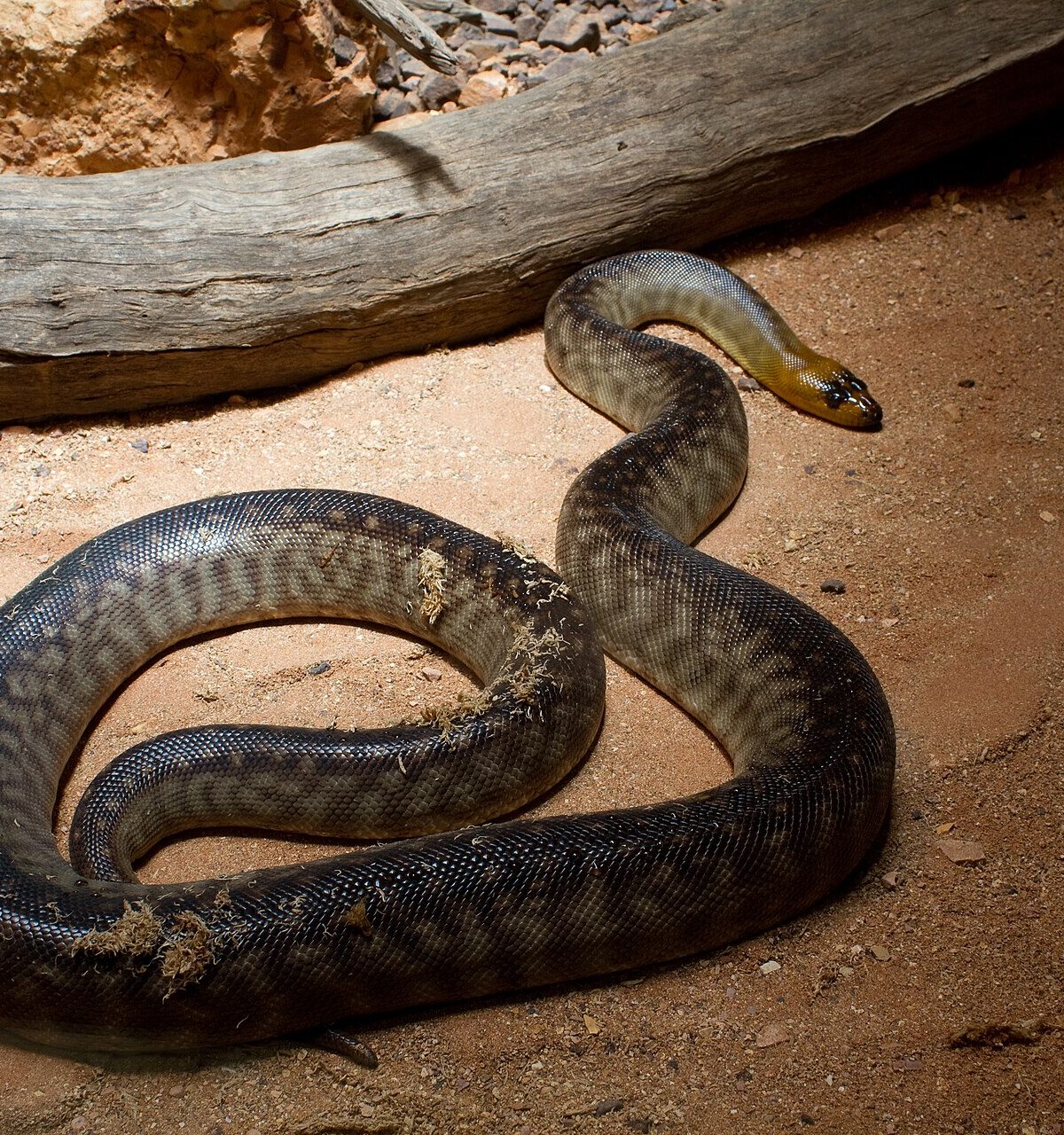
WOMA
Aspidites ramsayi
DESCRIPTION
The Woma, or Aspidites ramsayi, is a non-venomous python native to Australia. It has a distinctive appearance with a slender body, smooth scales, and a coloration that typically ranges from light brown to reddish-brown, often with darker bands or blotches. Womas are known for their burrowing behavior, often hiding in sandy or loose soil, and they are primarily nocturnal, emerging at night to hunt for prey.
FUN FACTS
- Womas are unique among pythons for their ability to burrow, which allows them to escape the heat of the day and avoid predators
- They are also known for their distinctive method of hunting, where they use their keen sense of smell to locate prey rather than relying solely on sight
- | Unlike many other snakes, Womas do not have a strong defensive bite; instead, they prefer to flee or hide when threatened
- This behavior makes them less aggressive compared to other snake species, contributing to their popularity in the exotic pet trade
QUICK INFO
Lifespan15-20 years in the wild, up to 30 in captivity
Average Weight2-5 kg
Average Length1.5-2.5 m
Diet TypeCarnivore
Social Structuresolitary
Activity PatternNocturnal
Breeding SeasonSpring (September-November)
- Habitat
- Womas inhabit a variety of environments, including arid and semi-arid regions, grasslands, and woodlands. They prefer areas with loose soil for burrowing and often seek shelter in crevices or under rocks.
- Biomes
- Desert, Grassland, Savanna
- Native Range
- The Woma is found throughout central and western Australia.
- Continent
- Australia
- Countries
- Australia
- Diet
- Womas primarily feed on small mammals, birds, and reptiles. They are constrictors, using their muscular bodies to subdue their prey before consumption.
- Diet Type
- Carnivore
- Favorite Food
- small mammals, birds
- Social Structure
- solitary
- Activity Pattern
- Nocturnal
- Group Size
- 1
- Territorial
- 0
 VU
VU
2-5 kg
Weight
1.5-2.5 m
Length
- Coloration
- light brown to reddish-brown with darker bands or blotches
- Lifespan
- 15-20 years in the wild, up to 30 in captivity
- Offspring per Birth
- 10-30
- Sexual Maturity
- 2-3 years
- Breeding Season
- Spring (September-November)
LC
Least Concern
IUCN Red List Status
- Population Status
- The Woma is currently not considered endangered, but its population is affected by habitat loss.
- Wild Population Estimate
- Unknown
- Population Trend
- Stable
- Endangered
- 0
- Threats
- Main threats include habitat destruction due to agriculture and urban development. Additionally, they may be affected by road mortality and predation by introduced species.
- Predators
- Birds of prey, larger snakes, and feral cats.
- Defense Mechanisms
- Womas can burrow quickly into the ground to escape threats and may also exhibit a defensive posture when threatened.
- Found in Zoos
- Uncommon