


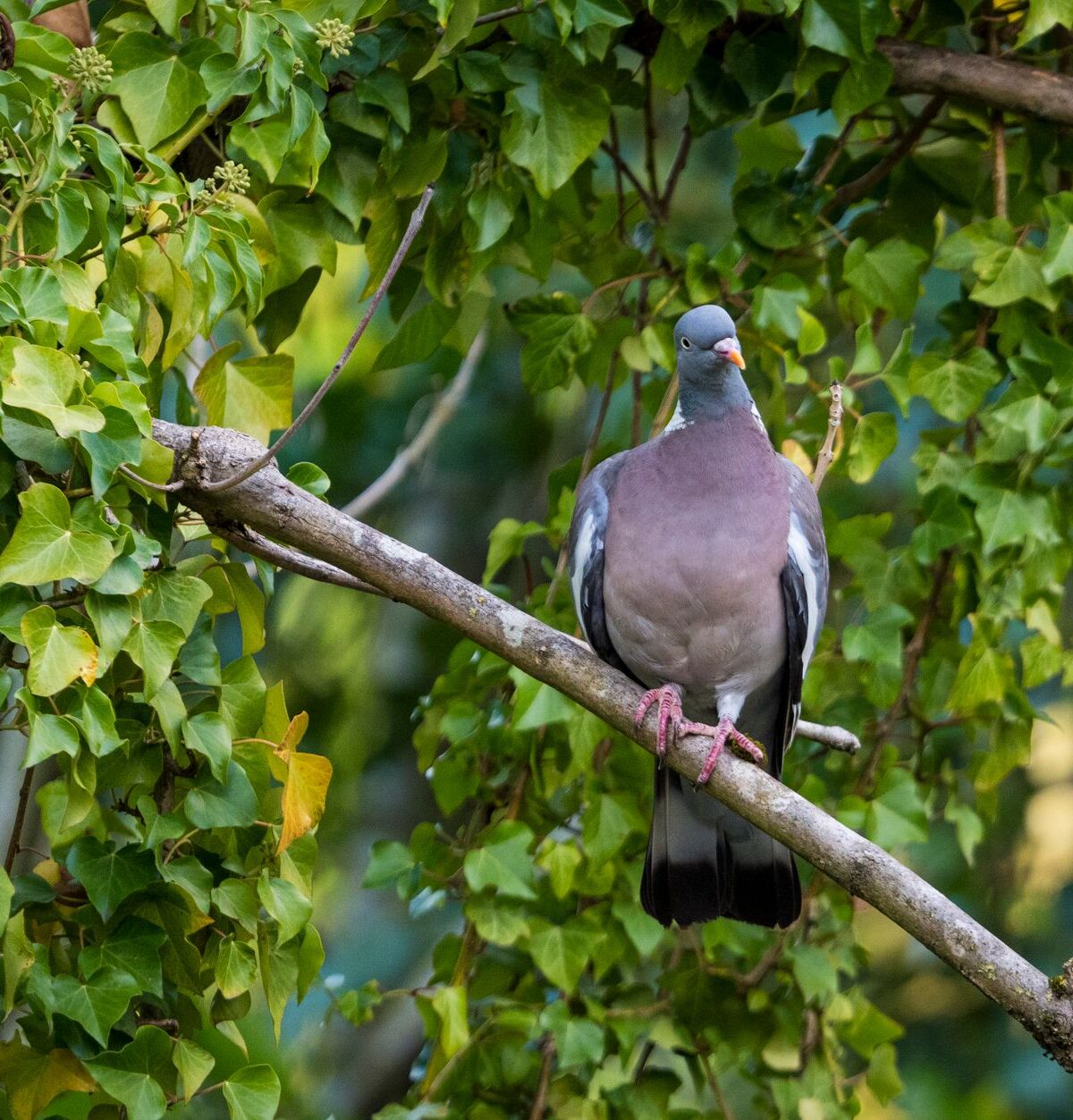
WOOD PIGEON
Columba palumbus
DESCRIPTION
Wood Pigeon (Columba palumbus) is commonly known as the European Wood Pigeon and Ringdove. This large bird features a distinctive grayish body with a white neck patch and two white wing bars, making it easily recognizable in flight. Wood Pigeons are social birds often seen in pairs or small groups, and they are known for their soft cooing calls, which are a characteristic part of their behavior.
FUN FACTS
- Wood Pigeons are known for their impressive homing abilities, often returning to their nests from distances of over 600 kilometers
- They are also capable of producing a variety of vocalizations, which they use to communicate with each other in their social groups
QUICK INFO
Lifespan3-5 years in the wild, up to 15 years in captivity
Average Weight300-500 g
Average Length38-44 cm
Diet TypeHerbivore
Social Structurepair, often seen in small groups during foraging
Activity PatternDiurnal
Breeding SeasonSpring to early summer (March-August)
- Habitat
- Wood Pigeons inhabit a range of environments, including woodlands, parks, and urban areas. They prefer areas with ample trees for nesting and open spaces for foraging.
- Biomes
- Temperate Forest, Urban
- Native Range
- Wood Pigeons are native to Europe and parts of Asia, extending from the British Isles to the western regions of Asia.
- Continent
- Europe, Asia
- Countries
- United Kingdom, France, Germany, Spain, Italy, Russia
- Diet
- Wood Pigeons primarily feed on seeds, fruits, and leaves, often foraging in fields and woodlands. They are known to consume a variety of plant materials, adapting their diet based on seasonal availability.
- Diet Type
- Herbivore
- Favorite Food
- seeds, fruits, leaves
- Social Structure
- pair, often seen in small groups during foraging
- Activity Pattern
- Diurnal
- Group Size
- 2-20
- Territorial
- 0
 LC
LC
 LC
LC
 LC
LC
300-500 g
Weight
38-44 cm
Length
- Coloration
- grayish body with a white neck patch and white wing bars
- Sexual Dimorphism
- males are generally larger than females
- Lifespan
- 3-5 years in the wild, up to 15 years in captivity
- Offspring per Birth
- 1-2
- Sexual Maturity
- 6-7 months
- Breeding Season
- Spring to early summer (March-August)
LC
Least Concern
IUCN Red List Status
- Population Status
- The Wood Pigeon population is currently stable and widespread across its range.
- Wild Population Estimate
- approximately 5 million breeding pairs in Europe
- Population Trend
- Stable
- Endangered
- 0
- Threats
- While Wood Pigeons face threats from habitat loss and hunting, they are generally adaptable and can thrive in urban environments. Predation by birds of prey can also impact local populations.
- Predators
- Sparrowhawks, Peregrine Falcons, domestic cats
- Defense Mechanisms
- Wood Pigeons rely on their ability to fly quickly and evade predators, often taking off at high speeds when threatened.
- Found in Zoos
- Uncommon