


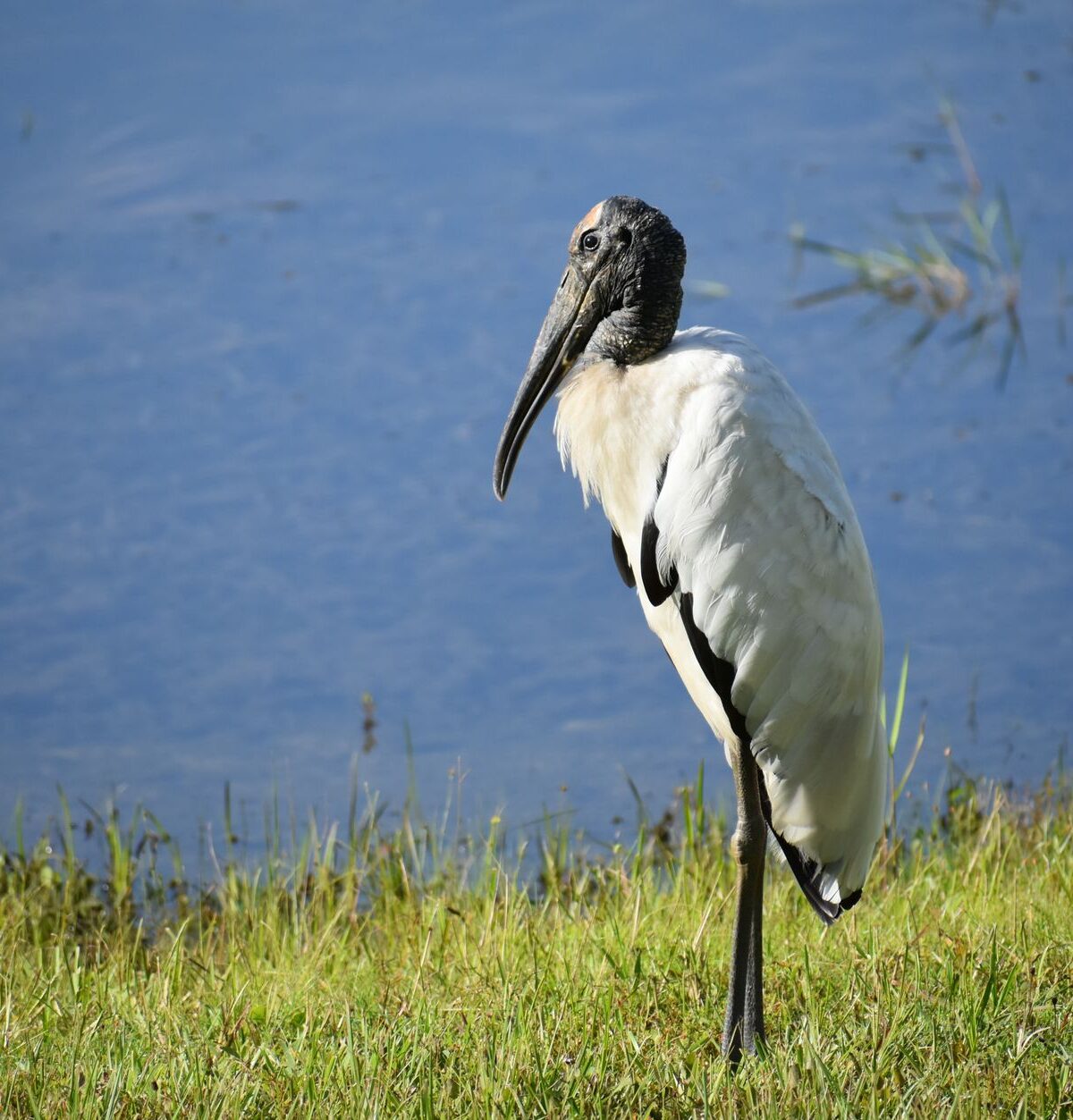
WOOD STORK
Mycteria americana
DESCRIPTION
Wood Stork (Mycteria americana) is a large wading bird known for its distinctive long, curved bill and striking white plumage with black flight feathers. These storks are often seen foraging in shallow waters, where they use their bill to catch fish and other aquatic prey. They are social birds, typically found in colonies, and play a crucial role in their wetland ecosystems by helping to control fish populations.
FUN FACTS
- Wood Storks are unique among storks for their ability to feed in complete darkness, relying on touch rather than sight to catch prey
- | They are also known for their elaborate courtship displays, which include synchronized flying and bill clattering, helping to strengthen pair bonds during the breeding season
QUICK INFO
Lifespan10-15 years in the wild, up to 20 years in captivi
Average Weight2.3-3.6 kg
Average Length0.8-1.0 m
Diet TypePiscivore
Social Structuregroup — they often nest and forage in colonies, which can include dozens to hundreds of individuals.
Activity PatternDiurnal
Breeding SeasonSpring to early summer (April-July)
- Habitat
- Wood Storks inhabit freshwater and brackish wetlands, including swamps, marshes, and mangroves. They prefer areas with abundant shallow water where they can easily find food.
- Biomes
- Wetlands, Coastal
- Native Range
- Wood Storks are native to the southeastern United States, Central America, and parts of South America.
- Continent
- North America, South America
- Countries
- United States, Mexico, Brazil, Colombia
- Diet
- Wood Storks primarily feed on fish, amphibians, and invertebrates, using their tactile feeding method to locate prey in murky waters.
- Diet Type
- Piscivore
- Favorite Food
- fish
- Social Structure
- group — they often nest and forage in colonies, which can include dozens to hundreds of individuals.
- Activity Pattern
- Diurnal
- Group Size
- 20-100
- Territorial
- 0

 LC
LC
2.3-3.6 kg
Weight
0.8-1.0 m
Length
- Coloration
- primarily white with black wing tips and a bare head and neck that are grayish.
- Lifespan
- 10-15 years in the wild, up to 20 years in captivi
- Offspring per Birth
- 2-5
- Sexual Maturity
- 3-4 years
- Breeding Season
- Spring to early summer (April-July)
VU
Vulnerable
IUCN Red List Status
- Population Status
- The Wood Stork population has been recovering in recent years, but it remains vulnerable due to habitat loss.
- Wild Population Estimate
- 20,000-30,000
- Population Trend
- Increasing
- Endangered
- 1
- Threats
- Main threats to Wood Storks include habitat destruction due to urban development and agriculture, as well as changes in water management practices that affect their feeding grounds.
- Conservation Program
- The Wood Stork Recovery Plan aims to protect and restore wetland habitats critical for their survival.
- Predators
- Alligators, raccoons, and large birds of prey can pose threats to Wood Stork nests and young.
- Defense Mechanisms
- Wood Storks rely on their size and social behavior to deter predators, often nesting in large colonies to reduce individual predation risk.
- Compatible Animals
- other wading birds, such as herons and egrets
- Found in Zoos
- Uncommon