


WOOLLY-NECKED STORK
Ciconia episcopus
DESCRIPTION
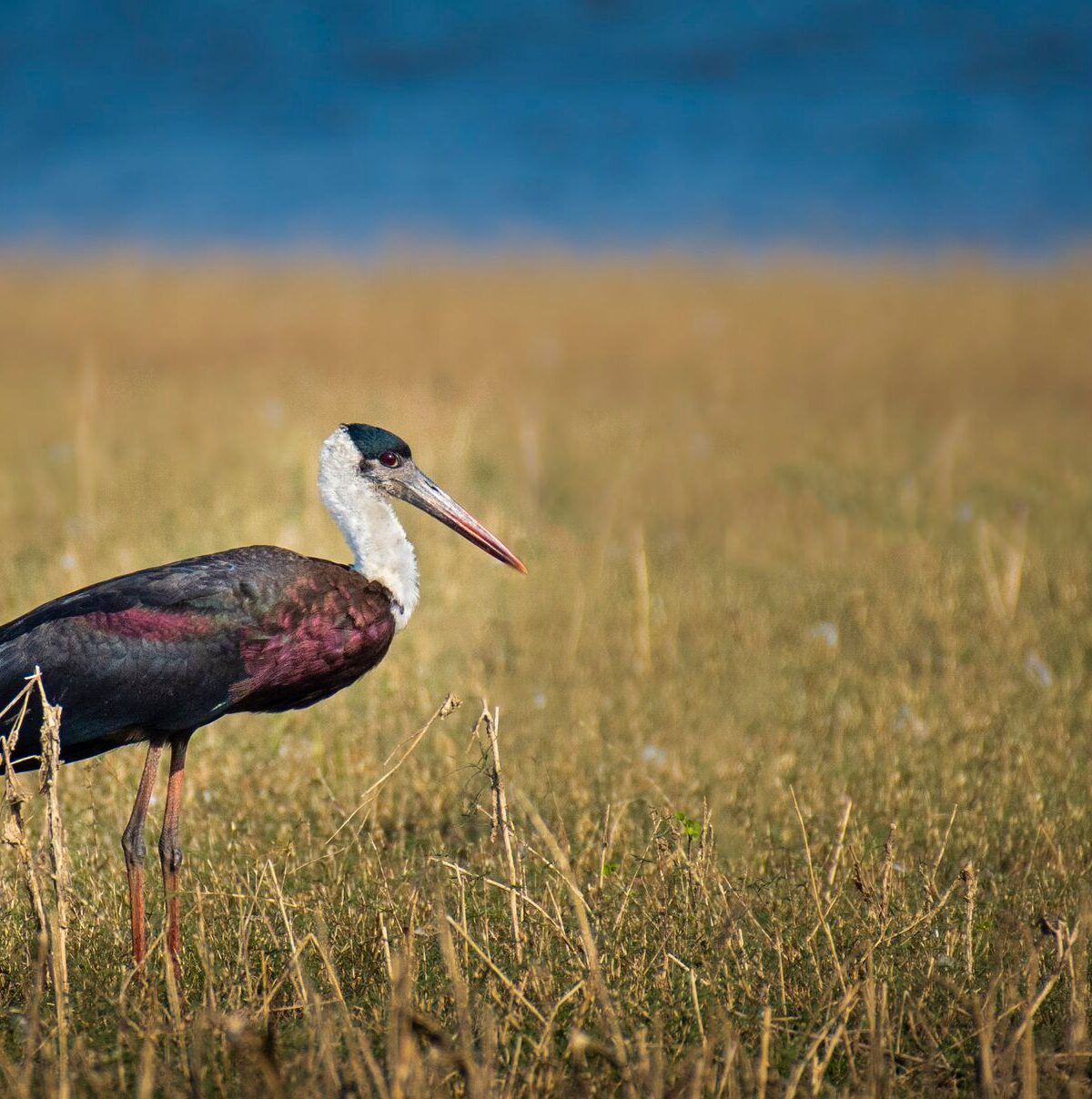
Woolly-necked Stork (Ciconia episcopus) is also known as the Black-necked Stork and is characterized by its striking black neck and white body. This large wading bird exhibits a long, slender bill and long legs, which are adapted for foraging in shallow waters. They are often seen in pairs or small groups, foraging in wetlands, rice fields, and along riverbanks, where they hunt for food.
FUN FACTS
- Woolly-necked Storks are known for their unique nesting habits, often building large nests in tall trees or on man-made structures
- These nests can be reused for several breeding seasons, showcasing their strong pair bonds
- | During the breeding season, the male performs elaborate displays to attract the female, including bowing and clattering their bills together
- This behavior not only strengthens their bond but also helps to establish territory among other storks
QUICK INFO
Lifespan10-15 years in the wild
Average Weight2-4 kg
Average Length70-80 cm
Diet TypeCarnivore
Social StructureThey are often seen in pairs or small groups, especially during the breeding season.
Activity PatternDiurnal
Breeding SeasonMonsoon season (June-September)
- Habitat
- These storks inhabit wetlands, marshes, and floodplains, often near rivers and lakes. They prefer areas with abundant water and vegetation, which provide ample foraging opportunities.
- Biomes
- Wetlands, Grasslands, Floodplains
- Native Range
- Woolly-necked Storks are native to parts of South and Southeast Asia, including India, Bangladesh, Myanmar, and Thailand.
- Continent
- Asia
- Countries
- India, Bangladesh, Myanmar, Thailand, Cambodia, Vietnam
- Diet
- Woolly-necked Storks primarily feed on fish, amphibians, and invertebrates, using their long bills to probe into the mud and water. They are opportunistic feeders and will also consume small mammals and birds when available.
- Diet Type
- Carnivore
- Favorite Food
- fish, amphibians
- Social Structure
- They are often seen in pairs or small groups, especially during the breeding season.
- Activity Pattern
- Diurnal
- Group Size
- 2-10
- Territorial
- 0
 VU
VU
 CR
CR
2-4 kg
Weight
70-80 cm
Length
- Coloration
- The Woolly-necked Stork has a distinctive black neck and head, with a white body and long, slender legs.
- Lifespan
- 10-15 years in the wild
- Offspring per Birth
- 2-4
- Sexual Maturity
- 3-4 years
- Breeding Season
- Monsoon season (June-September)
LC
Least Concern
IUCN Red List Status
- Population Status
- The population of Woolly-necked Storks is currently stable, but they face habitat loss.
- Wild Population Estimate
- 10,000-20,000
- Population Trend
- Stable
- Endangered
- 0
- Threats
- Main threats include habitat destruction due to agricultural expansion and pollution of water bodies. Climate change also poses a risk to their wetland habitats.
- Predators
- Large birds of prey, such as eagles and hawks, may prey on young storks. Additionally, humans can pose a threat through habitat destruction.
- Defense Mechanisms
- Woolly-necked Storks rely on their ability to fly away quickly to escape predators.
- Found in Zoos
- Uncommon