


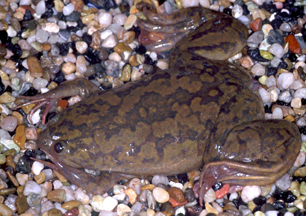
XENOPUS
DESCRIPTION
Xenopus, commonly known as the African clawed frog or Platanna, is a unique amphibian characterized by its flattened body and elongated limbs. This species is notable for its clawed toes, which are used for digging and swimming, and its smooth, often mottled skin that can vary in color from green to brown. Xenopus is primarily aquatic and exhibits a range of behaviors, including burrowing into the substrate and using its strong hind legs for powerful swimming in freshwater habitats.
FUN FACTS
- Xenopus is often used in scientific research due to its unique reproductive biology and ease of care in laboratory settings
- This species has played a significant role in developmental biology studies, particularly in understanding vertebrate embryonic development
- | The African clawed frog is also known for its ability to regenerate lost limbs, a fascinating trait that has intrigued scientists and researchers alike
- This regenerative capability is a subject of ongoing research, as it may provide insights into healing and regeneration in other species, including humans
QUICK INFO
Lifespan5-15 years in the wild, up to 20 years in captivit
Average Weight100-200 g
Average Length10-15 cm
Diet TypeOmnivore
Social Structuresolitary, typically found alone or in small groups during breeding
Activity PatternNocturnal
Breeding SeasonRainy season (varies by region)
- Habitat
- Xenopus inhabits freshwater environments such as ponds, marshes, and slow-moving streams. It prefers areas with abundant vegetation and soft substrates for burrowing.
- Biomes
- Freshwater, Wetlands
- Native Range
- Xenopus is native to sub-Saharan Africa, with a distribution that spans several countries across the continent.
- Continent
- Africa
- Countries
- South Africa, Namibia, Botswana, Zimbabwe, Democratic Republic of the Congo
- Diet
- Xenopus primarily feeds on small invertebrates and plant matter, utilizing its keen sense of sight to locate prey. It is known to consume a variety of food items, including insects and small crustaceans.
- Diet Type
- Omnivore
- Favorite Food
- small invertebrates, plant matter
- Social Structure
- solitary, typically found alone or in small groups during breeding
- Activity Pattern
- Nocturnal
- Group Size
- 1-5
- Territorial
- 0
 VU
VU
 LC
LC

100-200 g
Weight
10-15 cm
Length
- Coloration
- smooth, mottled skin in shades of green and brown
- Sexual Dimorphism
- males are generally smaller and have more pronounced vocal sacs
- Lifespan
- 5-15 years in the wild, up to 20 years in captivit
- Offspring per Birth
- 100-200 eggs
- Sexual Maturity
- 1-2 years
- Breeding Season
- Rainy season (varies by region)
LC
Least Concern
IUCN Red List Status
- Population Status
- Xenopus populations are generally stable, but local declines may occur due to habitat loss.
- Wild Population Estimate
- unknown
- Population Trend
- Stable
- Endangered
- 0
- Threats
- Main threats to Xenopus include habitat destruction due to agricultural expansion and pollution. Additionally, the introduction of invasive species can impact their populations.
- Predators
- birds, snakes, larger fish, and mammals
- Defense Mechanisms
- Xenopus can quickly burrow into the substrate to escape predators, and its coloration provides camouflage in its natural habitat.
- Compatible Animals
- other small amphibians, certain fish species
- Found in Zoos
- Common