


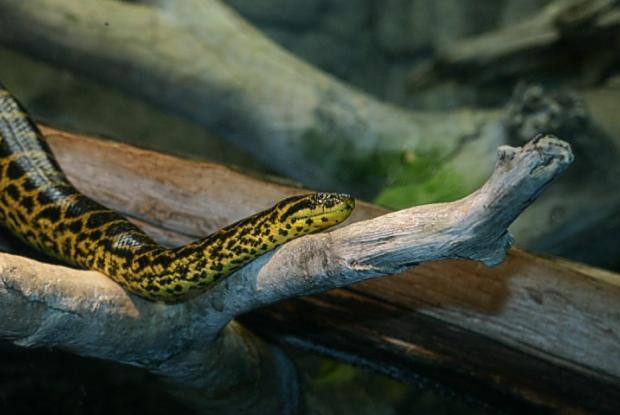
YELLOW ANACONDA
Eunectes notaeus
DESCRIPTION
Yellow Anaconda (Eunectes notaeus) is a large snake species known for its distinctive yellow and black patterning, which provides excellent camouflage in its natural habitat. This species is primarily aquatic, often found in swamps, marshes, and slow-moving rivers, where it exhibits a semi-aquatic lifestyle. Yellow Anacondas are known for their powerful constriction abilities, allowing them to subdue large prey, and they are generally solitary creatures, coming together only for mating purposes.
FUN FACTS
- Yellow Anacondas are among the heaviest snakes in the world, capable of weighing over 200 kg
- They are also known for their unique reproductive strategy, where females give birth to live young rather than laying eggs, which is relatively rare among snakes
QUICK INFO
Lifespan10-15 years in the wild, up to 30 years in captivi
Average Weight30-70 kg
Average Length2.5-3.5 m
Diet TypeCarnivore
Social Structuresolitary
Activity PatternNocturnal
Breeding SeasonSpring (September-November)
- Habitat
- Yellow Anacondas inhabit freshwater environments such as swamps, marshes, and rivers. They prefer areas with dense vegetation that provide cover and hunting opportunities.
- Biomes
- Wetlands, Tropical Rainforest
- Native Range
- The native range of the Yellow Anaconda includes the tropical regions of South America, particularly in countries like Brazil, Paraguay, and Argentina.
- Continent
- South America
- Countries
- Brazil, Paraguay, Argentina
- Diet
- Yellow Anacondas primarily feed on a variety of prey, including fish, birds, and mammals. They are known to consume animals as large as capybaras and even caimans.
- Diet Type
- Carnivore
- Favorite Food
- fish, birds, mammals
- Social Structure
- solitary
- Activity Pattern
- Nocturnal
- Group Size
- 1
- Territorial
- 0
 LC
LC
 VU
VU
30-70 kg
Weight
2.5-3.5 m
Length
- Coloration
- yellow with dark brown or black markings
- Sexual Dimorphism
- Females are generally larger than males.
- Lifespan
- 10-15 years in the wild, up to 30 years in captivi
- Gestation Period
- 6 months
- Offspring per Birth
- 20-40
- Sexual Maturity
- 2-3 years
- Breeding Season
- Spring (September-November)
LC
Least Concern
IUCN Red List Status
- Population Status
- The population of Yellow Anacondas is currently stable, but they face threats from habitat destruction and hunting.
- Wild Population Estimate
- Unknown
- Population Trend
- Stable
- Endangered
- 0
- Threats
- Main threats include habitat loss due to agriculture and urban development, as well as hunting for their skin. These factors can impact their populations in certain areas.
- Predators
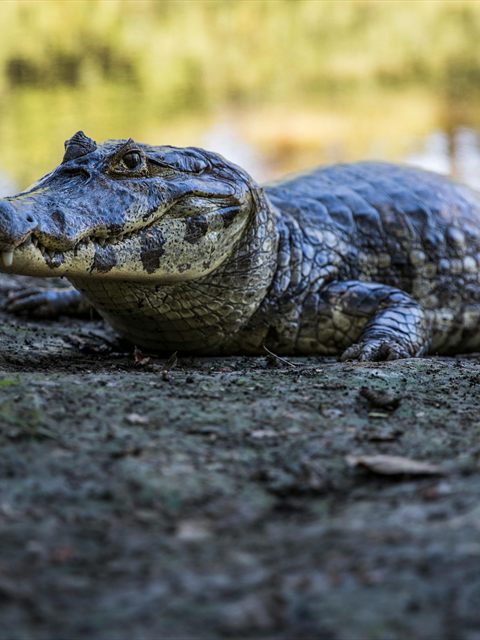
- Caiman, large birds of prey, and humans
- Defense Mechanisms
- Yellow Anacondas rely on their camouflage and aquatic abilities to evade predators, often submerging themselves in water to avoid detection.
- Found in Zoos
- Uncommon