


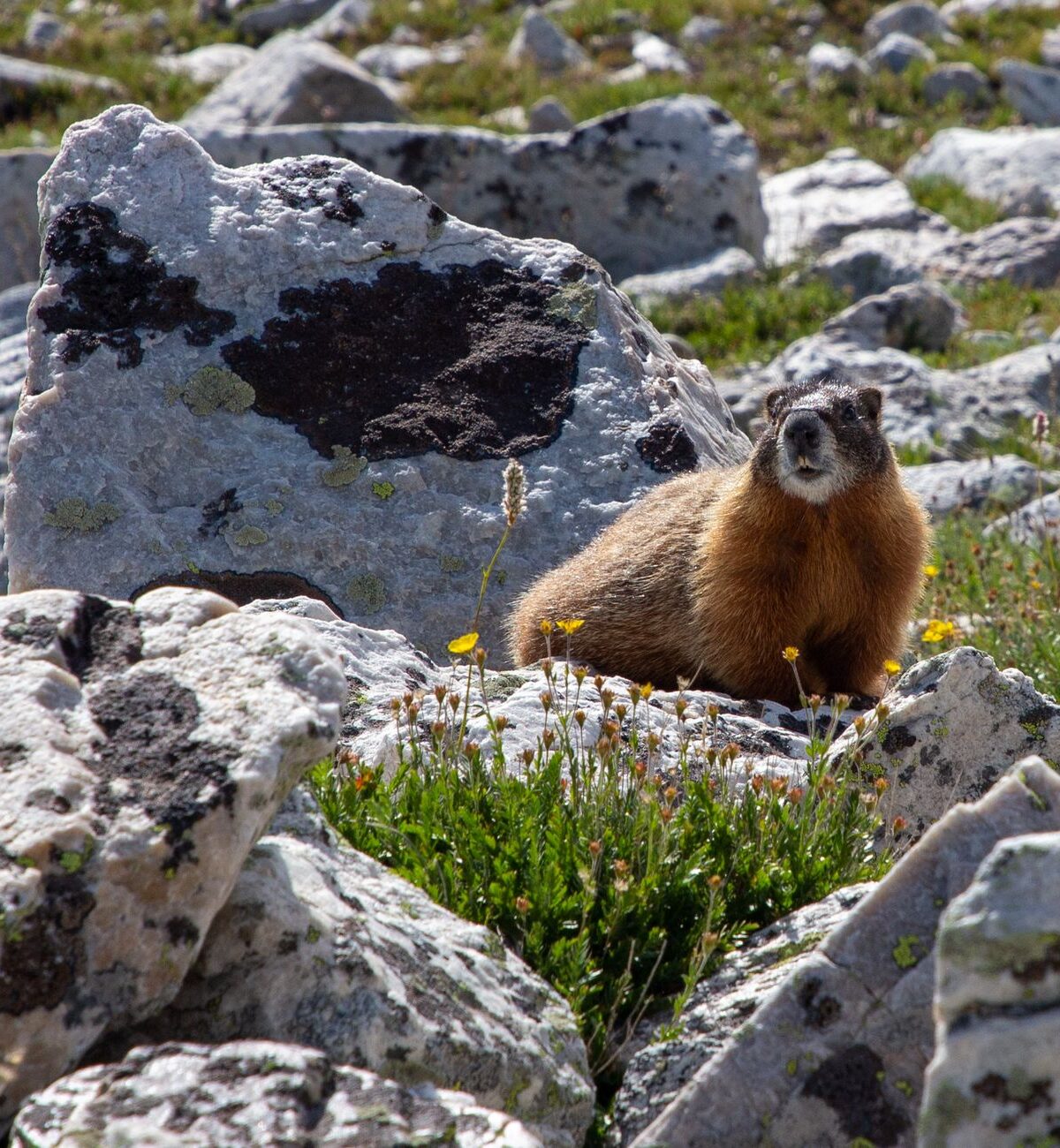
YELLOW-BELLIED MARMOT
Marmota flaviventris
DESCRIPTION
Yellow-Bellied Marmot (Marmota flaviventris) is a large rodent known for its distinctive yellowish belly and grayish-brown fur. These marmots are social animals that live in colonies, often found in mountainous regions of western North America. They are known for their loud whistles, which serve as alarm calls to warn other members of their group about potential predators.
FUN FACTS
- Yellow-Bellied Marmots are known for their impressive vocalizations, which include a variety of whistles and chirps used for communication within their colonies
- They can also be quite playful, often seen engaging in social grooming and play-fighting with one another, which helps strengthen social bonds within the group
QUICK INFO
Lifespan5-10 years in the wild, up to 15 in captivity
Average Weight3-5 kg
Average Length50-70 cm
Diet TypeHerbivore
Social StructureThey live in groups, often consisting of several adults and their offspring, which helps in protecting against predators.
Activity PatternDiurnal
Breeding SeasonSpring (April-June)
- Habitat
- Yellow-Bellied Marmots inhabit alpine meadows and rocky slopes, often at elevations between 1,500 and 4,000 meters. They prefer areas with plenty of vegetation for foraging and burrowing.
- Biomes
- Alpine, Temperate Grassland
- Native Range
- They are native to the western United States and Canada, particularly in the Rocky Mountains.
- Continent
- North America
- Countries
- United States, Canada
- Diet
- They primarily feed on a variety of grasses, herbs, and flowers, particularly during the summer months when food is abundant.
- Diet Type
- Herbivore
- Favorite Food
- grasses, herbs, flowers
- Social Structure
- They live in groups, often consisting of several adults and their offspring, which helps in protecting against predators.
- Activity Pattern
- Diurnal
- Group Size
- 5-20
- Territorial
- 0

 LC
LC
3-5 kg
Weight
50-70 cm
Length
- Coloration
- Grayish-brown fur with a distinctive yellowish belly.
- Sexual Dimorphism
- Males are generally larger than females.
- Lifespan
- 5-10 years in the wild, up to 15 in captivity
- Gestation Period
- 30 days
- Offspring per Birth
- 2-6
- Sexual Maturity
- 2-3 years
- Breeding Season
- Spring (April-June)
LC
Least Concern
IUCN Red List Status
- Population Status
- The population is currently stable, but habitat loss poses a potential threat.
- Wild Population Estimate
- 50,000-100,000
- Population Trend
- Stable
- Endangered
- 0
- Threats
- Main threats include habitat destruction due to human activities and climate change, which can affect their food sources and hibernation patterns.
- Predators
- Coyotes, foxes, eagles, and hawks are known predators of the Yellow-Bellied Marmot.
- Defense Mechanisms
- They use alarm calls to warn others of danger and can retreat quickly into their burrows.
- Found in Zoos
- Uncommon