


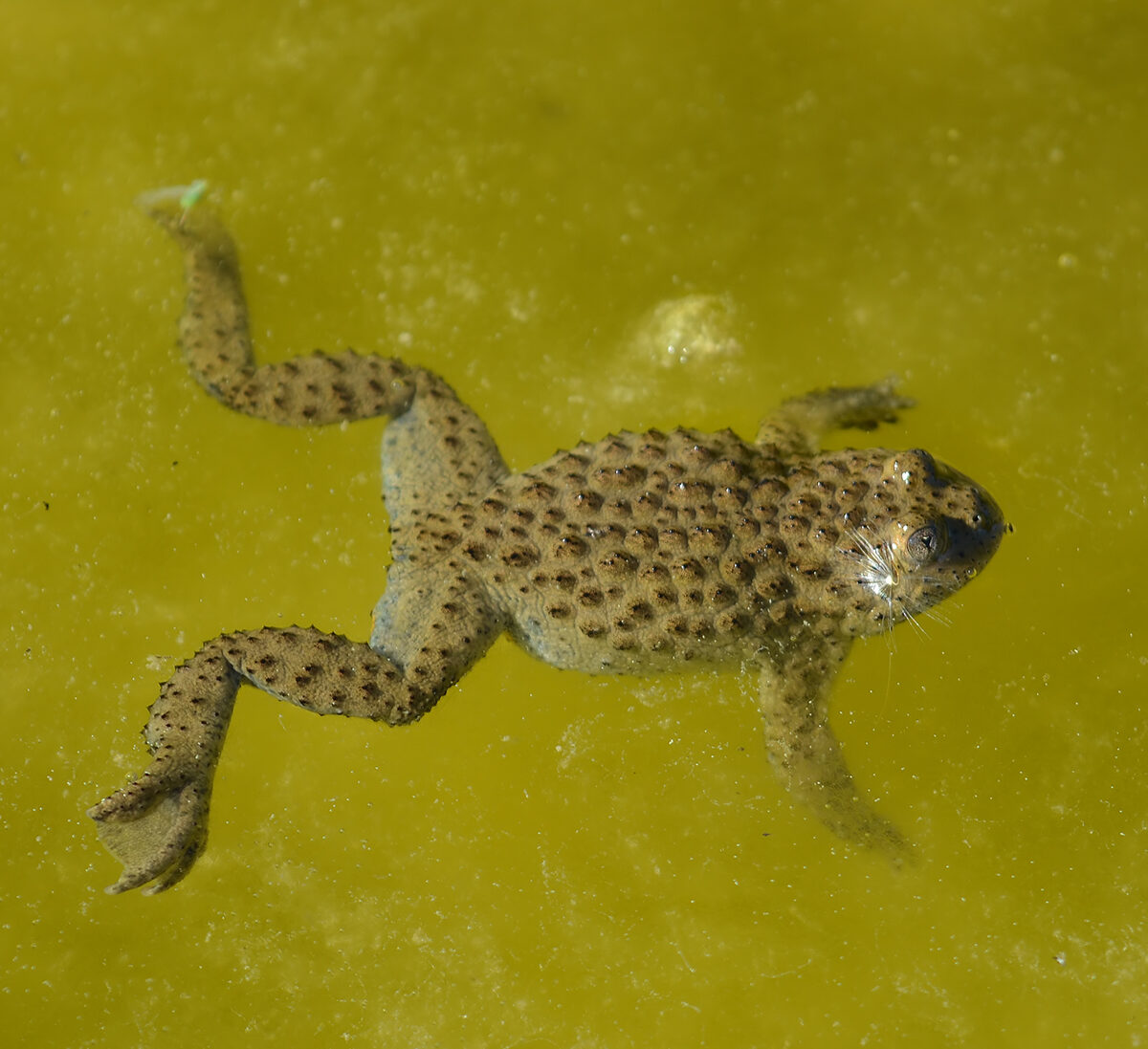
YELLOW-BELLIED TOAD
Bombina variegata
DESCRIPTION
Yellow-Bellied Toad (Bombina variegata) is commonly known as the European Yellow-Bellied Toad due to its distinctive yellow or orange belly, which serves as a warning coloration to potential predators. This small amphibian typically exhibits a warty, greenish or brownish dorsal surface, allowing it to blend into its natural surroundings. They are known for their unique vocalizations during the breeding season and are often found in shallow water bodies where they engage in breeding behaviors.
FUN FACTS
- Yellow-Bellied Toads are known for their unique breeding calls, which can be heard from a distance and are an important part of their mating rituals
- Additionally, their bright coloration serves as a warning to predators about their potential toxicity, making them less likely to be eaten.| These toads have a fascinating ability to absorb water through their skin, allowing them to stay hydrated in their often dry terrestrial habitats
- This adaptation is crucial for their survival, especially during the warmer months when water sources may be limited
QUICK INFO
Lifespan5-10 years in the wild, up to 15 years in captivit
Average Weight10-30 g
Average Length5-7 cm
Diet TypeInsectivore
Social StructureThey are typically solitary outside of the breeding season, coming together in groups during mating.
Activity PatternNocturnal
Breeding SeasonSpring (April-June)
- Habitat
- These toads prefer freshwater habitats such as ponds, marshes, and slow-moving streams, often with abundant vegetation. They require both aquatic and terrestrial environments for breeding and foraging.
- Biomes
- Temperate Forest, Freshwater
- Native Range
- The native range of the Yellow-Bellied Toad includes parts of Central and Eastern Europe, extending from the Alps to the Carpathians.
- Continent
- Europe
- Countries
- Austria, Czech Republic, Germany, Hungary, Italy, Poland, Slovakia, Slovenia, Switzerland
- Diet
- Yellow-Bellied Toads primarily consume small invertebrates, including insects and their larvae. They are opportunistic feeders and will eat whatever is available in their habitat.
- Diet Type
- Insectivore
- Favorite Food
- small insects, larvae
- Social Structure
- They are typically solitary outside of the breeding season, coming together in groups during mating.
- Activity Pattern
- Nocturnal
- Group Size
- 5-30
- Territorial
- 0
 VU
VU
 LC
LC
10-30 g
Weight
5-7 cm
Length
- Coloration
- Dorsally green or brown with a bright yellow or orange underside.
- Sexual Dimorphism
- Males are generally smaller and have more vibrant coloration compared to females.
- Lifespan
- 5-10 years in the wild, up to 15 years in captivit
- Offspring per Birth
- 100-200 eggs
- Sexual Maturity
- 2-3 years
- Breeding Season
- Spring (April-June)
LC
Least Concern
IUCN Red List Status
- Population Status
- The population of Yellow-Bellied Toads is currently stable in many areas, but they face threats from habitat loss.
- Wild Population Estimate
- Unknown
- Population Trend
- Stable
- Endangered
- 0
- Threats
- Main threats include habitat destruction due to urbanization and agricultural expansion, as well as pollution of water bodies. Climate change may also impact their breeding habitats.
- Predators
- Birds, snakes, and larger amphibians are known predators of the Yellow-Bellied Toad.
- Defense Mechanisms
- They exhibit a defensive posture by inflating their bodies and displaying their bright coloration to deter predators.
- Compatible Animals
- Other small amphibians, certain fish species in controlled environments
- Found in Zoos
- Uncommon