


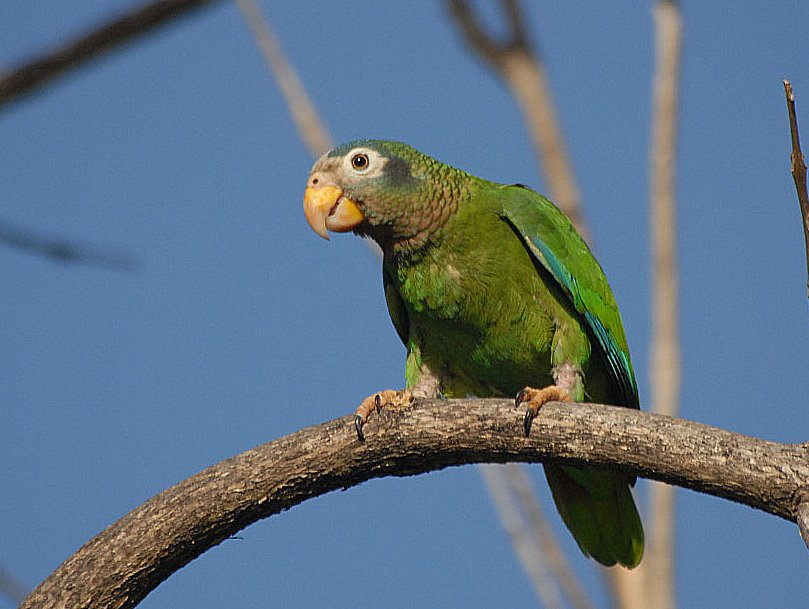
YELLOW-BILLED AMAZON
Amazona collaria
DESCRIPTION
Yellow-billed Amazon (Amazona collaria) is commonly known as the Yellow-billed Parrot due to its distinctive yellow bill. This medium-sized parrot features a predominantly green plumage with a yellow patch on the forehead and a blue crown, making it visually striking. Known for its social behavior, the Yellow-billed Amazon often forms flocks and is highly vocal, engaging in a variety of calls and sounds that contribute to its lively presence in its natural habitat.
FUN FACTS
- Yellow-billed Amazons are known for their impressive vocal abilities, often mimicking human speech and other sounds they hear in their environment
- This mimicry not only entertains but also serves as a form of social interaction among their flock
- | These parrots are highly intelligent and require mental stimulation, which is why they thrive in environments where they can engage in problem-solving activities and play
- Their playful nature makes them popular among bird enthusiasts, but they also need a lot of attention and care
QUICK INFO
Lifespan20-30 years in captivity
Average Weight300-400 g
Average Length30-35 cm
Diet TypeHerbivore
Social Structuregroup — they are often seen in flocks, which can range from small groups to larger gatherings.
Activity PatternDiurnal
Breeding SeasonSpring (March-May)
- Habitat
- This species inhabits tropical and subtropical forests, often found near water sources. They prefer areas with abundant fruiting trees, which provide both food and nesting sites.
- Biomes
- Tropical Rainforest, Subtropical Forest
- Native Range
- The Yellow-billed Amazon is native to the Caribbean coast of Central America, particularly in countries like Costa Rica and Nicaragua.
- Continent
- North America, Central America
- Countries
- Costa Rica, Nicaragua
- Diet
- The Yellow-billed Amazon primarily feeds on fruits, seeds, and nuts, showcasing a preference for a diverse diet. They are known to forage in trees and shrubs, utilizing their strong beaks to crack open hard seeds.
- Diet Type
- Herbivore
- Favorite Food
- fruits, seeds, nuts
- Social Structure
- group — they are often seen in flocks, which can range from small groups to larger gatherings.
- Activity Pattern
- Diurnal
- Group Size
- 5-30
- Territorial
- 0
 CR
CR
 LC
LC
300-400 g
Weight
30-35 cm
Length
- Coloration
- predominantly green with yellow forehead and blue crown
- Lifespan
- 20-30 years in captivity
- Offspring per Birth
- 2-4
- Sexual Maturity
- 3-4 years
- Breeding Season
- Spring (March-May)
LC
Least Concern
IUCN Red List Status
- Population Status
- The population of Yellow-billed Amazons is currently stable, but habitat loss poses a potential threat.
- Wild Population Estimate
- 10,000-20,000
- Population Trend
- Stable
- Endangered
- 0
- Threats
- Main threats include habitat destruction due to deforestation and illegal trapping for the pet trade. Conservation efforts are needed to ensure their habitats are preserved.
- Predators
- Hawks, snakes, and larger birds of prey are known to pose threats to the Yellow-billed Amazon.
- Defense Mechanisms
- They often rely on their ability to blend into the foliage for camouflage and will use loud calls to alert others of danger.
- Compatible Animals
- other parrot species, small mammals
- Found in Zoos
- Uncommon