


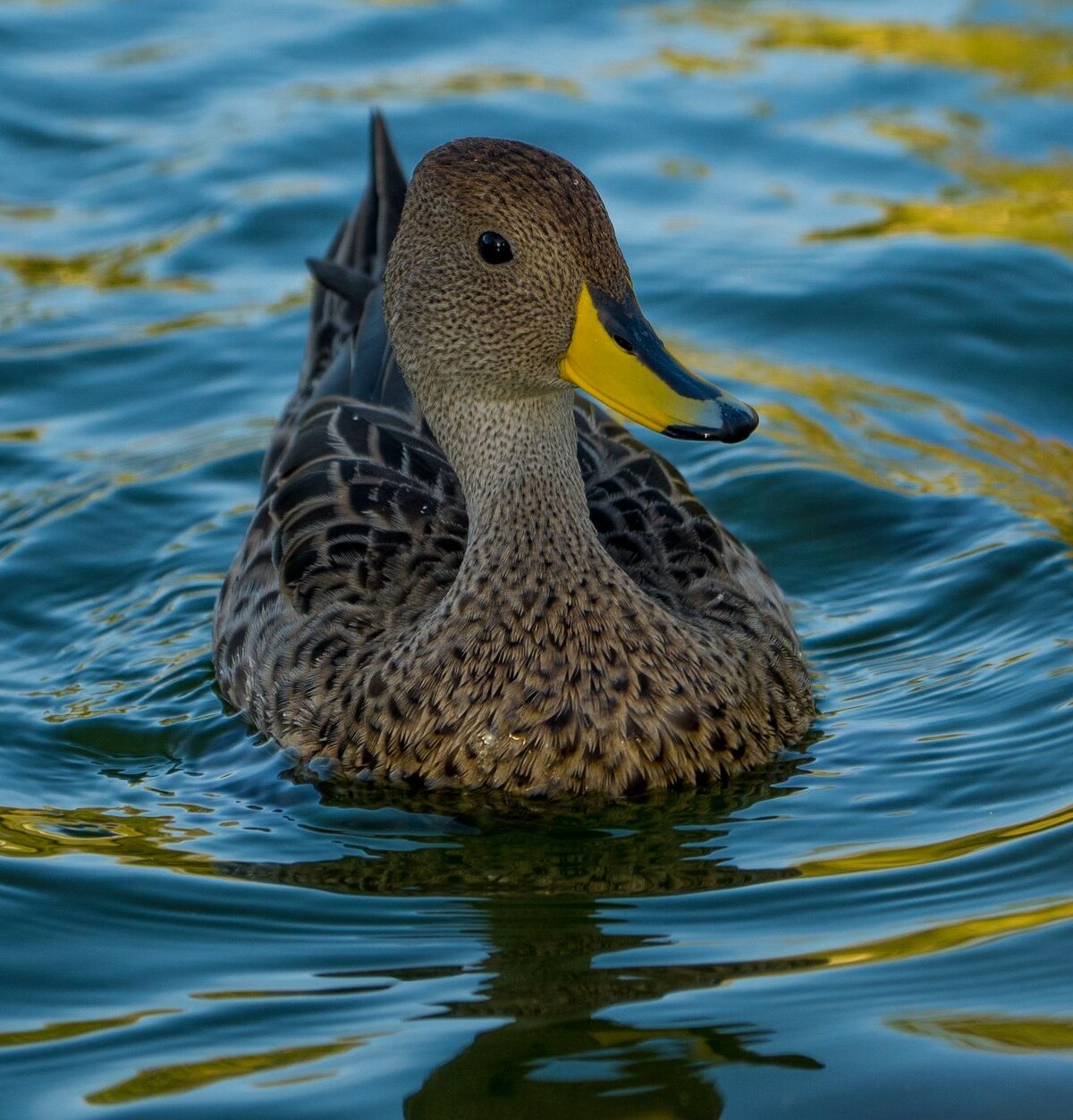
YELLOW-BILLED DUCK
Anas undulata
DESCRIPTION
Yellow-billed Duck (Anas undulata) is commonly known as the African Yellow-billed Duck. This medium-sized duck features a distinctive yellow bill, which contrasts with its mottled brown plumage. It is often found in freshwater habitats, where it exhibits dabbling behavior, foraging for food on the water's surface and in shallow areas.
FUN FACTS
- Yellow-billed Ducks are known for their unique vocalizations, which include a series of quacks and whistles that can be quite melodious
- They play an important role in their ecosystems by helping to control aquatic plant growth and providing food for predators in their habitats
QUICK INFO
Lifespan10-15 years in the wild
Average Weight700-1,200 g
Average Length50-60 cm
Diet TypeOmnivore
Social StructureThey are often found in pairs or small groups, especially during the breeding season.
Activity PatternDiurnal
Breeding SeasonSpring to early summer
- Habitat
- This species inhabits freshwater wetlands, lakes, and rivers, often favoring areas with dense vegetation. They are commonly found in both natural and artificial water bodies.
- Biomes
- Wetlands, Freshwater
- Native Range
- The Yellow-billed Duck is native to sub-Saharan Africa, particularly in regions with abundant water sources.
- Continent
- Africa
- Countries
- South Africa, Namibia, Botswana, Zimbabwe, Zambia, Angola, Tanzania
- Diet
- The Yellow-billed Duck primarily feeds on aquatic plants, seeds, and invertebrates. It forages by dabbling and tipping forward in the water.
- Diet Type
- Omnivore
- Favorite Food
- aquatic plants, seeds, invertebrates
- Social Structure
- They are often found in pairs or small groups, especially during the breeding season.
- Activity Pattern
- Diurnal
- Group Size
- 2-10
- Territorial
- 0
 CR
LC
CR
LC
700-1,200 g
Weight
50-60 cm
Length
- Coloration
- Mottled brown with a distinctive yellow bill and a dark crown.
- Sexual Dimorphism
- Males and females are similar in appearance, but males tend to have slightly brighter coloration.
- Lifespan
- 10-15 years in the wild
- Offspring per Birth
- 8-12
- Sexual Maturity
- 1 year
- Breeding Season
- Spring to early summer
LC
Least Concern
IUCN Red List Status
- Population Status
- The population of Yellow-billed Ducks is currently stable, with no immediate threats to their numbers.
- Wild Population Estimate
- Not quantified, but considered stable
- Population Trend
- Stable
- Endangered
- 0
- Threats
- Main threats include habitat loss due to wetland drainage and pollution. Additionally, hunting in some areas poses a risk to local populations.
- Predators
- Predators include large birds of prey, such as eagles and hawks, as well as terrestrial mammals like foxes and domestic dogs.
- Defense Mechanisms
- They rely on their ability to quickly take flight and their cryptic coloration for camouflage.
- Compatible Animals
- Other duck species, geese, swans
- Found in Zoos
- Uncommon