


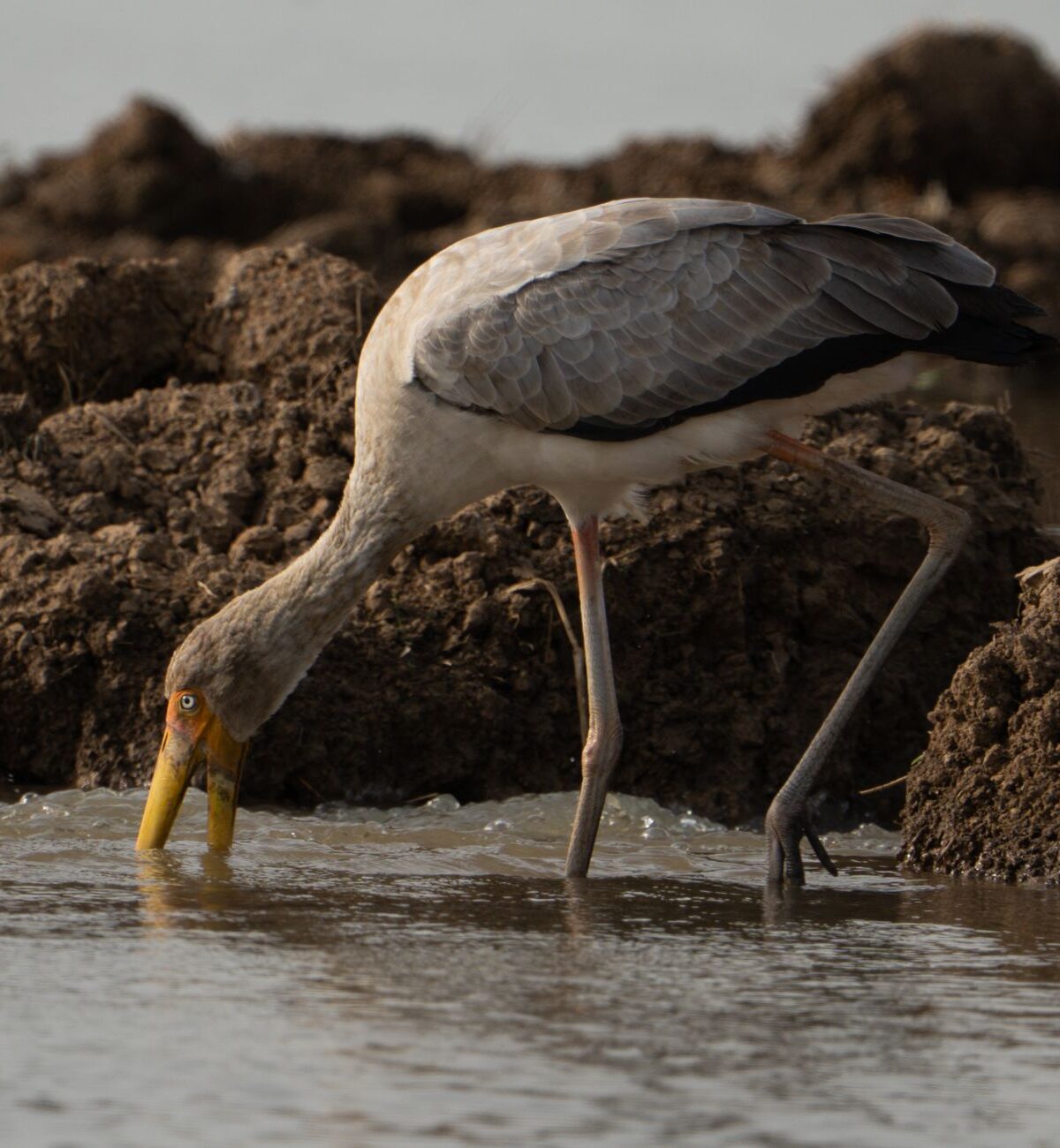
YELLOW-BILLED STORK
DESCRIPTION
Also called the Yellow-Billed Spoonbill, the Yellow-Billed Stork is a large wading bird known for its striking yellow bill and long legs. It has a predominantly white body with black wing tips and a distinctive yellow facial mask. This species is often found in wetlands and shallow waters, where it forages for food and can be seen wading gracefully through the water.
FUN FACTS
- The Yellow-Billed Stork is known for its unique feeding technique, where it uses its bill to sweep through the water to catch prey
- This method is highly effective and allows them to catch fish even in murky waters
- | During the breeding season, Yellow-Billed Storks engage in elaborate courtship displays, which include synchronized flying and dancing
- These displays are not only a way to attract mates but also strengthen pair bonds
QUICK INFO
Lifespan10-15 years in the wild, up to 20 years in captivi
Average Weight1.5-2.5 kg
Average Length0.7-1.0 m
Diet TypePiscivore
Social StructureThey are often found in groups, especially during feeding, but can also be solitary when nesting.
Activity PatternDiurnal
Breeding SeasonWet season (varies by region)
- Habitat
- This stork inhabits wetlands, marshes, and shallow lakes, often in areas with abundant vegetation. It prefers habitats that provide ample foraging opportunities and nesting sites.
- Biomes
- Wetlands, Freshwater
- Native Range
- The Yellow-Billed Stork is native to sub-Saharan Africa, particularly in regions with abundant water bodies.
- Continent
- Africa
- Countries
- Botswana, Namibia, South Africa, Zambia, Tanzania
- Diet
- The Yellow-Billed Stork primarily feeds on fish, amphibians, and invertebrates. It uses its long bill to probe into the mud and water to catch its prey.
- Diet Type
- Piscivore
- Favorite Food
- fish, amphibians
- Social Structure
- They are often found in groups, especially during feeding, but can also be solitary when nesting.
- Activity Pattern
- Diurnal
- Group Size
- 5-30
- Territorial
- 0

1.5-2.5 kg
Weight
0.7-1.0 m
Length
- Coloration
- Predominantly white with black wing tips and a bright yellow bill.
- Lifespan
- 10-15 years in the wild, up to 20 years in captivi
- Offspring per Birth
- 2-5
- Sexual Maturity
- 3-4 years
- Breeding Season
- Wet season (varies by region)
LC
Least Concern
IUCN Red List Status
- Population Status
- The population of Yellow-Billed Storks is currently stable, but they face habitat loss in some areas.
- Wild Population Estimate
- 50,000-100,000
- Population Trend
- Stable
- Endangered
- 0
- Threats
- Main threats include habitat destruction due to agriculture and urban development. Pollution and climate change also pose risks to their wetland habitats.
- Predators
- Nests may be vulnerable to predation by larger birds and mammals, but adult Yellow-Billed Storks have few natural predators.
- Compatible Animals
- other stork species, herons, ibises
- Found in Zoos
- Common