


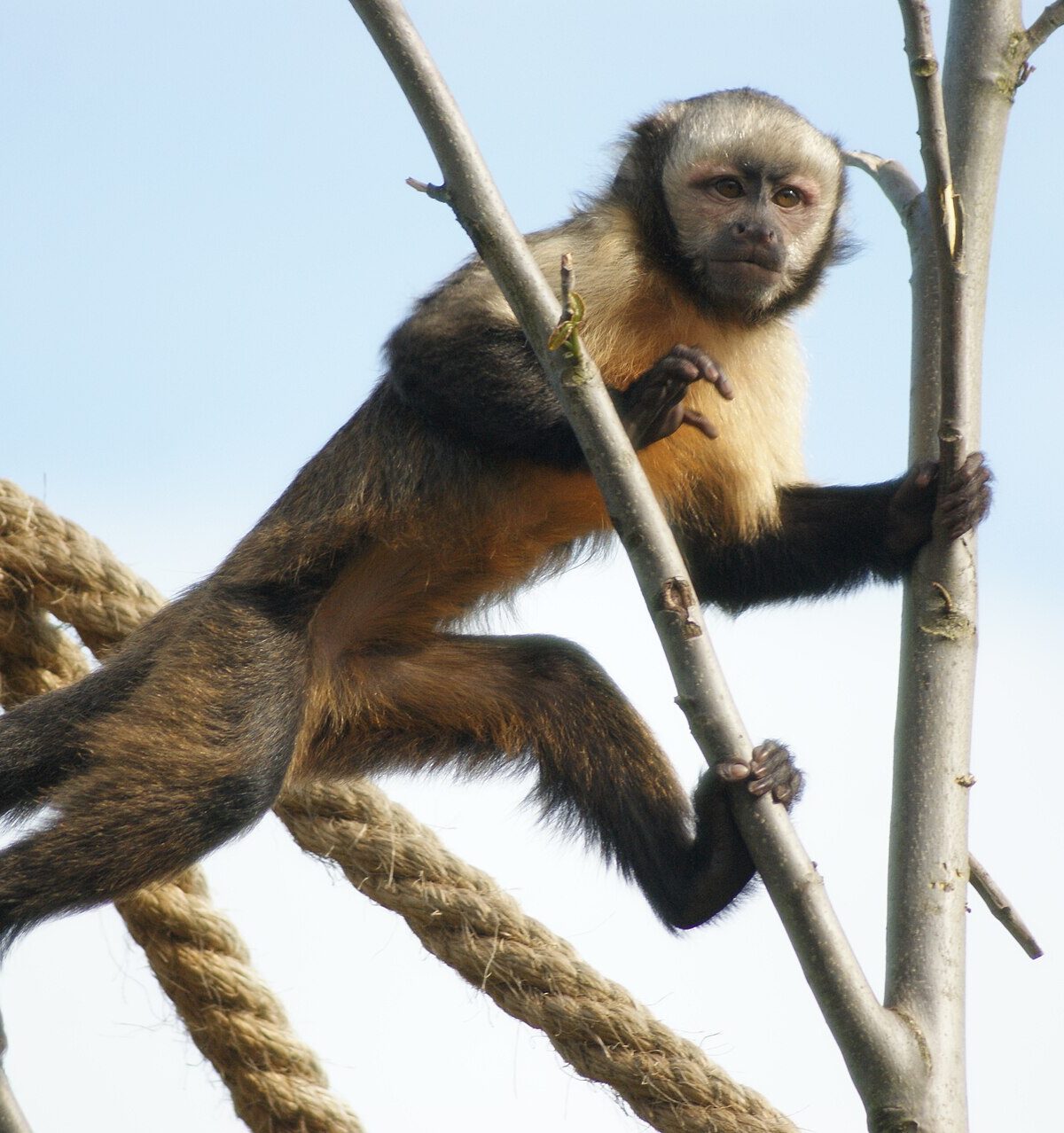
YELLOW-BREASTED CAPUCHIN
Sapajus xanthosternos
DESCRIPTION
Also called Xanthosternos Capuchin, the Yellow-breasted Capuchin (Sapajus xanthosternos) is a medium-sized primate known for its distinctive yellowish-brown fur on the chest and belly, contrasting with darker fur on the rest of the body. This species exhibits a high level of intelligence and is known for its complex social structures and behaviors, often using tools to access food. In the wild, they are primarily arboreal, spending much of their time in trees, where they forage for food and socialize with their group members.
FUN FACTS
- Yellow-breasted Capuchins are known for their impressive problem-solving skills, often using tools such as sticks to extract insects from crevices
- They also display a range of emotions and social behaviors, including grooming and play, which strengthen social bonds within their groups.| These monkeys have a unique way of communicating, using a variety of vocalizations and facial expressions to convey different messages
- Their intelligence and adaptability make them fascinating subjects for research in primate behavior and cognition
QUICK INFO
Lifespan15-25 years in the wild, up to 30 years in captivi
Average Weight3-4 kg
Average Length40-55 cm
Diet TypeOmnivore
Social StructureGroup, typically living in troops of 10-30 individuals with a clear hierarchy.
Activity PatternDiurnal
Breeding SeasonYear-round, with peaks depending on local conditions.
- Habitat
- This species inhabits tropical and subtropical forests, often favoring areas with abundant fruiting trees. They are also found in secondary forests and mangroves.
- Biomes
- Tropical Rainforest, Subtropical Forest
- Native Range
- The Yellow-breasted Capuchin is native to the Atlantic Forest region of Brazil.
- Continent
- South America
- Countries
- Brazil
- Diet
- The Yellow-breasted Capuchin primarily feeds on fruits, seeds, and insects, showcasing a diverse diet that allows it to thrive in various environments.
- Diet Type
- Omnivore
- Favorite Food
- Fruits, seeds, insects
- Social Structure
- Group, typically living in troops of 10-30 individuals with a clear hierarchy.
- Activity Pattern
- Diurnal
- Group Size
- 10-30
- Territorial
- 1
 VU
VU
 LC
LC
3-4 kg
Weight
40-55 cm
Length
- Coloration
- Yellowish-brown fur on the chest and belly with darker fur on the back and limbs.
- Sexual Dimorphism
- Males are generally larger than females.
- Lifespan
- 15-25 years in the wild, up to 30 years in captivi
- Gestation Period
- 160-170 days
- Offspring per Birth
- 1-2
- Sexual Maturity
- 3-4 years
- Breeding Season
- Year-round, with peaks depending on local conditions.
EN
Endangered
IUCN Red List Status
- Population Status
- The population is currently declining due to habitat loss and fragmentation.
- Wild Population Estimate
- Unknown, but believed to be decreasing.
- Population Trend
- Decreasing
- Endangered
- 1
- Threats
- Main threats include habitat destruction due to logging and agriculture, as well as hunting. These pressures have led to significant declines in their populations.
- Predators
- Large birds of prey, snakes, and jaguars are known to prey on Yellow-breasted Capuchins.
- Defense Mechanisms
- They use vocalizations to alert others of danger and can also flee to the treetops to escape predators.
- Found in Zoos
- Uncommon