


YELLOW-COLLARED MACAW
Primolius auricollis
DESCRIPTION
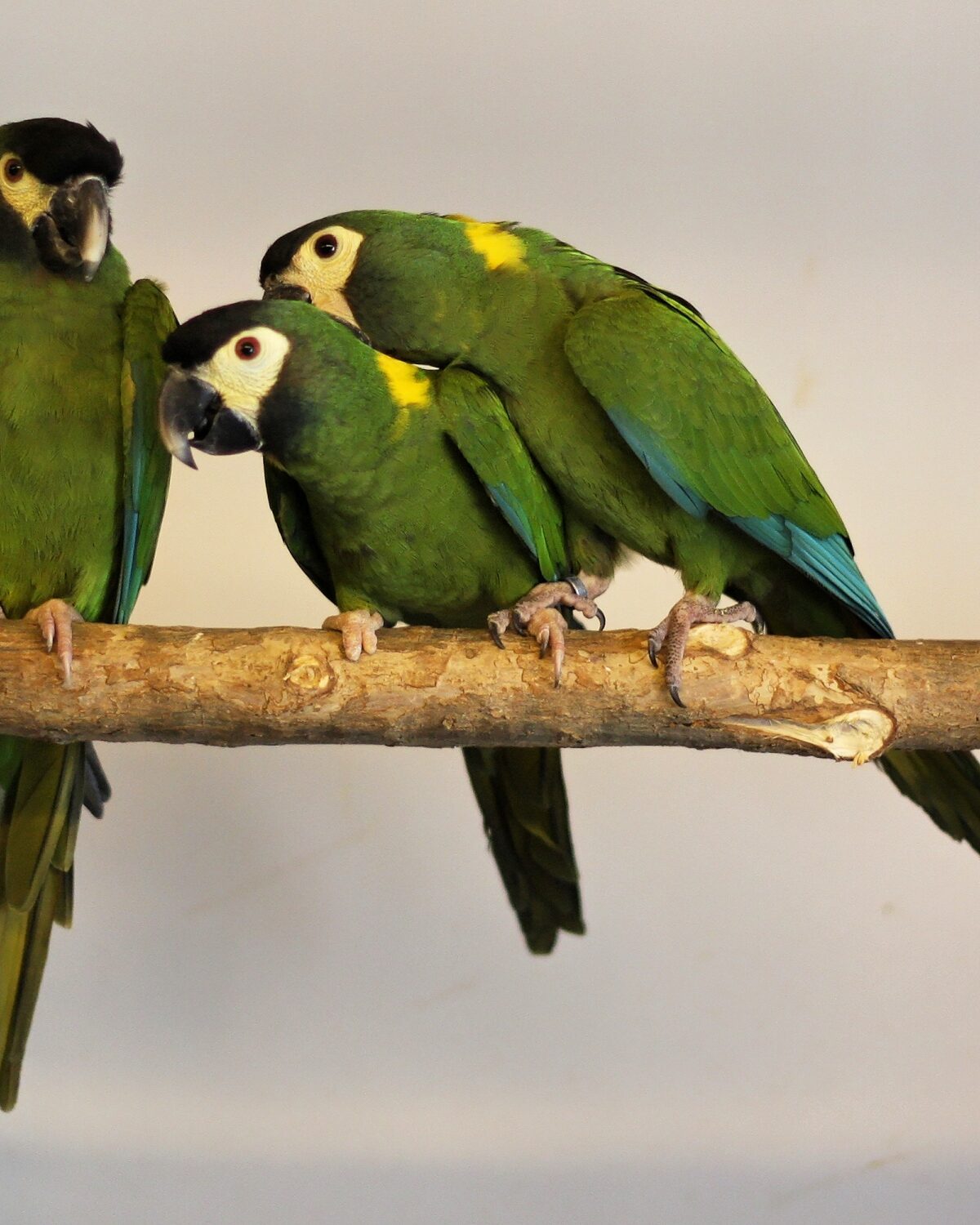
Yellow-collared Macaw (Primolius auricollis), also known as the Golden-collared Macaw, is a medium-sized parrot characterized by its vibrant yellow collar and green plumage. This species exhibits a playful and social behavior, often seen in pairs or small groups, engaging in acrobatic displays and vocalizations. In the wild, they inhabit tropical forests and woodlands, where they play a crucial role in seed dispersal and maintaining the health of their ecosystem.
FUN FACTS
- Yellow-collared Macaws are known for their playful personalities and can learn to mimic human speech quite well, making them popular pets
- In the wild, they often engage in social grooming, which helps strengthen bonds within their groups
QUICK INFO
Lifespan20-30 years in the wild, up to 50 in captivity
Average Weight300-400 g
Average Length40-45 cm
Diet TypeHerbivore
Social StructureThey are typically found in pairs or small groups, showcasing a strong pair bond during breeding.
Activity PatternDiurnal
Breeding SeasonSpring (March-May)
- Habitat
- Yellow-collared Macaws thrive in tropical and subtropical forests, often near water sources. They prefer areas with abundant fruiting trees for foraging.
- Biomes
- Tropical Rainforest, Woodland
- Native Range
- This species is native to parts of South America, particularly in Brazil and Bolivia.
- Continent
- South America
- Countries
- Brazil, Bolivia
- Diet
- They primarily feed on fruits, seeds, and nuts, utilizing their strong beaks to crack open hard shells.
- Diet Type
- Herbivore
- Favorite Food
- Fruits, seeds, nuts
- Social Structure
- They are typically found in pairs or small groups, showcasing a strong pair bond during breeding.
- Activity Pattern
- Diurnal
- Group Size
- 2-10
- Territorial
- 1
 LC
LC
300-400 g
Weight
40-45 cm
Length
- Coloration
- They have a predominantly green body with a distinctive yellow collar and blue wings.
- Lifespan
- 20-30 years in the wild, up to 50 in captivity
- Offspring per Birth
- 2-4
- Sexual Maturity
- 3-4 years
- Breeding Season
- Spring (March-May)
LC
Least Concern
IUCN Red List Status
- Population Status
- The population is currently stable, but habitat loss poses a potential threat.
- Wild Population Estimate
- 10,000-20,000
- Population Trend
- Stable
- Endangered
- 0
- Threats
- Main threats include habitat destruction due to deforestation and illegal trapping for the pet trade. Conservation efforts are needed to protect their natural habitats.
- Predators
- Natural predators include large birds of prey and snakes, which may target eggs or young chicks.
- Defense Mechanisms
- They use loud vocalizations to warn of danger and can fly quickly to escape predators.
- Compatible Animals
- Other macaws, large parrots
- Found in Zoos
- Common