


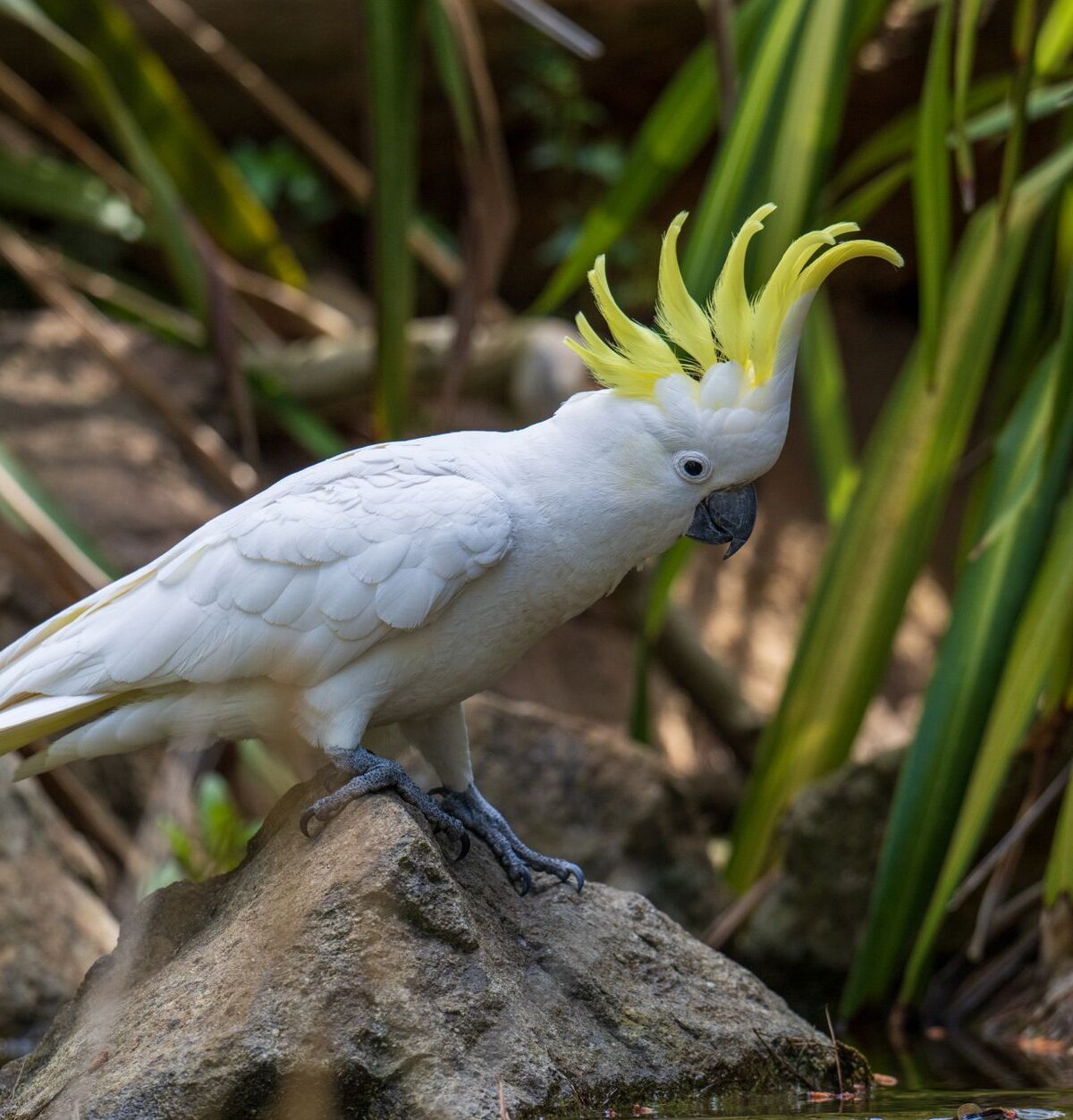
YELLOW-CRESTED COCKATOO
Cacatua sulphurea
DESCRIPTION
Yellow-Crested Cockatoo (Cacatua sulphurea) is a striking bird known for its vibrant yellow crest and predominantly white plumage. This species exhibits a playful and intelligent behavior, often engaging in social interactions and vocalizations. In the wild, they are typically found in forested areas and are known to form strong pair bonds, showcasing their complex social structures.
FUN FACTS
- Yellow-Crested Cockatoos are known for their impressive vocal abilities, often mimicking human speech and other sounds they hear in their environment
- They are also highly social creatures, requiring mental stimulation and interaction to thrive, which makes them popular pets despite their conservation status.| These cockatoos have a unique way of communicating with each other through body language and vocalizations, showcasing their intelligence and social complexity
- In the wild, they often engage in playful behaviors, such as swinging from branches and playing with objects, which highlights their need for enrichment
QUICK INFO
Lifespan20-30 years in the wild, up to 50 years in captivi
Average Weight300-400 g
Average Length30-35 cm
Diet TypeHerbivore
Social StructureThey are typically found in pairs or small groups, often forming strong bonds with their mates.
Activity PatternDiurnal
Breeding SeasonSpring (August-December)
- Habitat
- Yellow-Crested Cockatoos inhabit tropical and subtropical forests, often favoring areas with abundant food sources. They are also found in woodlands and mangroves, adapting to various environments.
- Biomes
- Tropical Rainforest, Subtropical Forest
- Native Range
- This species is native to the islands of Indonesia, particularly the Lesser Sundas and the Moluccas.
- Continent
- Asia
- Countries
- Indonesia
- Diet
- They primarily feed on seeds, fruits, and nuts, utilizing their strong beaks to crack open hard shells. In addition to these, they may also consume flowers and roots.
- Diet Type
- Herbivore
- Favorite Food
- seeds, fruits, nuts
- Social Structure
- They are typically found in pairs or small groups, often forming strong bonds with their mates.
- Activity Pattern
- Diurnal
- Group Size
- 2-10
- Territorial
- 1
 LC
LC
300-400 g
Weight
30-35 cm
Length
- Coloration
- Predominantly white with a bright yellow crest and a slight pinkish hue on the underside of the wings.
- Sexual Dimorphism
- Males and females are similar in appearance, but males tend to have slightly larger crests.
- Lifespan
- 20-30 years in the wild, up to 50 years in captivi
- Offspring per Birth
- 1-3
- Sexual Maturity
- 2-3 years
- Breeding Season
- Spring (August-December)
EN
Endangered
IUCN Red List Status
- Population Status
- The population is currently declining due to habitat loss and capture for the pet trade.
- Wild Population Estimate
- Less than 20,000
- Population Trend
- Decreasing
- Endangered
- 1
- Threats
- Main threats include habitat destruction due to logging and agriculture, as well as illegal trapping for the pet trade. These factors have significantly impacted their populations in the wild.
- Conservation Program
- Various conservation efforts are underway, including habitat protection and breeding programs in captivity.
- Predators
- Natural predators include birds of prey and snakes, although specific predator species are not well-documented.
- Defense Mechanisms
- They use loud vocalizations and their strong beaks to deter potential threats.
- Compatible Animals
- Other cockatoos, parrots, and larger birds
- Found in Zoos
- Common