


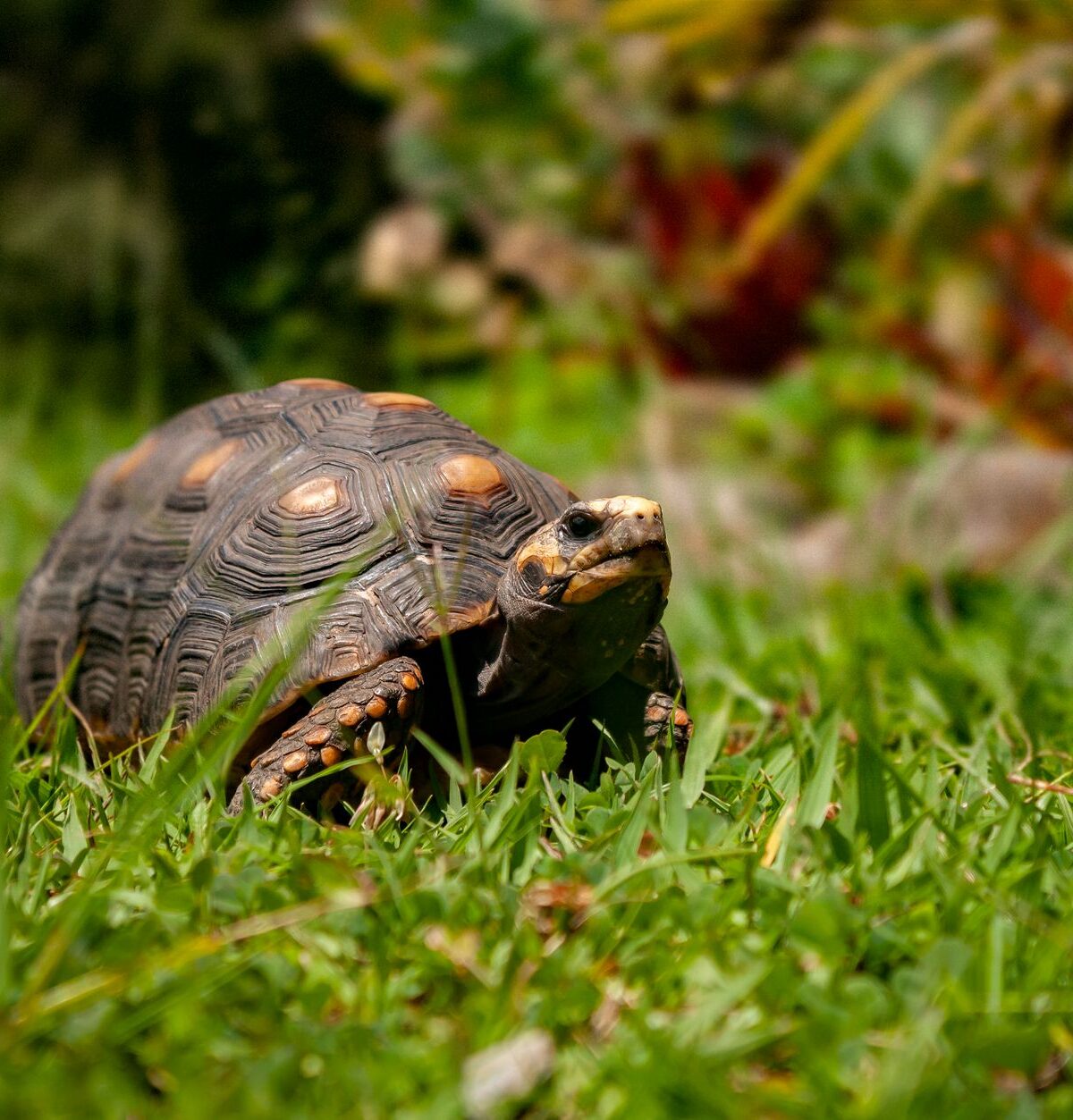
YELLOW-FOOTED TORTOISE
DESCRIPTION
Also called the Brazilian Tortoise and Red-Footed Tortoise, the Yellow-Footed Tortoise is a medium to large tortoise known for its distinctive yellow markings on its limbs and head. This species has a domed shell that can vary in color from brown to black, often with yellow or orange patterns. They are primarily terrestrial and are known for their gentle demeanor, often seen basking in the sun or foraging for food in their natural habitat.
FUN FACTS
- The Yellow-Footed Tortoise is known for its unique ability to adapt to various diets, which helps it thrive in different environments
- They play a crucial role in their ecosystem by helping to disperse seeds through their feces, promoting plant growth in their habitats.| These tortoises are also known for their long lifespans, often living for several decades, which makes them a long-term commitment for pet owners
- In the wild, they can live up to 60 years, but in captivity, they can exceed 80 years with proper care
QUICK INFO
Lifespan40-60 years in the wild, up to 80 years in captivi
Average Weight4-10 kg
Average Length30-50 cm
Diet TypeHerbivore
Social Structuresolitary, though they may come together during breeding
Activity PatternDiurnal
Breeding SeasonSpring to early summer
- Habitat
- This tortoise inhabits tropical rainforests and areas with dense vegetation, often near water sources. They prefer humid environments where they can easily find food and shelter.
- Biomes
- Tropical Rainforest
- Native Range
- The Yellow-Footed Tortoise is native to the Amazon Basin, primarily found in Brazil, Colombia, and Peru.
- Continent
- South America
- Countries
- Brazil, Colombia, Peru
- Diet
- The Yellow-Footed Tortoise is primarily herbivorous, feeding on a variety of plant materials including fruits, leaves, and flowers. They are known to enjoy a diverse diet that includes both leafy greens and fruits.
- Diet Type
- Herbivore
- Favorite Food
- Fruits, leafy greens
- Social Structure
- solitary, though they may come together during breeding
- Activity Pattern
- Diurnal
- Group Size
- 1-3
- Territorial
- 0
 NT
NT
4-10 kg
Weight
30-50 cm
Length
- Coloration
- Brown to black shell with yellow or orange markings
- Sexual Dimorphism
- Males are generally smaller with a more concave plastron, while females are larger with a flatter plastron.
- Lifespan
- 40-60 years in the wild, up to 80 years in captivi
- Gestation Period
- 60-90 days
- Offspring per Birth
- 2-10
- Sexual Maturity
- 5-7 years
- Breeding Season
- Spring to early summer
VU
Vulnerable
IUCN Red List Status
- Population Status
- The population is currently declining due to habitat loss and illegal pet trade.
- Wild Population Estimate
- Unknown
- Population Trend
- Decreasing
- Endangered
- 1
- Threats
- Main threats include habitat destruction due to deforestation and illegal capture for the pet trade. These factors have significantly impacted their populations in the wild.
- Predators
- Main predators include large birds of prey, jaguars, and humans.
- Defense Mechanisms
- They can retract into their shells for protection against predators.
- Found in Zoos
- Common