


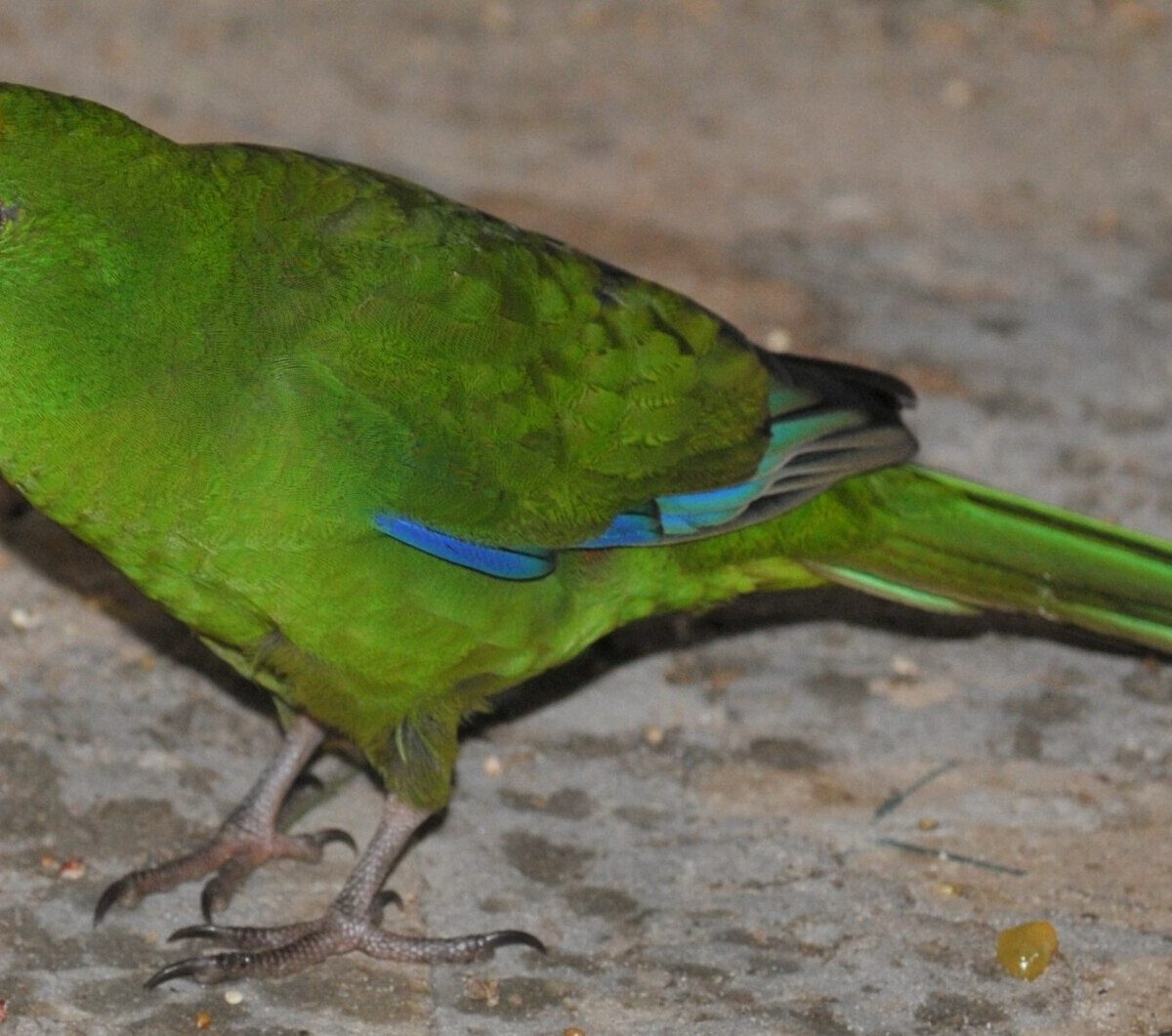
YELLOW-FRONTED PARAKEET
Cyanoramphus auriceps
DESCRIPTION
Yellow-fronted Parakeet (Cyanoramphus auriceps) is a small, vibrant parakeet native to New Zealand. It is characterized by its bright green plumage, with a distinctive yellow patch on the forehead and a blue hue on the wings. These birds are social and often found in flocks, displaying playful behavior as they interact with one another and their environment.
FUN FACTS
- Yellow-fronted Parakeets are known for their intelligence and problem-solving abilities, often engaging in playful activities that showcase their cognitive skills
- They are also highly social birds, forming strong bonds with their mates and often seen grooming each other, which helps reinforce their social structure
QUICK INFO
Lifespan10-15 years in the wild, up to 20 years in captivi
Average Weight70-100 g
Average Length25-30 cm
Diet TypeHerbivore
Social StructureThey are typically found in pairs or small groups, often forming strong bonds with their mates.
Activity PatternDiurnal
Breeding SeasonSpring to early summer (September to January)
- Habitat
- Yellow-fronted Parakeets inhabit a variety of forested areas, including native bush and scrubland. They prefer habitats with abundant vegetation for foraging and nesting.
- Biomes
- Temperate Forest, Grassland
- Native Range
- Endemic to New Zealand, particularly on the North Island and some offshore islands.
- Continent
- Oceania
- Countries
- New Zealand
- Diet
- They primarily feed on seeds, fruits, and flowers, foraging in trees and shrubs. Their diet is supplemented with various plant materials, making them important seed dispersers in their habitat.
- Diet Type
- Herbivore
- Favorite Food
- seeds, fruits, flowers
- Social Structure
- They are typically found in pairs or small groups, often forming strong bonds with their mates.
- Activity Pattern
- Diurnal
- Group Size
- 2-10
- Territorial
- 0
 LC
LC

70-100 g
Weight
25-30 cm
Length
- Coloration
- Bright green with a yellow forehead and blue wing feathers.
- Sexual Dimorphism
- Males and females are similar in appearance, making it difficult to distinguish between the sexes.
- Lifespan
- 10-15 years in the wild, up to 20 years in captivi
- Offspring per Birth
- 3-5
- Sexual Maturity
- 1-2 years
- Breeding Season
- Spring to early summer (September to January)
LC
Least Concern
IUCN Red List Status
- Population Status
- The population is currently stable, but habitat loss poses a potential threat.
- Wild Population Estimate
- 10,000-20,000
- Population Trend
- Stable
- Endangered
- 0
- Threats
- Main threats include habitat destruction due to agriculture and urban development, as well as predation by introduced species such as rats and cats.
- Predators
- Rats, cats, stoats, and other introduced mammals pose significant threats to their populations.
- Defense Mechanisms
- They rely on their agility and ability to fly to escape predators, often taking refuge in dense foliage.
- Compatible Animals
- Other small parakeets, finches, canaries
- Found in Zoos
- Uncommon