


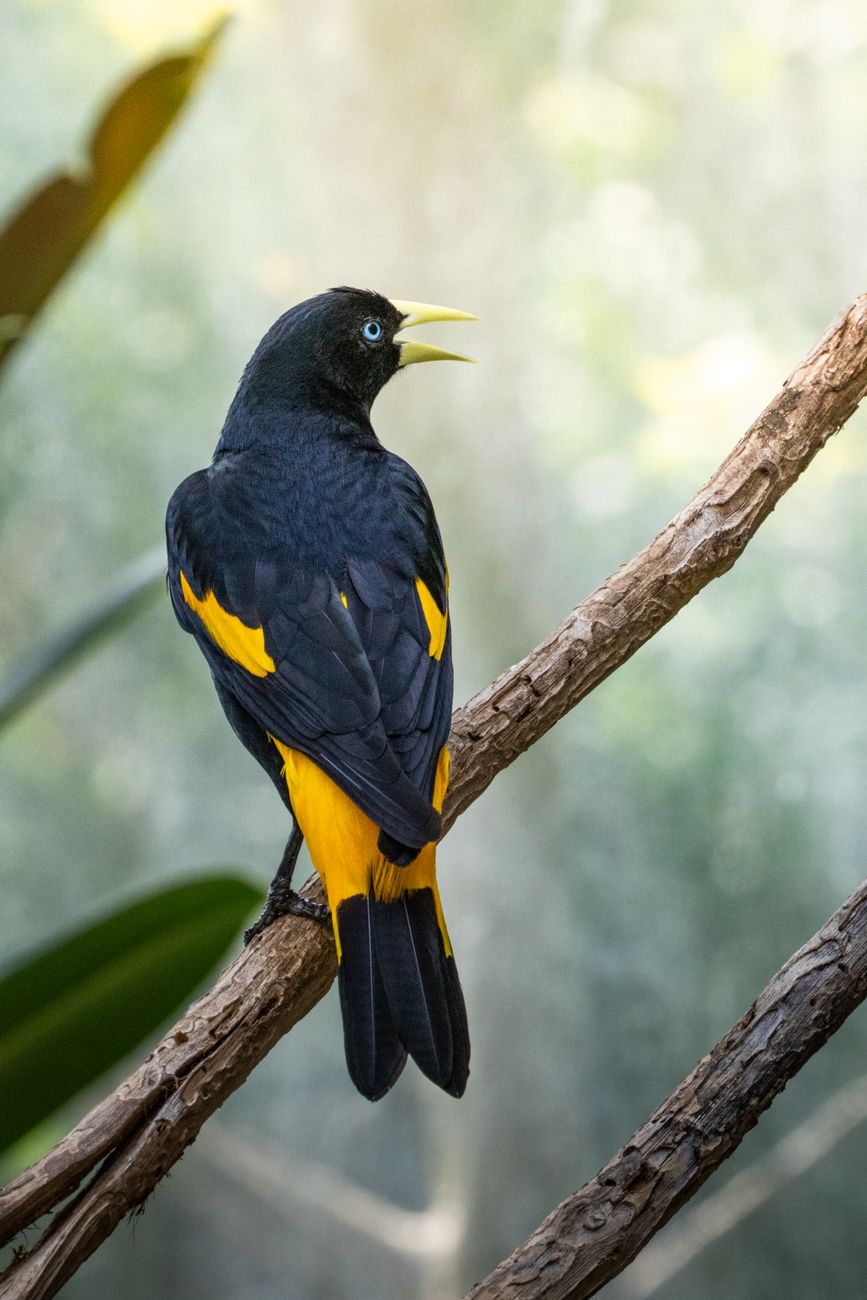
YELLOW-RUMPED CACIQUE
DESCRIPTION
Also called Cacique à croupion jaune and Cacique à croupion doré, the Yellow-Rumped Cacique is a striking bird known for its vibrant yellow and black plumage. Males are particularly notable for their bright yellow rumps and contrasting black wings and head, while females are generally more subdued in coloration. This species is highly social, often found in large flocks, and is known for its complex vocalizations and communal nesting behavior.
FUN FACTS
- The Yellow-Rumped Cacique is known for its unique nesting behavior, where they build large, hanging nests that can be quite elaborate
- These nests are often constructed in colonies, providing safety in numbers against predators
- | Another interesting fact is that these birds have a diverse diet that includes not only fruits and insects but also nectar, making them important pollinators in their ecosystems
- Their foraging habits help maintain the health of their habitats by promoting plant growth
QUICK INFO
Lifespanup to 10 years in the wild
Average Weight50-70 g
Average Length22-25 cm
Diet TypeOmnivore
Social Structuregroup — they are highly social birds that often nest and forage in large flocks.
Activity PatternDiurnal
Breeding SeasonSpring to early summer
- Habitat
- This species inhabits tropical and subtropical forests, often near water sources. It prefers areas with abundant vegetation for foraging and nesting.
- Biomes
- Tropical Rainforest, Subtropical Forest
- Native Range
- The Yellow-Rumped Cacique is native to Central and South America, particularly in regions from southern Mexico to western Ecuador.
- Continent
- North America, South America
- Countries
- Mexico, Guatemala, Honduras, Nicaragua, Costa Rica, Panama, Colombia, Ecuador
- Diet
- The Yellow-Rumped Cacique primarily feeds on fruits, insects, and nectar. It plays a significant role in seed dispersal within its habitat.
- Diet Type
- Omnivore
- Favorite Food
- fruits, insects, nectar
- Social Structure
- group — they are highly social birds that often nest and forage in large flocks.
- Activity Pattern
- Diurnal
- Group Size
- 10-50
- Territorial
- 0
 LC
LC
 DD
DD
50-70 g
Weight
22-25 cm
Length
- Coloration
- bright yellow and black plumage
- Sexual Dimorphism
- males are more brightly colored than females
- Lifespan
- up to 10 years in the wild
- Offspring per Birth
- 2-4
- Sexual Maturity
- 1-2 years
- Breeding Season
- Spring to early summer
LC
Least Concern
IUCN Red List Status
- Population Status
- The population is currently stable, but habitat loss poses a potential threat.
- Wild Population Estimate
- unknown
- Population Trend
- Stable
- Endangered
- 0
- Threats
- Main threats include habitat destruction due to deforestation and agricultural expansion. These activities reduce their natural habitat and food sources.
- Predators
- snakes, raptors, and larger birds
- Defense Mechanisms
- They often use their social structure to deter predators by mobbing them.
- Found in Zoos
- Uncommon