


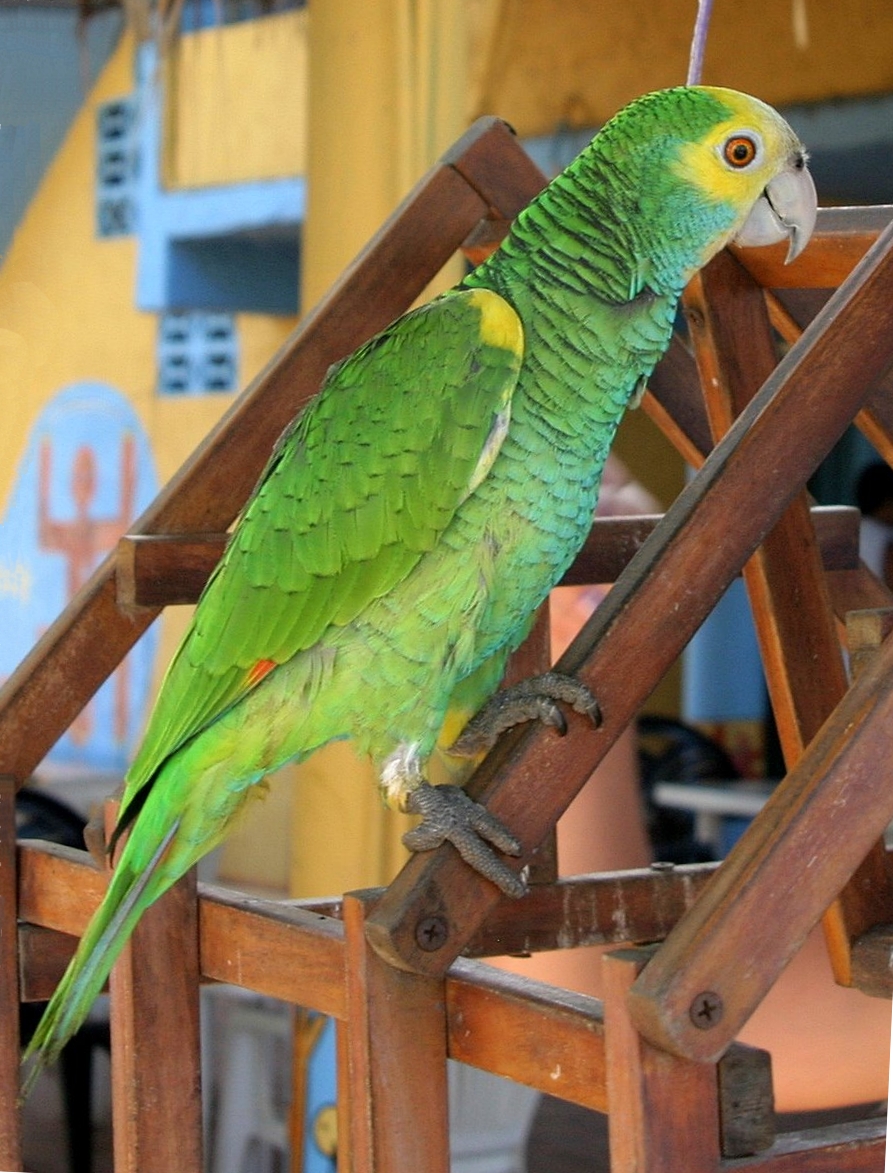
YELLOW-SHOULDERED AMAZON
Amazona barbadensis
DESCRIPTION
Yellow-Shouldered Amazon (Amazona barbadensis) is also known as the Barbados Amazon and is characterized by its vibrant green plumage, accented by a distinctive yellow patch on its shoulders. This medium-sized parrot exhibits a playful and social nature, often seen in pairs or small groups, engaging in vocalizations and interactions with one another. In the wild, they inhabit dry forests and scrublands, showcasing their adaptability to various ecological niches.
FUN FACTS
- Yellow-Shouldered Amazons are known for their impressive vocal abilities, often mimicking human speech and other sounds they hear in their environment
- They are also highly intelligent and require mental stimulation, making them engaging companions for those who keep them as pets.| In the wild, these parrots play a crucial role in their ecosystem by helping to disperse seeds through their diet, contributing to the health of their habitats
- Their social nature means they often engage in playful behaviors, which can be entertaining to observe
QUICK INFO
Lifespan20-30 years in captivity
Average Weight250-300 g
Average Length28-30 cm
Diet TypeHerbivore
Social StructureThey are typically found in pairs or small groups, showcasing a social structure that emphasizes strong pair bonds.
Activity PatternDiurnal
Breeding SeasonSpring (March-May)
- Habitat
- Yellow-Shouldered Amazons thrive in dry forests and scrublands, often favoring areas with abundant fruiting trees. They are also found in urban areas where food sources are available.
- Biomes
- Tropical Dry Forest, Scrubland
- Native Range
- This species is native to the Caribbean, specifically found on the islands of Aruba, Bonaire, and Curaçao.
- Continent
- South America, North America
- Countries
- Aruba, Bonaire, Curaçao
- Diet
- They primarily feed on fruits, seeds, and nuts, with a preference for native plants. Their diet can vary based on seasonal availability.
- Diet Type
- Herbivore
- Favorite Food
- Fruits, seeds, nuts
- Social Structure
- They are typically found in pairs or small groups, showcasing a social structure that emphasizes strong pair bonds.
- Activity Pattern
- Diurnal
- Group Size
- 2-10
- Territorial
- 1
250-300 g
Weight
28-30 cm
Length
- Coloration
- Predominantly green with yellow shoulder patches and a slight blue hue on the forehead.
- Lifespan
- 20-30 years in captivity
- Offspring per Birth
- 2-4
- Sexual Maturity
- 3-4 years
- Breeding Season
- Spring (March-May)
EN
Endangered
IUCN Red List Status
- Population Status
- The population is currently declining due to habitat loss and illegal trapping.
- Wild Population Estimate
- 10,000-20,000
- Population Trend
- Decreasing
- Endangered
- 1
- Threats
- Main threats include habitat destruction due to agriculture and urban development, as well as illegal trapping for the pet trade. These factors have significantly impacted their population numbers.
- Predators
- Natural predators include hawks and larger birds of prey, as well as snakes that may target their nests.
- Defense Mechanisms
- They often rely on their ability to fly away quickly and their vocalizations to alert others of danger.
- Compatible Animals
- Other parrot species, small mammals
- Found in Zoos
- Uncommon