


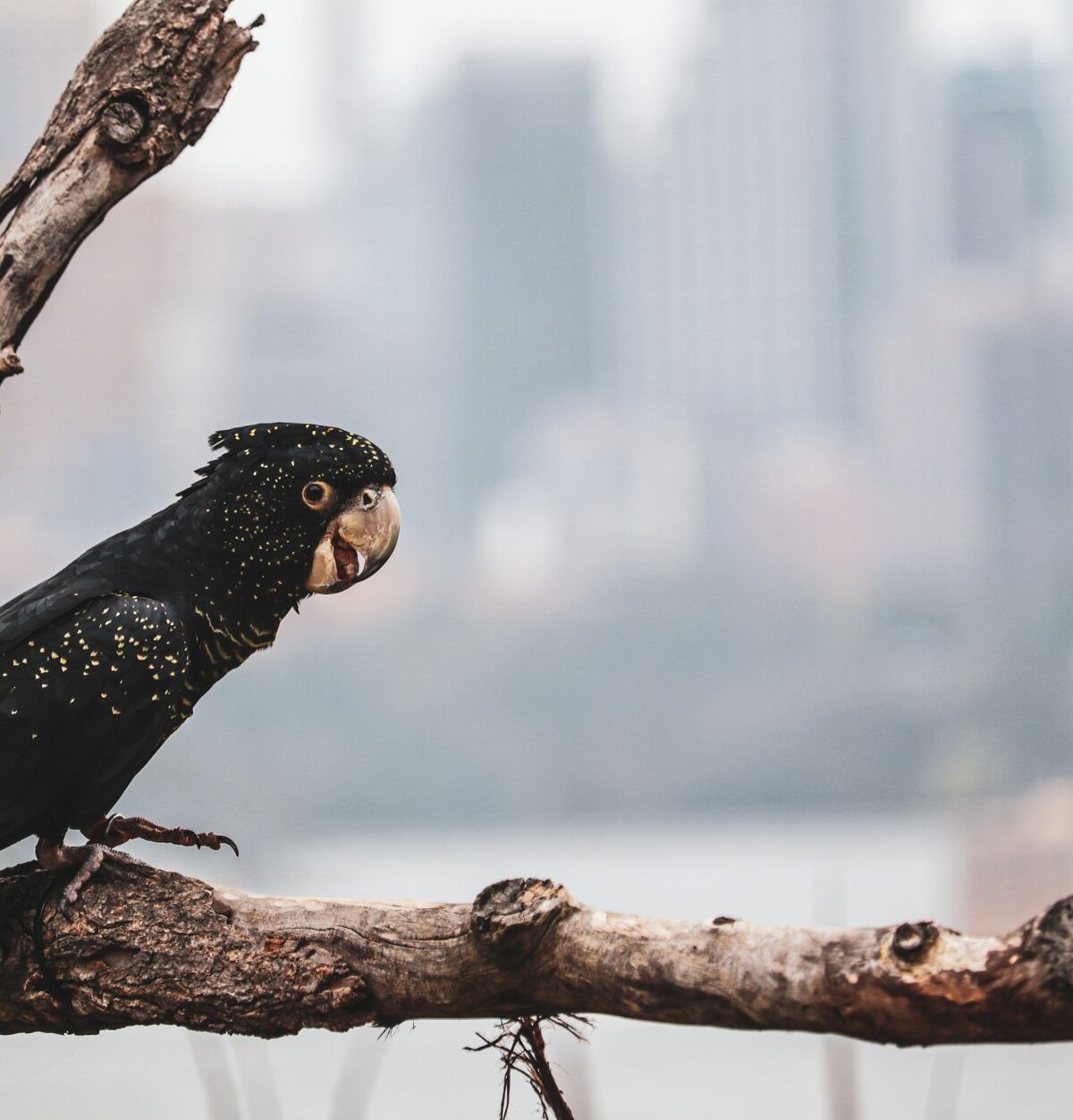
YELLOW-TAILED BLACK COCKATOO
Calyptorhynchus funereus
DESCRIPTION
Yellow-tailed Black Cockatoo (Calyptorhynchus funereus) is a striking bird known for its distinctive yellow tail feathers and predominantly black plumage. These cockatoos are often seen in pairs or small groups, exhibiting social behaviors and vocalizations that are characteristic of their species. They inhabit forested areas and woodlands, where they play a crucial role in seed dispersal and maintaining the health of their ecosystems.
FUN FACTS
- The Yellow-tailed Black Cockatoo is known for its impressive vocal abilities, often mimicking sounds from their environment, including human-made noises
- They are also highly social birds, often forming strong bonds with their mates and engaging in playful behaviors such as chasing each other through the trees
QUICK INFO
Lifespan20-30 years in the wild, up to 50 in captivity
Average Weight600-800 g
Average Length50-60 cm
Diet TypeHerbivore
Social StructureThey are often seen in pairs or small family groups, showcasing a social structure that promotes bonding and cooperation.
Activity PatternDiurnal
Breeding SeasonSpring to early summer (September to January)
- Habitat
- They are typically found in open forests, woodlands, and areas with abundant native vegetation. Their habitat is crucial for their feeding and nesting activities.
- Biomes
- Temperate Forest, Woodland
- Native Range
- The Yellow-tailed Black Cockatoo is native to southeastern Australia, particularly in New South Wales and Victoria.
- Continent
- Australia
- Countries
- Australia
- Diet
- They primarily feed on seeds, nuts, and fruits, with a particular preference for the seeds of native trees. Their strong beaks are adapted for cracking open hard-shelled seeds.
- Diet Type
- Herbivore
- Favorite Food
- Seeds and nuts
- Social Structure
- They are often seen in pairs or small family groups, showcasing a social structure that promotes bonding and cooperation.
- Activity Pattern
- Diurnal
- Group Size
- 2-10
- Territorial
- 1
 CR
CR
600-800 g
Weight
50-60 cm
Length
- Coloration
- Predominantly black with striking yellow tail feathers and a yellow patch on the nape.
- Sexual Dimorphism
- Males and females are similar in appearance, but males tend to have slightly larger beaks.
- Lifespan
- 20-30 years in the wild, up to 50 in captivity
- Offspring per Birth
- 1-2
- Sexual Maturity
- 2-3 years
- Breeding Season
- Spring to early summer (September to January)
LC
Least Concern
IUCN Red List Status
- Population Status
- The population is currently stable, but habitat loss poses a potential threat.
- Wild Population Estimate
- 10,000-20,000
- Population Trend
- Stable
- Endangered
- 0
- Threats
- Main threats include habitat destruction due to land clearing and logging, as well as competition for food resources with other species. Climate change also poses a long-term threat to their habitat.
- Predators
- Natural predators include birds of prey such as eagles and hawks, as well as introduced species like foxes and cats that may prey on their eggs and young.
- Defense Mechanisms
- They use loud vocalizations to warn off potential threats and can also engage in aggressive displays.
- Compatible Animals
- Other cockatoos, parrots
- Found in Zoos
- Uncommon