


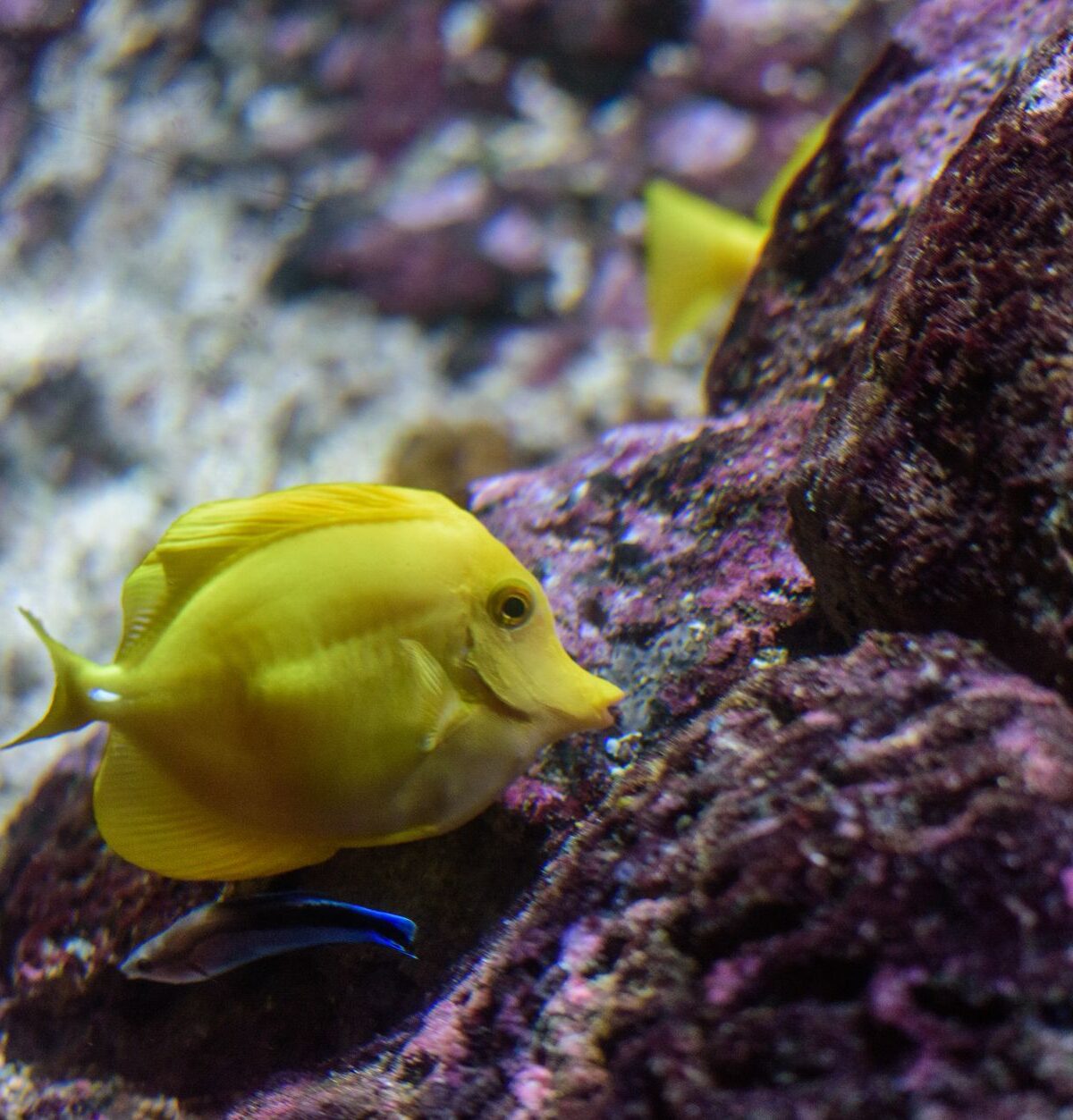
YELLOW TANG
Zebrasoma flavescens
DESCRIPTION
Yellow Tang (Zebrasoma flavescens) is commonly known as the Yellow Surgeonfish or Yellow Tang Fish. This vibrant species is characterized by its bright yellow coloration and a distinctive, laterally compressed body shape. They are known for their active swimming behavior and are often found in large schools, grazing on algae in their natural reef habitats.
FUN FACTS
- Yellow Tangs are often seen in aquariums due to their striking color and active nature, making them a favorite among marine enthusiasts
- They are also known for their unique ability to change their behavior based on their environment, becoming more aggressive when competing for food or territory.|In Hawaiian culture, the Yellow Tang is known as 'Manini' and is considered a symbol of good luck
- They are often featured in local art and crafts, reflecting their importance in the region's marine biodiversity
QUICK INFO
Lifespan10-15 years in the wild, up to 20 years in captivi
Average Weight0.5-1 kg
Average Length20-25 cm
Diet TypeHerbivore
Social StructureThey are typically found in groups, but can also be solitary when feeding.
Activity PatternDiurnal
Breeding SeasonYear-round in tropical waters
- Habitat
- Yellow Tangs inhabit shallow coral reefs, typically in areas with abundant algae. They prefer warm, tropical waters where they can find ample food sources.
- Biomes
- Coral Reef, Tropical Marine
- Native Range
- They are native to the Indo-Pacific region, particularly around the Hawaiian Islands and the Great Barrier Reef.
- Continent
- Oceania, Asia
- Countries
- Hawaii, Japan, Philippines, Australia
- Diet
- Yellow Tangs primarily feed on algae, which they graze from rocks and coral surfaces. They play a crucial role in maintaining the health of coral reefs by controlling algal growth.
- Diet Type
- Herbivore
- Favorite Food
- algae
- Social Structure
- They are typically found in groups, but can also be solitary when feeding.
- Activity Pattern
- Diurnal
- Group Size
- 5-30
- Territorial
- 1
 LC
LC
0.5-1 kg
Weight
20-25 cm
Length
- Coloration
- vibrant yellow with a slightly darker dorsal fin
- Lifespan
- 10-15 years in the wild, up to 20 years in captivi
- Offspring per Birth
- 1000-2000 eggs
- Sexual Maturity
- 1-2 years
- Breeding Season
- Year-round in tropical waters
LC
Least Concern
IUCN Red List Status
- Population Status
- The population of Yellow Tangs is currently stable, but they are affected by habitat loss and overfishing.
- Wild Population Estimate
- Unknown
- Population Trend
- Stable
- Endangered
- 0
- Threats
- Main threats include habitat destruction due to coral reef degradation and overfishing for the aquarium trade. Conservation efforts are needed to protect their natural habitats.
- Predators
- Larger fish, sharks, and some species of moray eels are known to prey on Yellow Tangs.
- Defense Mechanisms
- They have a sharp spine on their tail that can be used for defense against predators.
- Compatible Animals
- Clownfish, Damselfish, other small reef fish
- Found in Zoos
- Common