


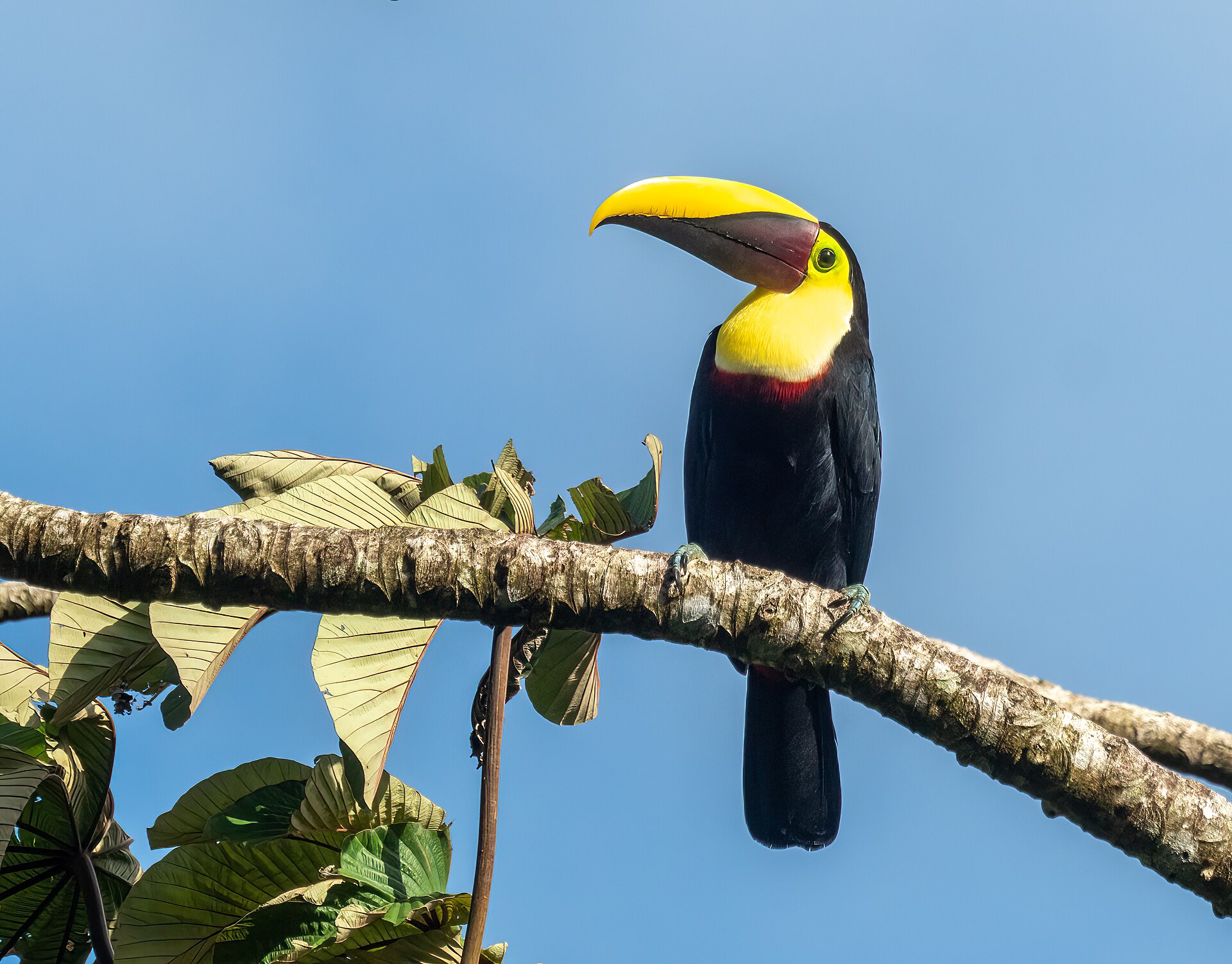
YELLOW-THROATED TOUCAN
Ramphastos ambiguus
DESCRIPTION
Yellow-throated Toucan (Ramphastos ambiguus) is a striking bird known for its vibrant coloration and large, colorful bill. It features a distinctive yellow throat and a predominantly black body with a bright orange and yellow bill that can be nearly half the length of its body. This species is often found in pairs or small groups, displaying a range of vocalizations that contribute to its social behavior in the lush canopies of tropical forests.
FUN FACTS
- The Yellow-throated Toucan's bill, while large and colorful, is surprisingly lightweight due to its hollow structure, allowing for easy maneuverability
- Additionally, these toucans play a crucial role in their ecosystem by dispersing seeds from the fruits they consume, helping to maintain the health of their forest habitats
QUICK INFO
Lifespan20-25 years in the wild, up to 30 years in captivi
Average Weight500-700 g
Average Length50-60 cm
Diet TypeOmnivore
Social StructureThey are typically found in pairs or small groups, often consisting of family units.
Activity PatternDiurnal
Breeding SeasonSpring (March-May)
- Habitat
- This species inhabits tropical and subtropical forests, often favoring areas with abundant fruiting trees. They are typically found in the canopy layer, where they can easily access their food sources.
- Biomes
- Tropical Rainforest
- Native Range
- The Yellow-throated Toucan is native to Central America, ranging from southern Mexico to western Panama.
- Continent
- North America, Central America
- Countries
- Mexico, Guatemala, Honduras, Nicaragua, Costa Rica, Panama
- Diet
- The Yellow-throated Toucan primarily feeds on fruits, but it also consumes insects and small vertebrates. Its strong bill allows it to reach and manipulate food items in the treetops.
- Diet Type
- Omnivore
- Favorite Food
- Fruits, particularly figs
- Social Structure
- They are typically found in pairs or small groups, often consisting of family units.
- Activity Pattern
- Diurnal
- Group Size
- 2-6
- Territorial
- 0
 VU
VU
 LC
LC
500-700 g
Weight
50-60 cm
Length
- Coloration
- Predominantly black with a bright yellow throat and a colorful bill featuring orange and yellow hues.
- Lifespan
- 20-25 years in the wild, up to 30 years in captivi
- Offspring per Birth
- 2-4
- Sexual Maturity
- 3-4 years
- Breeding Season
- Spring (March-May)
LC
Least Concern
IUCN Red List Status
- Population Status
- The population is currently stable, but habitat loss poses a potential threat.
- Wild Population Estimate
- 50,000-100,000
- Population Trend
- Stable
- Endangered
- 0
- Threats
- Main threats include habitat destruction due to deforestation and fragmentation of their forest habitats. Additionally, they may be affected by hunting and the pet trade.
- Predators
- Large birds of prey, snakes, and mammals such as jaguars may prey on Yellow-throated Toucans, especially when they are young or nesting.
- Defense Mechanisms
- They often rely on their ability to blend into the foliage and their loud calls to warn of danger.
- Compatible Animals
- Other toucans, parrots, and various small mammals in a zoo setting
- Found in Zoos
- Common